Vibrio in Shrimp Culture: Understanding the Risk and Complete Farm Management Guide
7/10/2026
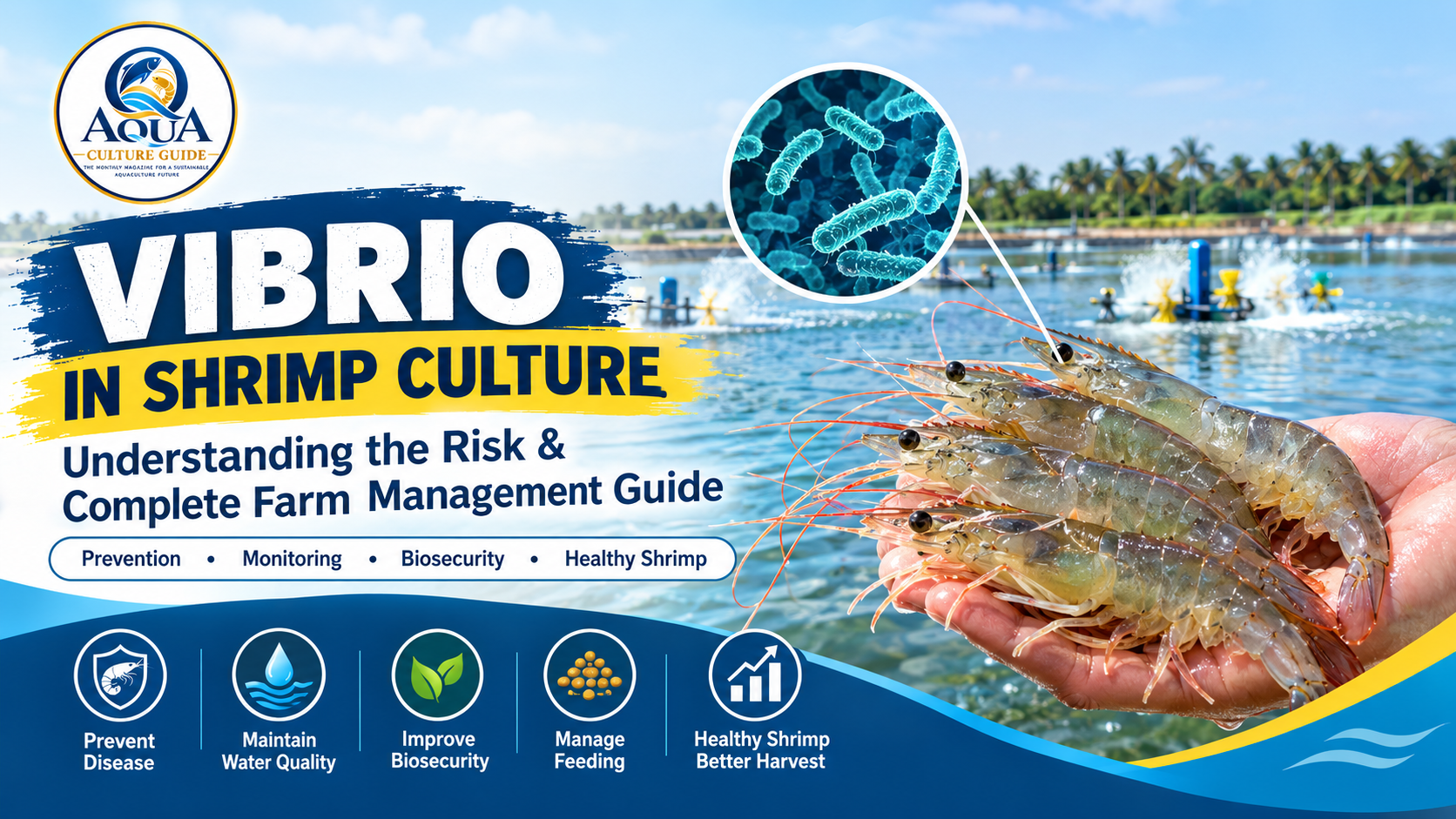
Vibrio in shrimp culture can become a serious problem when poor water quality, high organic load, stress and weak biosecurity create favorable conditions for bacterial disease. This complete guide exp
Vibrio in Shrimp Culture: Understanding the Risk and Complete Farm Management Guide
Vibrio is one of the major bacterial concerns in shrimp farming, particularly in intensive and high-density culture systems. Vibrio bacteria naturally occur in marine and brackish-water environments, so finding Vibrio in a shrimp pond does not automatically mean that the shrimp are diseased.
The real concern begins when pathogenic Vibrio, poor water quality, high organic matter, environmental stress and weak shrimp health come together.
For shrimp farmers, effective Vibrio management is therefore not simply about trying to eliminate bacteria from the pond. The better approach is to prevent conditions that allow harmful bacteria to multiply and cause disease.
This guide provides a practical, step-by-step approach to managing Vibrio risk from pond preparation and stocking through the culture cycle.
What is Vibrio in Shrimp Culture?
Vibrio is a group of bacteria commonly found in marine and brackish-water environments.
Some Vibrio species and strains can cause vibriosis, a bacterial disease problem in cultured shrimp.
Examples of Vibrio associated with shrimp disease include:
Vibrio parahaemolyticus
Vibrio harveyi
Vibrio alginolyticus
Other potentially pathogenic Vibrio species and strains
However, not every Vibrio is harmful.
The presence of Vibrio should be interpreted together with:
Shrimp health
Water quality
Pond conditions
Feeding behavior
Mortality
Laboratory results
Environmental stress
Why Does Vibrio Become a Problem in Shrimp Ponds?
Vibrio-related problems are often associated with a combination of environmental and biological factors.
Major risk factors include:
Poor water quality
High organic matter
Excess feeding
Poor pond-bottom condition
Low dissolved oxygen
Sudden pH or temperature changes
High stocking density
Stressful handling
Weak or poor-quality seed
Poor biosecurity
Inadequate aeration
Sudden environmental changes
Important: A Vibrio problem should be viewed as a farm-management issue, not only as a bacterial issue.
Step-by-Step Guide to Vibrio Management in Shrimp Farming
Step 1: Prepare the Pond Properly
Vibrio-risk management begins before stocking.
A poorly prepared pond can carry excessive organic matter and create unfavorable conditions during culture.
Pond preparation checklist
☐ Remove accumulated sludge where appropriate
☐ Remove unwanted organisms and debris
☐ Repair pond bunds and structures
☐ Check inlet and outlet systems
☐ Maintain proper filtration systems
☐ Dry the pond adequately when the culture system allows
☐ Prepare the pond bottom according to the farm's production system
☐ Ensure equipment is clean and ready
☐ Prepare the water-treatment system
☐ Establish a biosecurity protocol before stocking
The objective is to start the culture cycle with a clean, stable and manageable pond environment.
Step 2: Use Good-Quality Shrimp Seed
The quality and health status of post-larvae (PL) are extremely important.
Before stocking, farmers should verify the source of the seed and use appropriate health-screening procedures.
Seed-selection checklist
☐ Purchase PL from a reliable hatchery
☐ Check PL activity and appearance
☐ Check size uniformity
☐ Review hatchery health information
☐ Conduct appropriate pathogen screening where available
☐ Avoid visibly weak or abnormal PL
☐ Acclimate PL carefully
☐ Avoid unnecessary handling stress
Never depend only on appearance. Appropriate laboratory screening and professional advice can provide additional information about seed health.
Step 3: Manage Water Quality Before Stocking
Water quality should be checked before shrimp enter the pond.
Important parameters include:
Dissolved oxygen
Temperature
pH
Salinity
Alkalinity
Ammonia
Nitrite
The goal is not simply to achieve one "perfect" number. Stable conditions and gradual changes are extremely important for shrimp health.
Pre-stocking checklist
☐ Water quality tested
☐ Dissolved oxygen checked
☐ pH checked
☐ Temperature checked
☐ Salinity checked
☐ Alkalinity checked
☐ Ammonia checked
☐ Nitrite checked
☐ Water source assessed
☐ Water-treatment procedures completed
Step 4: Maintain Strong Aeration
Adequate aeration is essential in shrimp culture, especially as biomass increases.
Good aeration helps maintain dissolved oxygen and improves water circulation.
Aeration checklist
☐ Aerators properly positioned
☐ Aerators serviced regularly
☐ No major dead zones in the pond
☐ Dissolved oxygen monitored regularly
☐ Night and early-morning conditions monitored carefully
☐ Aeration adjusted according to biomass and pond conditions
Do not judge aeration only by how long the machines operate. Monitor actual dissolved oxygen and pond conditions.
Step 5: Control Organic Matter
Excess organic matter can become a major management challenge.
Sources include:
Uneaten feed
Shrimp feces
Dead plankton
Dead organisms
Accumulated sludge
Other decomposing material
Organic-load checklist
☐ Avoid unnecessary overfeeding
☐ Monitor feeding response
☐ Check pond-bottom condition
☐ Manage sludge appropriately
☐ Remove dead shrimp promptly
☐ Maintain effective water circulation
☐ Monitor water quality regularly
The principle is simple:
Less unnecessary organic accumulation = better control of pond conditions.
Step 6: Manage Feed Carefully
Overfeeding is one of the common management mistakes in intensive shrimp farming.
Excess feed can increase waste and organic loading.
Feeding checklist
☐ Follow a planned feeding program
☐ Monitor shrimp feeding response
☐ Use feeding trays where appropriate
☐ Adjust feed according to shrimp biomass
☐ Reduce feed when shrimp feeding activity falls
☐ Consider weather and environmental conditions
☐ Avoid unnecessary feed accumulation
A sudden reduction in feed consumption should be treated as a warning sign that requires investigation.
Step 7: Monitor Shrimp Health Every Day
Daily observation is one of the most valuable tools available to a shrimp farmer.
Do not wait until mass mortality occurs.
Check daily:
☐ Feeding behavior
☐ Swimming behavior
☐ Shrimp activity
☐ Gut fullness where observable
☐ Growth
☐ Size variation
☐ Mortalities
☐ Shell condition
☐ Color or visible abnormalities
☐ Pond-water appearance
Record observations rather than relying only on memory.
Step 8: Watch for Possible Vibrio-Related Warning Signs
Possible warning signs may include:
Reduced feeding
Weak or inactive shrimp
Increased mortality
Poor growth
Abnormal swimming
Empty gut
Visible lesions
Abnormal coloration
Increasing size variation
Sudden changes in pond behavior
Important
These symptoms do not prove that Vibrio is responsible.
Other bacterial, viral, parasitic or environmental problems can produce similar signs.
If abnormal mortality or disease signs appear, appropriate laboratory diagnosis should be considered.
Step 9: Monitor Water Quality Regularly
A water-quality monitoring program should be established for every shrimp farm.
Regular monitoring checklist
Parameter Why It Matters
Dissolved Oxygen Essential for shrimp respiration
pH Important for shrimp health and water chemistry
Temperature Influences metabolism and microbial activity
Salinity Important for osmoregulation
Alkalinity Helps maintain pH stability
Ammonia Can become toxic under unfavorable conditions
Nitrite Can stress shrimp at elevated levels
Water transparency/color Provides information about pond conditions
Organic load Helps identify accumulation of waste
Step 10: Maintain Good Biosecurity
Biosecurity is an important part of Vibrio and disease-risk management.
Farm biosecurity checklist
☐ Control unnecessary visitors
☐ Maintain clean equipment
☐ Avoid sharing equipment between ponds without proper cleaning
☐ Maintain pond-specific equipment where practical
☐ Control worker movement
☐ Maintain proper entry procedures
☐ Filter incoming water where appropriate
☐ Maintain clean harvest equipment
☐ Remove dead shrimp safely
☐ Manage birds, crabs and other potential disease vectors
☐ Keep farm records
A biosecurity plan should be established before a disease problem occurs.
Step 11: Monitor Vibrio When Necessary
Vibrio testing can be useful when there are concerns about shrimp health or pond conditions.
However, a simple Vibrio count should not automatically be interpreted as "disease."
A proper assessment should consider:
Vibrio result + shrimp health + water quality + mortality + environmental conditions + laboratory diagnosis
Step 12: Use Probiotics Carefully
Probiotics are widely used in shrimp farming as part of pond and microbial-management programs.
They may be included in a broader strategy involving:
Water-quality management
Organic-load management
Feed management
Microbial management
Shrimp-health management
However, probiotics should not be considered a guaranteed cure for Vibrio disease.
Before using a probiotic:
☐ Check the product label
☐ Verify the intended application
☐ Follow manufacturer instructions
☐ Check storage requirements
☐ Avoid mixing incompatible products
☐ Monitor the pond after application
☐ Evaluate results based on farm conditions
Step 13: Avoid Blind Antibiotic Use
One of the most important principles of responsible shrimp farming is:
Do not use antibiotics simply because Vibrio is detected.
Vibrio can naturally occur in aquatic environments, and the detection of bacteria alone does not automatically justify antibiotic treatment.
Unnecessary antimicrobial use can contribute to antimicrobial resistance and may fail to solve the underlying environmental problem.
If serious bacterial disease is suspected:
Diagnose → Identify the problem → Consult a qualified professional → Follow applicable regulations → Use treatment only when justified.
Step 14: Have an Early-Response Plan
If shrimp begin showing unusual behavior or mortality, do not wait several days before investigating.
Early-response procedure
- Observe the shrimp
Check behavior, feeding and physical condition.
- Check the water
Test important water-quality parameters.
- Check feeding
Determine whether feed consumption has changed.
- Check pond conditions
Look for dead zones, excess organic matter, sludge or other changes.
- Review recent farm activities
Ask:
Was there a sudden water-quality change?
Was feeding increased?
Was there heavy rain?
Was there sudden temperature variation?
Was water exchanged?
Were chemicals or other products recently applied?
- Collect appropriate samples if required
Laboratory diagnosis can help distinguish between bacterial, viral, parasitic and environmental causes.
- Take corrective action based on evidence
Avoid random treatment.
Complete Vibrio Risk-Management Checklist
Before Stocking
☐ Pond properly prepared
☐ Pond bottom assessed
☐ Sludge managed
☐ Inlet/outlet systems checked
☐ Water filtration prepared
☐ Water quality tested
☐ Seed source verified
☐ PL health assessed
☐ Appropriate pathogen screening completed
☐ Equipment cleaned
☐ Biosecurity protocol established
☐ Aerators checked
☐ Emergency plan prepared
During Stocking
☐ PL acclimated carefully
☐ Temperature difference minimized
☐ Salinity difference assessed
☐ Stocking carried out carefully
☐ Unnecessary handling avoided
☐ Initial shrimp behavior monitored
☐ Stocking records maintained
Daily Management
☐ Observe shrimp behavior
☐ Monitor feeding response
☐ Check mortality
☐ Check aeration
☐ Observe water condition
☐ Check equipment
☐ Record important observations
Regular Water-Quality Management
☐ Dissolved oxygen
☐ pH
☐ Temperature
☐ Salinity
☐ Alkalinity
☐ Ammonia
☐ Nitrite
☐ Organic load
☐ Pond-bottom condition
Weekly Farm Review
☐ Review shrimp growth
☐ Review feed consumption
☐ Review mortality
☐ Review water-quality records
☐ Check sludge accumulation
☐ Check aerator performance
☐ Inspect pond infrastructure
☐ Review biosecurity
☐ Check equipment hygiene
☐ Identify unusual trends
Vibrio Risk Management: Do's and Don'ts
DO DON'T
Maintain stable water quality Don't ignore sudden water-quality changes
Monitor shrimp daily Don't wait for mass mortality
Control organic matter Don't allow excessive waste accumulation
Use quality seed Don't stock weak or questionable PL
Maintain aeration Don't rely only on visual observation
Practice biosecurity Don't freely move equipment between ponds
Record farm data Don't depend only on memory
Investigate disease early Don't assume every problem is Vibrio
Use laboratory diagnosis when needed Don't randomly apply treatments
Use responsible antimicrobial practices Don't use antibiotics blindly
Simple Vibrio Management Formula for Shrimp Farmers
Healthy Seed
↓
Good Pond Preparation
↓
Stable Water Quality
↓
Adequate Aeration
↓
Controlled Feeding
↓
Low Excess Organic Matter
↓
Strong Biosecurity
↓
Daily Monitoring
↓
Early Detection
↓
Timely Corrective Action
↓
Better Shrimp Health & Farm Performance
Conclusion
Vibrio management starts with good farm management.
Instead of focusing only on killing bacteria, shrimp farmers should focus on creating pond conditions that reduce stress and make it more difficult for harmful bacterial disease to develop.
The most important priorities are:
Good seed + proper pond preparation + stable water quality + adequate aeration + controlled feeding + organic-load management + biosecurity + daily monitoring + early diagnosis.
Questions & Answers
Q1.What is Vibrio in shrimp culture?
Vibrio is a group of bacteria commonly found in marine and brackish-water environments. Some species and strains can cause bacterial disease or vibriosis in shrimp
Q2.Is Vibrio always harmful to shrimp?
No. Vibrio bacteria can naturally occur in aquatic environments. Detecting Vibrio does not automatically mean that the shrimp are diseased.
Q3.What causes Vibrio problems in shrimp ponds?
Risk can increase when shrimp experience stress associated with poor water quality, excess organic matter, inadequate aeration, high stocking density, poor nutrition or weak biosecurity.
Q4.How can Vibrio be prevented in shrimp farming?
Prevention involves proper pond preparation, healthy seed, water-quality management, adequate aeration, controlled feeding, organic-load management, biosecurity and regular shrimp-health monitoring.
Q5.Should antibiotics be used for Vibrio?
Antibiotics should not be used blindly whenever Vibrio is detected. Disease diagnosis and professional guidance should be used to determine whether antimicrobial treatment is appropriate.
Q6.What should a farmer do if shrimp mortality suddenly increases?
Immediately check shrimp behavior, feeding, dissolved oxygen and other important water-quality parameters. Review recent management changes and seek appropriate diagnostic support if disease is suspected.
Related articles
భారతీయ రిజర్వాయర్లలో కేజ్ ఫిష్ ఫార్మింగ్: సాంకేతికత, అనుమతులు మరియు పెట్టుబడి వివరాలు
భారతదేశంలోని రిజర్వాయర్లలో కేజ్ ఫిష్ ఫార్మింగ్ ఎలా ప్రారంభించాలి? అవసరమైన సాంకేతికత, ప్రభుత్వ అనుమతులు, పెట్టుబడి, చేపల జాతులు, మేత నిర్వహణ మరియు లాభనష్టాల గురించి పూర్తి వివరాలు తెలుసుకోండి.
Freshwater Prawn Farming in IndiaFreshwater Prawn Farming in India: రైతులకు పూర్తి సాగు మార్గదర్శిని
భారతదేశంలో మంచినీటి రొయ్యల సాగు ఎలా ప్రారంభించాలి? జెయింట్ ఫ్రెష్వాటర్ ప్రాన్ సీడ్ ఎంపిక, చెరువు తయారీ, స్టాకింగ్, ఆహారం, నీటి నాణ్యత, పెట్టుబడి, మార్కెటింగ్ గురించి పూర్తి వివరాలు తెలుసుకోండి.
Tilapia farming in Indiaభారతదేశంలో తిలాపియా చేపల పెంపకం – మార్కెట్ అవకాశాలు, ప్రభుత్వ నిబంధనలు మరియు ఆధునిక సాగు పద్ధతులు
భారతదేశంలో తిలాపియా చేపల పెంపకం ఎలా చేయాలి? మార్కెట్ అవకాశాలు, ప్రభుత్వ అనుమతులు, చెరువు సాగు, బయోఫ్లాక్, RAS విధానాలు, పిల్లల ఎంపిక, మేత నిర్వహణ మరియు దిగుబడి గురించి పూర్తి సమాచారం.
PCR Testing in Shrimp Hatcheriesరొయ్యల హ్యాచరీల్లో PCR పరీక్షలు: ఫలితాలను రైతులు ఎలా అర్థం చేసుకోవాలి?
WSSV, EHP, AHPND వంటి వ్యాధికారకాలను గుర్తించడంలో PCR పరీక్షల పాత్ర, పరీక్షా నివేదికలను అర్థం చేసుకోవడం, నాణ్యమైన రొయ్య పిల్లలను ఎంపిక చేసుకోవడం గురించి రైతులు తెలుసుకోవాల్సిన పూర్తి సమాచారం.
Explore Aqua Culture Guide
Aqua companies directory
Feed, seed, probiotics & equipment suppliers
Aquaculture calculators
Feed, FCR, stocking & water quality tools
Telugu aqua magazine
Read the latest monthly issue online
All aqua news & articles
Farming, disease control and market updates
List your company free
Get found by farmers across India
Advertise with us
Magazine and website advertising options