Tilapia Farming in India: Complete Guide from Fingerlings to Harvest
12/10/2026
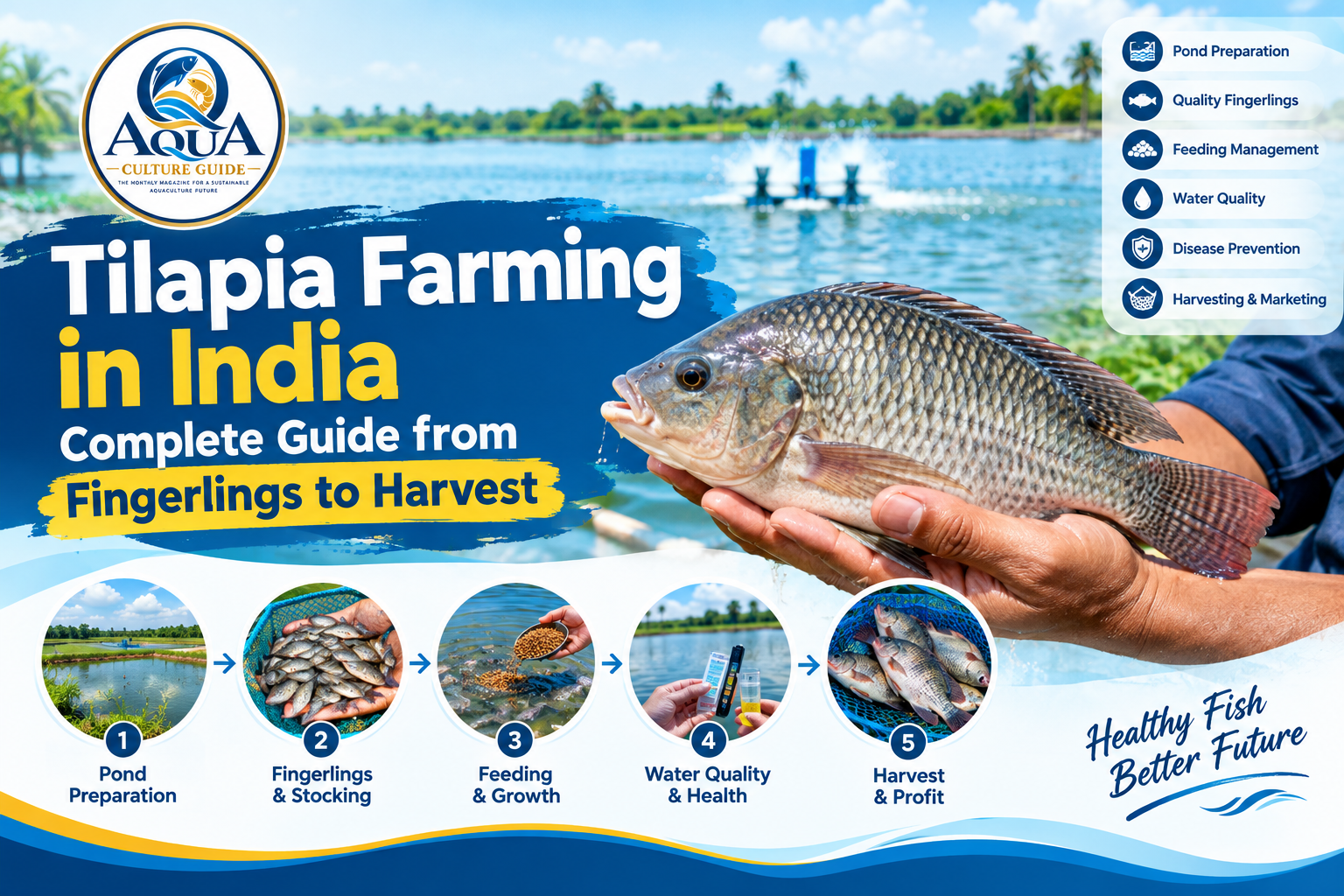
tilapia farming in India with this complete guide covering pond preparation, quality fingerlings, stocking density, feeding, water quality, disease prevention, harvesting and farm management.
Introduction
Tilapia farming is becoming an important option for fish farmers looking to diversify their aquaculture businesses. Tilapia is a fast-growing freshwater fish that can adapt to a range of farming conditions when managed properly. It is popular in many countries because of its growth potential, relatively efficient feed use, and demand in domestic and international markets.
In India, tilapia farming may offer opportunities for farmers with suitable land, reliable water resources, good-quality seed, and access to buyers. However, profitability depends on stocking management, feed costs, water quality, survival, market price, and compliance with applicable aquaculture regulations.
The success of a tilapia farm does not depend on stocking fish alone. Farmers must plan the entire production cycle, from selecting an appropriate culture system and sourcing healthy fingerlings to feeding, monitoring growth, preventing disease, and harvesting at the right size.
This guide explains how to start and manage tilapia farming in India, step by step.
What Is Tilapia Farming?
Tilapia farming is the controlled rearing of tilapia fish in ponds, tanks, cages, or other suitable aquaculture systems.
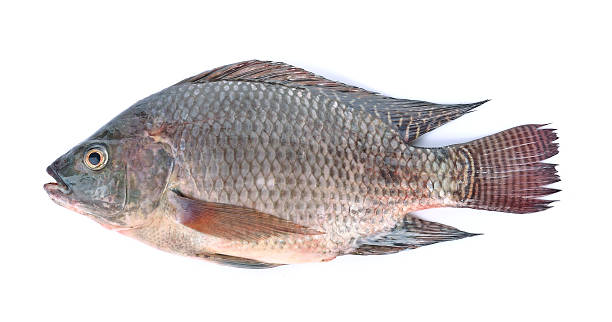
One commonly farmed species is the Nile tilapia (Oreochromis niloticus). Farmers may also encounter improved strains developed for faster growth and more uniform harvest sizes.
Tilapia can consume formulated feeds and natural food organisms in the water. However, commercial production generally requires planned feeding, stocking management, water-quality monitoring, and regular assessment of fish growth.
Why do farmers consider tilapia farming?
- Relatively fast growth under suitable conditions.
- Ability to use formulated feeds and natural pond productivity.
- Potential for production in different freshwater farming systems.
- Availability of domestic markets in some regions.
- Opportunity to diversify an existing fish farming business.
Important for Indian farmers: Tilapia culture is subject to Indian fisheries and aquaculture rules. Before stocking, verify that the proposed species or strain, seed source, culture system, and farm location comply with current requirements. Do not assume that every tilapia strain or culture method is automatically permitted.
Which Tilapia Species Is Suitable for Farming in India?
Choosing the right species or strain is an important first step.
Nile tilapia (Oreochromis niloticus)
A widely farmed tilapia species known for its adaptability and growth potential. Actual performance depends on the strain, water conditions, feed and management.
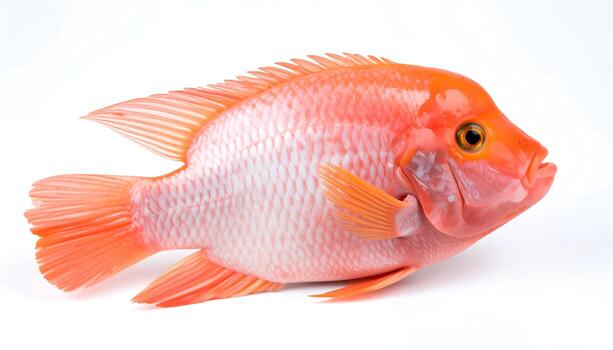
Red tilapia
A group of tilapia varieties with reddish or pinkish coloration. Market preference varies by region, so confirm buyer demand and the permitted strain before investing.
Why do commercial farms often prefer all-male tilapia?
Under suitable management, all-male populations can provide more uniform growth and reduce unwanted reproduction in grow-out ponds. Mixed-sex tilapia may reproduce in ponds, creating overcrowding and competition for food, which can result in uneven fish sizes.
All-male seed should come from a reliable, authorized supplier with clear information about the strain and production method. Do not assume that a batch is all-male based only on the supplier's verbal assurance.
Requirements Before Starting a Tilapia Farm
Before investing in pond construction, assess the following factors.
Requirement What to check
Land Suitable soil, drainage and access
Water Reliable supply with acceptable quality
Pond Appropriate depth, area and water retention
Fingerlings Healthy seed from a verified supplier
Feed Reliable supply of nutritionally appropriate fish feed
Electricity Aeration and pumping requirements
Market Local buyers, fish size preference and transport
Finance Construction, seed, feed, labour and operating costs
Regulations Applicable state and national permissions
Biosecurity Measures to prevent disease and fish escape
A farm may have good growth performance and still make a loss if feed prices are high or buyers offer a low price. Market research should therefore be completed before stocking.
Step-by-Step Guide to Tilapia Farming in India
Step 1: Select a suitable site
Choose a location with a reliable freshwater source, suitable soil, good drainage, road access and proximity to fish markets.
Check the following before starting:
- The pond can retain water without excessive seepage.
- Water is free from known contamination sources.
- Flooding will not cause fish to escape into natural water bodies.
- Water can be drained or exchanged when required.
- Electricity is available if aerators or pumps are needed.
- The location meets applicable state fisheries requirements.
Avoid sites where untreated industrial wastewater, pesticide runoff or other pollutants may enter the pond.
Step 2: Prepare the pond
Proper pond preparation reduces risks from unwanted fish, accumulated organic waste and predators.
Follow these steps:
- Harvest or remove existing fish from the pond.
- Drain the pond where practical and remove excessive accumulated sludge.
- Repair pond bunds, inlet pipes, outlets and drainage channels.
- Install screens at water inlets and outlets to prevent unwanted fish entry and fish escape.
- Test pond soil and water before deciding whether lime is required.
- Fill the pond with suitable water and allow conditions to stabilize.
- Check water quality before introducing fingerlings.
Step 3: Arrange quality tilapia fingerlings
Fingerling quality is one of the biggest factors influencing farm performance.
Purchase seed only from a legally authorized and reliable supplier. Ask for documentation of the strain, source, health status and any applicable permissions.
Before purchasing, check:
- Fingerlings are active and swim normally.
- Fish are reasonably uniform in size.
- There are no obvious wounds, ulcers or abnormal swimming patterns.
- The supplier provides the expected quantity and size.
- Transport and stocking arrangements minimize stress.
- Any claim of all-male or improved-strain seed can be supported by appropriate documentation.
Step 4: Decide the stocking density
Stocking density is the number of fish introduced per unit of pond area or water volume.
It depends on:
- Pond size and depth.
- Fish strain and fingerling size.
- Water exchange and dissolved oxygen.
- Aeration capacity.
- Feed quality and feeding management.
- Target harvest weight.
- Farmer experience and market requirements.
Example: Calculate fingerlings for a pond
Suppose a pond has an area of 1 acre.
One acre is approximately 4,047 square metres.
If a suitable farm-specific plan recommends 2 fish per square metre:
4,047x2=8,094fish
The theoretical stocking quantity is approximately 8,094 fingerlings.
Before applying this example to a real pond, confirm that the density is appropriate for the permitted strain, pond management, water supply and aeration capacity.
Do not use intensive cage or tank stocking rates for an earthen pond. Higher densities generally require stronger oxygen management, waste removal and water-quality control.
Step 5: Acclimatize fingerlings before stocking
Sudden changes in water temperature or chemistry can stress fingerlings.
Follow these precautions:
- Stock during a cooler part of the day, where practical.
- Compare the transport water temperature with the pond water temperature.
- Gradually adjust the transport water to pond conditions using a suitable acclimatization procedure.
- Avoid pouring transport water into the pond if it may introduce contaminants or pathogens.
- Release fish gently without overcrowding them in nets or containers.
- Observe their swimming and behaviour after release.
Step 6: Manage feeding correctly
Feed is often one of the largest operating expenses in commercial tilapia farming. Good feeding practices support growth and help limit waste.
Growth stage Feeding approach
Small fingerlings Small pellets or crumble appropriate to mouth size
Juveniles Regular feeding with suitable grow-out starter feed
Growing fish Adjust pellet size and ration as fish gain weight
Near harvest Continue suitable feed while monitoring appetite and water quality
Daily feeding procedure
- Estimate fish biomass using representative sample weights and a realistic survival estimate.
- Calculate a starting feed ration using a suitable feed manufacturer's guide.
- Distribute feed evenly in consistent feeding areas.
- Observe feeding response and leftover feed.
- Reduce or suspend feeding when fish show abnormal appetite or water quality is unsafe.
- Record feed use and investigate unexpected changes in consumption.
Excess feed increases waste accumulation and can reduce dissolved oxygen. Feeding management should therefore be linked to water-quality monitoring.
Step 7: Maintain water quality
Good water quality is essential for fish growth, feed utilization and survival.
The following are general operating targets for freshwater tilapia culture, not substitutes for site-specific advice.
Parameter General target or action
Water temperature Approximately 25–32°C is a useful growth range
Dissolved oxygen (DO) Aim for at least 5 mg/L where practical
pH Approximately 6.5–8.5
Ammonia Keep unionized ammonia as low as possible; monitor total ammonia alongside pH and temperature
Nitrite Monitor regularly and keep within safe limits for the system
Water clarity and color Observe for sudden changes, blooms or unusual odours
Daily water-quality checklist
- Check fish activity, especially early in the morning.
- Monitor dissolved oxygen with a suitable meter where available.
- Record water temperature and pH.
- Inspect for unusual water colour, foam or odour.
- Check aerators and backup power.
- Remove dead fish promptly and investigate possible causes.
- Test ammonia and nitrite when conditions change or fish show stress.
If fish are gasping at the surface, congregating near water inlets or suddenly refusing feed, check dissolved oxygen and other water-quality parameters immediately.
Step 8: Monitor fish growth and biomass
Do not rely only on the number of days since stocking to estimate growth.
Sample fish regularly using an appropriate netting method. Weigh a representative sample, count the fish and calculate average body weight.
Average body weight (g)}=Sample weight (g)/Number of fish sampled
To estimate standing biomass:
Biomass (kg)=Estimated live fish count x ABW (g)/1000
For example, if the estimated live population is 7,000 fish and average body weight is 250 g:
7,000x250/1000=1,750
The estimated standing biomass is 1,750 kg.
Use biomass estimates to guide feeding and production planning, while accounting for mortality and any partial harvests.
Step 9: Prevent disease and maintain biosecurity
Disease risks increase when fish are stressed, water quality deteriorates or pathogens enter the farm.
Important precautions include:
- Buy fingerlings from reliable sources.
- Avoid introducing fish of unknown health status.
- Clean and disinfect equipment appropriately between ponds.
- Prevent contaminated water from entering culture ponds.
- Remove dead and moribund fish promptly.
- Avoid sharing equipment between farms without suitable disinfection.
- Maintain records of mortality, feed intake and water-quality changes.
- Seek diagnosis from a qualified aquatic animal health professional when unusual mortality occurs
Step 10: Plan the harvest
Harvest timing depends on market demand, fish size, growth rate, water temperature, survival, feed costs and buyer requirements.
Before harvesting:
- Confirm the preferred market size with buyers.
- Sample fish to estimate average harvest weight.
- Estimate the remaining standing biomass.
- Arrange labour, nets, transport and suitable containers.
- Plan water management and harvest timing to minimize fish stress.
- Handle fish carefully and maintain hygienic conditions.
- Weigh the harvested fish and record the total quantity.
How Long Does Tilapia Take to Reach Harvest Size?
Tilapia growth varies significantly with strain, starting size, water temperature, stocking density, feed quality and management.
Under suitable warm-water conditions, some commercial systems may target market size in approximately 5–8 months, but this is only a planning estimate. Actual time to harvest may be shorter or longer.
Instead of harvesting based only on culture days, farmers should consider:
- Average body weight and growth trend.
- Market-preferred fish size.
- Feed conversion and feed cost.
- Fish health and survival.
- Water-quality conditions.
- Expected sale price and remaining production costs.
A farm-specific growth record provides a more reliable harvest plan than a fixed calendar.
How to Calculate Tilapia Farming Production
Production is based on the number of fish harvested and their average harvest weight.
Harvest biomass (kg)}= Number harvested x Average harvest weight (g)/1000
Example:
Suppose 6,500 fish are harvested at an average weight of 400 g.
6,500x400/1000=2,600Kg
Total harvest biomass is 2,600 kg, or 2.6 tonnes.
This is harvested production, not profit. Financial performance must account for fingerling purchases, feed, electricity, labour, water management, transport, mortality and other costs.
Tilapia Farming Cost and Profit Calculation
Before starting a commercial farm, prepare a budget for the complete production cycle. Profitability depends heavily on the price of feed, survival rate, harvest weight and the price buyers actually pay.
Major expenses
- Pond construction or lease.
- Fingerlings and transport.
- Commercial feed.
- Electricity, aeration and pumping.
- Labour and routine maintenance.
- Water testing and fish-health management.
- Harvesting, packing and transportation.
- Permissions, biosecurity and other operating expenses.
Simple profit calculation
Net profit=Total revenue-Total production cost
For example, consider a hypothetical crop:
Item Illustrative amount
Harvested fish 2,600 kg
Selling price ₹130/kg
Total revenue ₹3,38,000
Total production cost ₹2,60,000
Estimated operating profit ₹78,000
Calculate your own farm budget
Tilapia profit estimator
Enter your expected harvest and local figures to estimate revenue and operating profit.
Expected harvest (kg)
Selling price (₹ per kg) - 130
Total production cost (₹)- 260000
Estimated revenue - ₹3,38,000
Estimated operating profit / loss - ₹78,000
Complete Tilapia Farming Checklist
[ ] Verify current permissions and applicable tilapia farming regulations.
[ ] Confirm local demand, buyer requirements and expected selling price.
[ ] Assess land suitability, water supply, drainage and electricity.
[ ] Prepare the pond and repair bunds and drainage structures.
[ ] Install suitable screens to prevent fish escape.
[ ] Purchase healthy fingerlings from an authorized source.
[ ] Verify strain information and all-male seed claims where applicable.
[ ] Calculate a suitable stocking density for the culture system.
[ ] Acclimatize fingerlings before release.
[ ] Select an appropriate feed for each growth stage.
[ ] Monitor feed intake and record daily feed use.
[ ] Monitor dissolved oxygen, pH, temperature and other relevant water parameters.
[ ] Sample fish and record average body weight regularly.
[ ] Estimate standing biomass and adjust feed according to actual conditions.
[ ] Inspect fish for disease and remove mortalities promptly.
[ ] Maintain farm biosecurity and seek professional advice for disease problems.
[ ] Confirm harvest size, market arrangements and transport.
[ ] Record total harvest, sales, feed expenses and other production costs.
Common Mistakes to Avoid in Tilapia Farming
- Stocking without checking regulations: Verify the approved species, strain, seed supplier and culture system before stocking.
- Using mixed-sex fish without a population-management plan: Uncontrolled breeding can result in overcrowding and smaller fish.
- Overstocking the pond: Stocking beyond the system's capacity can cause oxygen shortages, poor growth and increased mortality.
- Overfeeding: Uneaten feed adds organic waste and increases production costs.
- Ignoring water quality: Fish may experience stress even when the pond looks healthy.
- Buying unverified fingerlings: Poor seed quality can lead to uneven growth and disappointing harvests.
- Harvesting without checking the market: Fish size and buyer demand can affect the final selling price.
- Failing to keep records: Without accurate records, farmers cannot properly assess growth, survival, feed costs or profitability.
Conclusion
Tilapia farming can be a useful freshwater aquaculture opportunity in India when the farm is planned carefully and managed scientifically. Success begins with selecting a suitable location, verifying regulatory requirements and purchasing healthy fingerlings. It continues through appropriate stocking, balanced feeding, water-quality monitoring, disease prevention and timely harvesting.
Farmers should base decisions on actual growth, survival, market demand and production costs rather than relying on fixed stocking or profit figures.
The key to successful tilapia farming is simple: start with verified seed, maintain good water quality, manage feed carefully, keep accurate records and plan the market before harvest.
Questions & Answers
Q1.Is tilapia farming profitable in India?
It can be profitable when suitable seed, feed, water quality, stocking density and market access are available. Profitability varies with local prices, operating expenses, survival and harvest size.
Q2.How many tilapia fish can be stocked in one acre?
The appropriate number depends on the pond and production system. For example, at 2 fish per square metre, one acre would accommodate approximately 8,094 fish. This is a calculation example, not a universal stocking recommendation. Confirm a suitable density with a qualified fisheries professional.
Q3.How long does tilapia take to grow to market size?
Some commercial systems target harvest in around 5–8 months under suitable conditions. Growth rate, starting fingerling size, strain, temperature, feeding and stocking density all affect the actual duration.
Q4.Which tilapia feed is best?
A complete commercial feed formulated for tilapia and appropriate to the fish's growth stage is a practical choice. Check the nutritional specifications, pellet size, freshness and feeding guidance provided by the manufacturer.
Q5.Why is all-male tilapia culture preferred?
All-male culture can reduce uncontrolled reproduction and improve harvest-size uniformity under suitable management. Seed quality and the reliability of the supplier are important.
Q6.What is the ideal water temperature for tilapia farming?
Approximately 25–32°C is a useful general growth range. Performance can decline outside the preferred range, and sudden temperature changes can stress fish.
Related articles
భారతదేశంలో తిలాపియా చేపల పెంపకం – మార్కెట్ అవకాశాలు, ప్రభుత్వ నిబంధనలు మరియు ఆధునిక సాగు పద్ధతులు
భారతదేశంలో తిలాపియా చేపల పెంపకం ఎలా చేయాలి? మార్కెట్ అవకాశాలు, ప్రభుత్వ అనుమతులు, చెరువు సాగు, బయోఫ్లాక్, RAS విధానాలు, పిల్లల ఎంపిక, మేత నిర్వహణ మరియు దిగుబడి గురించి పూర్తి సమాచారం.
Cage Culture Subsidyభారతీయ రిజర్వాయర్లలో కేజ్ ఫిష్ ఫార్మింగ్: సాంకేతికత, అనుమతులు మరియు పెట్టుబడి వివరాలు
భారతదేశంలోని రిజర్వాయర్లలో కేజ్ ఫిష్ ఫార్మింగ్ ఎలా ప్రారంభించాలి? అవసరమైన సాంకేతికత, ప్రభుత్వ అనుమతులు, పెట్టుబడి, చేపల జాతులు, మేత నిర్వహణ మరియు లాభనష్టాల గురించి పూర్తి వివరాలు తెలుసుకోండి.
Freshwater Prawn Farming in IndiaFreshwater Prawn Farming in India: రైతులకు పూర్తి సాగు మార్గదర్శిని
భారతదేశంలో మంచినీటి రొయ్యల సాగు ఎలా ప్రారంభించాలి? జెయింట్ ఫ్రెష్వాటర్ ప్రాన్ సీడ్ ఎంపిక, చెరువు తయారీ, స్టాకింగ్, ఆహారం, నీటి నాణ్యత, పెట్టుబడి, మార్కెటింగ్ గురించి పూర్తి వివరాలు తెలుసుకోండి.
PCR Testing in Shrimp Hatcheriesరొయ్యల హ్యాచరీల్లో PCR పరీక్షలు: ఫలితాలను రైతులు ఎలా అర్థం చేసుకోవాలి?
WSSV, EHP, AHPND వంటి వ్యాధికారకాలను గుర్తించడంలో PCR పరీక్షల పాత్ర, పరీక్షా నివేదికలను అర్థం చేసుకోవడం, నాణ్యమైన రొయ్య పిల్లలను ఎంపిక చేసుకోవడం గురించి రైతులు తెలుసుకోవాల్సిన పూర్తి సమాచారం.
Explore Aqua Culture Guide
Aqua companies directory
Feed, seed, probiotics & equipment suppliers
Aquaculture calculators
Feed, FCR, stocking & water quality tools
Telugu aqua magazine
Read the latest monthly issue online
All aqua news & articles
Farming, disease control and market updates
List your company free
Get found by farmers across India
Advertise with us
Magazine and website advertising options