The Future of Indian Aquaculture: Technology, Sustainability and New Opportunities
1/11/2026
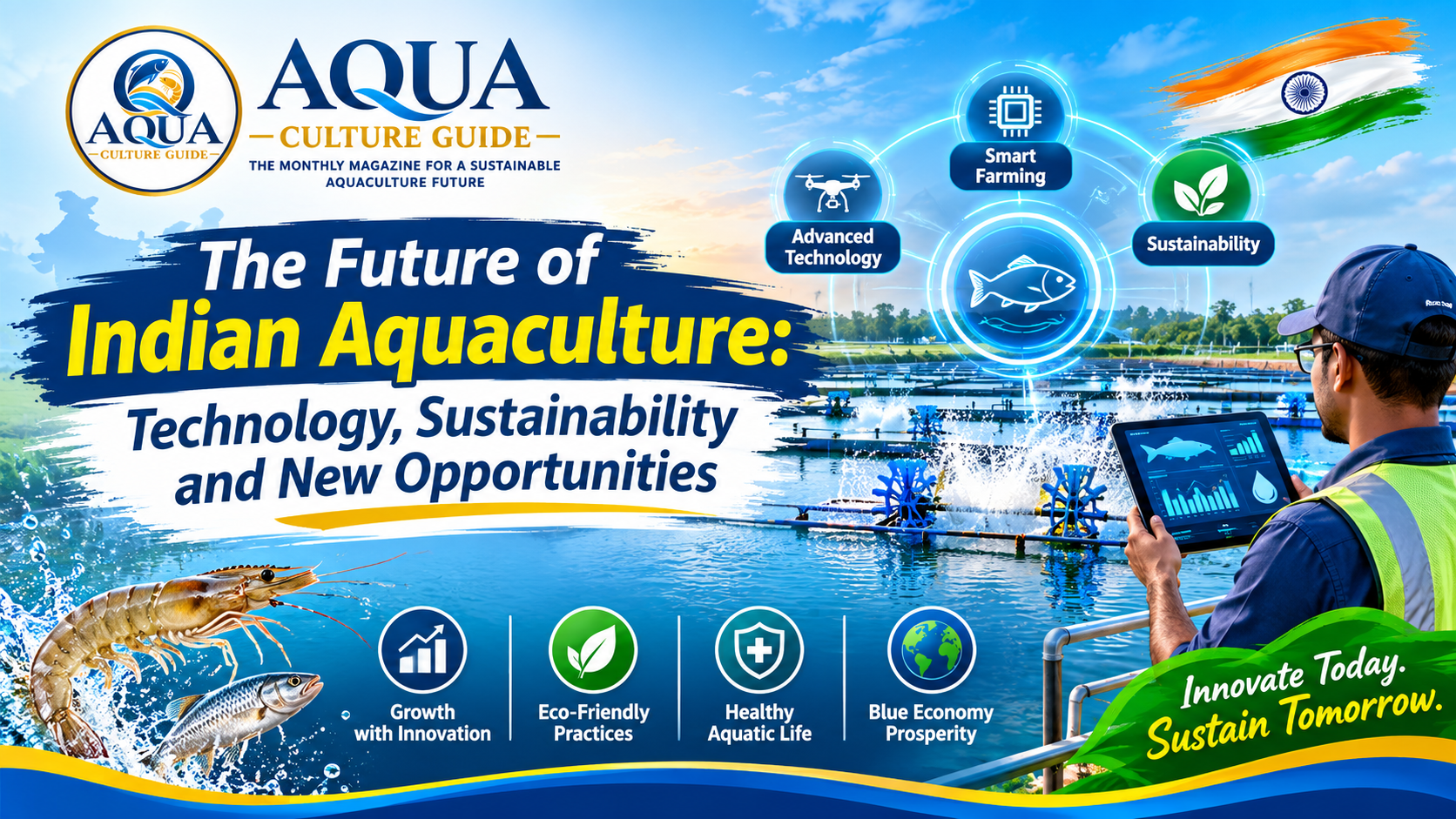
Explore the future of Indian aquaculture, including smart farming technology, sustainable fish and shrimp production, modern infrastructure and new business opportunities.
Introduction
India has become an important country in the global aquaculture and fisheries industry. Fish and shrimp farming provide food, employment and business opportunities for millions of people, including farmers, hatcheries, feed manufacturers, processing companies and exporters.
The Indian aquaculture industry is changing as new technologies, improved farming methods and growing market requirements create opportunities for the future.
Traditional farming practices are gradually being supported by modern technologies such as automatic feeders, water quality sensors, artificial intelligence (AI), Internet of Things (IoT) and digital farm management systems.
At the same time, sustainability is becoming increasingly important. Farmers need to manage water resources carefully, reduce feed wastage, maintain biosecurity and protect the environment while improving production.
The future of Indian aquaculture will not depend only on producing more fish and shrimp. It will also depend on producing them efficiently, responsibly and profitably.
Why Is Indian Aquaculture Important?
Aquaculture plays an important role in India's food production, rural economy and seafood industry.
It supports several connected businesses, including:
Fish and shrimp farms.
Fish and shrimp hatcheries.
Aquaculture feed manufacturing.
Aqua health and nutrition products.
Farm equipment and machinery.
Processing and cold storage.
Seafood transportation and exports.
Technical services and farm consultancy.
The growth of aquaculture creates opportunities beyond farming. Many small and medium businesses depend on the industry.
Technology Will Change the Future of Aquaculture
Technology is expected to play a major role in improving farm management.
A. Artificial Intelligence (AI) in Aquaculture
Artificial Intelligence can analyse farm information and help farmers make better decisions.
AI-based systems may be used for
Monitoring fish and shrimp feeding behaviour.
Identifying unusual animal activity.
Estimating fish size and biomass.
Supporting water quality analysis.
Identifying possible disease warning signs.
Analysing farm production records.
Supporting harvest planning.
For example, a camera-based system can observe fish feeding activity and identify changes that may indicate reduced appetite.
AI cannot replace farmers or confirm every disease, but it can provide useful information to support farm decisions.
B. IoT Sensors and Smart Water Monitoring
Internet of Things (IoT) technology connects sensors and equipment to digital monitoring systems.
In aquaculture, sensors can measure important water quality parameters such as:
Dissolved oxygen.
Temperature.
pH.
Salinity.
Water level.
Farmers can view readings through mobile applications or computer dashboards.
Some systems also send alerts when readings cross selected warning limits.
This can help farmers identify unusual water quality changes earlier and respond more quickly.
C. Automatic Feeding Systems
Feed is one of the major expenses in fish and shrimp farming.
Automatic feeders can provide feed at scheduled times or according to selected feeding settings.
More advanced systems may use cameras, sensors or feeding activity information to support feeding decisions.
Possible benefits include:
Better feeding control.
Reduced unnecessary feed wastage.
More consistent feeding schedules.
Reduced repetitive manual work.
Improved feed record keeping.
Farmers should still observe feeding behaviour and adjust feeding according to actual farm conditions.
D. Digital Farm Management
Digital farm management systems can help farmers record and analyse daily farm activities.
Information may include:
Seed stocking details.
Daily feed consumption.
Water quality readings.
Growth and sampling records
Mortality.
Medicine and product usage.
Electricity expenses.
Harvest quantity.
Selling price and farm income.
Accurate records help farmers understand production costs and identify areas that need improvement.
E. Advanced Aeration and Energy Management
Aeration is essential in many intensive aquaculture systems.
Modern aeration equipment and smart controls can help farmers manage oxygen supply and energy consumption.
Some systems use dissolved oxygen sensors to control connected aerators according to preset limits.
Farmers should always maintain backup equipment and emergency oxygen management plans.
Sustainable Aquaculture Will Become More Important
Sustainability means producing fish and shrimp while using natural resources responsibly and reducing avoidable environmental impacts.
It is important for the long-term success of Indian aquaculture.
A. Responsible Water Management
Water is one of the most important resources in aquaculture.
Farmers should:
Test water before using it.
Monitor important water quality parameters.
Avoid unnecessary water exchange.
Maintain proper drainage.
Prevent contamination from outside sources.
Use suitable water treatment and reuse methods where practical.
Better water management can reduce operating problems and help protect surrounding water resources.
B. Better Feed Management
Feed management has a direct effect on farm costs and water quality.
Overfeeding increases waste and can contribute to poor pond conditions.
Farmers should:
Use feed suitable for the species and growth stage.
Follow appropriate feeding practices.
Monitor feeding activity.
Maintain daily feed records.
Check feed quality and storage conditions.
Review feed conversion ratio (FCR).
Better feed management can improve production efficiency and reduce unnecessary expenses.
C. Strong Biosecurity Practices
Biosecurity helps reduce the entry and spread of disease-causing organisms.
Important practices include:
Buying healthy seed from reliable hatcheries.
Using suitable screens at water inlets.
Cleaning and disinfecting equipment appropriately.
Controlling unnecessary farm access.
Monitoring animal health.
Removing dead animals safely.
Maintaining proper waste disposal.
Good biosecurity will remain essential as farming systems become more intensive.
D. Responsible Use of Aqua Products
Probiotics, minerals, water treatments and other aquaculture products are commonly used in farm management.
Farmers should understand the purpose, ingredients, quality and recommended usage of each product.
They should avoid unnecessary product combinations and follow professional advice.
The future of the industry will require more focus on product quality, safety, transparency and evidence-based farm practices.
E. Efficient Use of Energy
Electricity is an important operating expense, particularly in intensive shrimp and fish farming.
Farmers can improve energy management by:
Maintaining aerators and pumps.
Using suitable equipment.
Monitoring electricity consumption.
Avoiding unnecessary equipment operation.
Exploring solar energy where practical.
Maintaining backup power for essential equipment.
Energy savings should never compromise required aeration or animal safety.
New Business Opportunities in Indian Aquaculture
The future of aquaculture offers opportunities for farmers, entrepreneurs, manufacturers and service providers.
A. Fish Farming
Demand for fish as a food source creates opportunities for freshwater and other suitable fish farming systems.
Potential business areas include:
Commercial pond fish farming.
Nursery and fingerling production.
Cage culture in suitable water bodies.
Integrated fish farming.
Fish seed supply.
Fish feed distribution.
Farmers should select species according to local water conditions, seed availability, technical knowledge and market demand.
B. Shrimp Farming
Shrimp farming is an important part of India's seafood export industry.
Business opportunities include:
Shrimp seed production.
Commercial shrimp farming.
Feed and nutrition products.
Water quality management products.
Farm monitoring equipment.
Harvesting and transportation services.
Processing and export businesses.
However, shrimp farming involves production, disease, weather and market risks. Proper planning is essential before investment.
C. Aquaculture Equipment and Technology
As farms adopt modern technology, demand may increase for:
Water quality sensors.
Automatic feeders.
Aerators and pumps.
Monitoring applications.
Farm management software.
Solar-powered equipment.
Pond cleaning and maintenance equipment.
Entrepreneurs can explore affordable solutions designed for the practical needs of Indian farmers.
D. Aqua Health and Nutrition Products
Farmers need quality products for nutrition, water management and animal health
Business opportunities may include:
Probiotics.
Mineral supplements.
Feed additives.
Water treatment products.
Aquaculture testing equipment.
Technical support services.
Product quality, correct labelling, suitable usage guidance and customer trust will be important for long-term success.
E. Processing, Cold Storage and Export
Aquaculture growth also creates opportunities after harvesting.
Businesses can explore:
Fish and shrimp processing.
Cold storage facilities.
Refrigerated transportation.
Packaging.
Value-added seafood products.
Domestic seafood distribution.
Export services.
Better post-harvest handling can help maintain product quality and reduce losses.
F. Aquaculture Training and Consultancy
As farming technology develops, farmers may need more technical support.
Opportunities include:
Farm management consultancy.
Water quality testing services.
Disease diagnostic support.
Worker training.
Digital farm record services.
Technical education.
Farm audits and biosecurity support.
Government Support and Infrastructure for Indian Aquaculture
Government policies, infrastructure and development programmes can influence the future of the Indian aquaculture sector.
Farmers and entrepreneurs should stay informed about relevant schemes and official guidelines.
Some important initiatives and institutions include:
Pradhan Mantri Matsya Sampada Yojana (PMMSY): A major fisheries development programme supporting different areas of fisheries and aquaculture development. Eligibility and available assistance depend on the applicable scheme guidelines.
Pradhan Mantri Matsya Kisan Samridhi Sah-Yojana (PM-MKSSY): A programme designed to support formalisation, quality assurance and related improvements in the fisheries sector.
National Fisheries Development Board (NFDB): Supports fisheries and aquaculture development through various initiatives, training and technical activities.
Marine Products Export Development Authority (MPEDA): Plays an important role in supporting India's marine products export industry, including quality and export-related development.
Coastal Aquaculture Authority (CAA): Regulates coastal aquaculture activities under the applicable legal framework.
Before applying for financial assistance or subsidies, farmers should check current eligibility, application procedures and scheme availability through official government sources.
Challenges Facing the Future of Indian Aquaculture
Although the industry has strong potential, several challenges need attention.
A. Disease Management
Disease outbreaks can cause production losses and affect farmer income.
Better seed quality, biosecurity, diagnostics and technical support are important.
B. Rising Production Costs
Feed, seed, electricity, labour and other inputs can increase farm expenses.
Farmers need better cost tracking and efficient resource management.
C. Climate Change
Heatwaves, irregular rainfall, floods, drought and changing water conditions can affect farm production.
Climate-resilient pond design and improved monitoring will become increasingly important.
D. Market Price Fluctuations
Fish and shrimp prices can change depending on demand, supply, quality, size and market conditions.
Farmers should understand their production costs and plan harvests carefully.
E. Technology Investment
Advanced equipment and digital systems may require significant initial investment.
Affordable and easy-to-use technology will be important for wider adoption.
F. Skill Development
Modern farming requires knowledge of water quality, disease prevention, digital equipment, business management and market requirements.
Continuous training will be important for farmers and farm workers.
Complete Checklist for the Future-Ready Aquaculture Farm
Farmers can use this checklist to prepare their farms for modern and sustainable aquaculture.
Farm Planning Checklist
Select a suitable location for farming.
Understand local water availability.
Check soil and water suitability.
Study seasonal weather conditions.
Identify the target species.
Understand local market demand.
Estimate total investment and operating costs.
Check applicable permissions and regulations.
Seed and Stocking Checklist
Purchase seed from reliable hatcheries.
Check seed health and quality.
Maintain stocking records.
Select suitable stocking density.
Follow proper acclimatisation procedures.
Maintain seed purchase documents.
Water Quality Checklist
Monitor dissolved oxygen.
Record water temperature.
Check pH regularly.
Monitor salinity where relevant.
Check alkalinity.
Monitor ammonia and nitrite.
Maintain proper water exchange practices.
Use reliable testing equipment.
Keep water quality records.
Feed Management Checklist
Select suitable feed.
Check feed quality and storage.
Follow appropriate feeding schedules.
Observe feeding behaviour.
Avoid overfeeding.
Record daily feed consumption.
Calculate FCR.
Review feed expenses regularly.
Technology Checklist
Explore suitable IoT sensors.
Consider automatic feeders.
Use digital farm records.
Monitor important water parameters.
Check equipment accuracy.
Maintain backup power.
Train workers to use digital systems.
Evaluate technology costs before investing.
Sustainability Checklist
Reduce unnecessary water exchange.
Avoid feed wastage.
Maintain farm biosecurity.
Manage sludge and waste responsibly.
Use energy efficiently.
Follow responsible product usage.
Protect surrounding water resources.
Maintain records of farm inputs and outputs.
Business and Financial Checklist
Record seed and feed expenses.
Track electricity and labour costs.
Calculate production costs
Understand break-even price.
Maintain harvest records.
Compare farm-gate prices.
Identify potential buyers
Review insurance and financial support options.
Maintain an emergency budget where possible.
Step-by-Step Guide: How to Prepare for the Future of Indian Aquaculture
Farmers and entrepreneurs can follow these steps to build a modern, efficient and sustainable aquaculture business.
Step 1: Study the Local Aquaculture Market
Understand which fish or shrimp species have demand in your area.
Study local buyers, processing companies, hatcheries, feed suppliers and market prices.
Do not start farming only because a particular species is popular. Check whether it is suitable for your location and budget.
Step 2: Select the Right Farming System
Choose a farming system according to your land, water resources, investment and technical knowledge.
Possible systems include:
Freshwater pond fish farming.
Brackishwater shrimp farming.
Cage culture.
Biofloc systems.
Recirculating aquaculture systems (RAS).
Nursery and hatchery operations.
Each system has different costs, technical requirements and risks.
Step 3: Prepare a Business Plan
Calculate the expected investment and operating expenses
Include:
Pond construction or preparation.
Seed purchase.
Feed.
Electricity.
Labour.
Aeration and pumping.
Water testing.
Health management.
Harvesting and transportation.
Estimate possible production and selling prices conservatively.
Step 4: Choose Quality Seed and Feed
Purchase healthy seed from reliable suppliers.
Select feed according to species, growth stage and farm requirements.
Maintain purchase records and monitor feed performance.
Step 5: Introduce Proper Water Quality Management
Create a regular water testing schedule.
Monitor important parameters and maintain records.
Prepare suitable aeration and emergency management arrangements.
Step 6: Adopt Technology Gradually
Start with technology that solves an actual farm problem.
For example, begin with digital records or dissolved oxygen monitoring.
After understanding the benefits, consider automatic feeding, additional sensors or advanced farm management software.
Step 7: Strengthen Biosecurity and Sustainability
Prepare a farm-level biosecurity plan.
Use suitable water management, control unwanted entry and maintain good waste disposal practices.
Avoid unnecessary use of farm inputs and follow recommended product instructions.
Step 8: Train Farm Workers
Train workers in:
Feeding management.
Water quality testing.
Aerator operation.
Seed handling.
Animal health observation.
Equipment maintenance.
Emergency procedures.
Farm record keeping.
Step 9: Maintain Daily Farm Records
Record feed consumption, water quality, growth, mortality, expenses and other important activities.
Review the records regularly to identify problems and improve farm performance.
Step 10: Plan Harvesting and Marketing
Identify potential buyers before harvest.
Understand the quality, size, handling and delivery requirements of the market.
Arrange harvesting, weighing, icing, transportation and payment terms in advance.
Step 11: Review Farm Performance
After every culture cycle, review:
Total production.
Survival rate.
Feed conversion ratio.
Total operating cost.
Selling price.
Profit or loss.
Major production problems.
Use the results to improve the next culture cycle.
Step 12: Expand Carefully
Once the farming system becomes stable and financially manageable, consider expanding production or adding new business activities.
Expansion should be based on actual farm performance, market demand and available resources.
What Will Indian Aquaculture Look Like in the Next 10 Years?
The coming years may bring significant changes to the Indian aquaculture industry.
Some important developments to watch include:
More Smart Farms: IoT sensors, digital monitoring and automated equipment may become more common.
Better Feed Efficiency: Improved feed formulations and feeding technologies may help reduce waste and improve production efficiency.
Stronger Biosecurity: Farmers may adopt better disease prevention, diagnostics and farm-level monitoring.
Sustainable Production: More attention may be given to responsible water use, waste management, energy efficiency and traceability.
Value-Added Seafood: Processing and value-added products may create new opportunities in domestic and international markets.
Digital Market Connections: Online platforms may help farmers access buyers, suppliers, technical information and market services.
Skill Development: Training in modern farming, technology and business management may become increasingly important.
Conclusion
The future of Indian aquaculture offers opportunities for farmers, entrepreneurs, manufacturers, technology providers and seafood businesses.
Technology can improve monitoring and farm management. Sustainable practices can support better use of water, feed and energy. Improved seed quality, biosecurity, processing and market connections can strengthen the entire industry.
However, future growth will require more than increasing production. Farmers and businesses must focus on quality, efficiency, environmental responsibility and long-term planning.
The best way to prepare is to understand local opportunities, adopt suitable technologies, maintain accurate records and improve farming practices step by step.
The future of Indian aquaculture will be shaped by smart technology, sustainable production and the people who turn new opportunities into better farming practices.
Questions & Answers
Q1.What is the future of aquaculture in India?
The future of Indian aquaculture is expected to involve greater use of technology, sustainable production, improved seed and feed, better disease management, processing infrastructure and new business opportunities.
Q2.Which technologies will influence Indian aquaculture?
Important technologies include AI, IoT sensors, automatic feeders, smart aeration, digital farm management, water quality monitoring and improved disease diagnostic tools.
Q3.What is sustainable aquaculture?
Sustainable aquaculture means producing fish and shrimp responsibly while managing water, feed, energy and other resources carefully and reducing avoidable environmental impacts.
Q4.Is shrimp farming a good business opportunity in India?
Shrimp farming can offer business opportunities, particularly in suitable coastal and brackishwater areas. However, profitability depends on seed quality, feed costs, survival, disease management, production performance and market prices.
Q5.What are the new business opportunities in Indian aquaculture?
Opportunities include fish farming, shrimp farming, hatcheries, feed manufacturing, aqua health products, water testing services, smart farming equipment, processing, cold storage and technical consultancy.
Q6.How can technology help fish and shrimp farmers?
Technology can help farmers monitor water quality, manage feeding, maintain digital records, identify unusual changes and improve production planning.
Q7.What is the role of government support in Indian aquaculture?
Government programmes and institutions can support infrastructure development, training, fisheries development, quality improvement and other sector activities. Farmers should check current scheme guidelines and eligibility before applying.
Related articles
భారతీయ రిజర్వాయర్లలో కేజ్ ఫిష్ ఫార్మింగ్: సాంకేతికత, అనుమతులు మరియు పెట్టుబడి వివరాలు
భారతదేశంలోని రిజర్వాయర్లలో కేజ్ ఫిష్ ఫార్మింగ్ ఎలా ప్రారంభించాలి? అవసరమైన సాంకేతికత, ప్రభుత్వ అనుమతులు, పెట్టుబడి, చేపల జాతులు, మేత నిర్వహణ మరియు లాభనష్టాల గురించి పూర్తి వివరాలు తెలుసుకోండి.
Freshwater Prawn Farming in IndiaFreshwater Prawn Farming in India: రైతులకు పూర్తి సాగు మార్గదర్శిని
భారతదేశంలో మంచినీటి రొయ్యల సాగు ఎలా ప్రారంభించాలి? జెయింట్ ఫ్రెష్వాటర్ ప్రాన్ సీడ్ ఎంపిక, చెరువు తయారీ, స్టాకింగ్, ఆహారం, నీటి నాణ్యత, పెట్టుబడి, మార్కెటింగ్ గురించి పూర్తి వివరాలు తెలుసుకోండి.
Tilapia farming in Indiaభారతదేశంలో తిలాపియా చేపల పెంపకం – మార్కెట్ అవకాశాలు, ప్రభుత్వ నిబంధనలు మరియు ఆధునిక సాగు పద్ధతులు
భారతదేశంలో తిలాపియా చేపల పెంపకం ఎలా చేయాలి? మార్కెట్ అవకాశాలు, ప్రభుత్వ అనుమతులు, చెరువు సాగు, బయోఫ్లాక్, RAS విధానాలు, పిల్లల ఎంపిక, మేత నిర్వహణ మరియు దిగుబడి గురించి పూర్తి సమాచారం.
PCR Testing in Shrimp Hatcheriesరొయ్యల హ్యాచరీల్లో PCR పరీక్షలు: ఫలితాలను రైతులు ఎలా అర్థం చేసుకోవాలి?
WSSV, EHP, AHPND వంటి వ్యాధికారకాలను గుర్తించడంలో PCR పరీక్షల పాత్ర, పరీక్షా నివేదికలను అర్థం చేసుకోవడం, నాణ్యమైన రొయ్య పిల్లలను ఎంపిక చేసుకోవడం గురించి రైతులు తెలుసుకోవాల్సిన పూర్తి సమాచారం.
Explore Aqua Culture Guide
Aqua companies directory
Feed, seed, probiotics & equipment suppliers
Aquaculture calculators
Feed, FCR, stocking & water quality tools
Telugu aqua magazine
Read the latest monthly issue online
All aqua news & articles
Farming, disease control and market updates
List your company free
Get found by farmers across India
Advertise with us
Magazine and website advertising options