
Shrimp Feed Ingredients: Protein, Lipids, Carbs & Minerals
26/10/2026
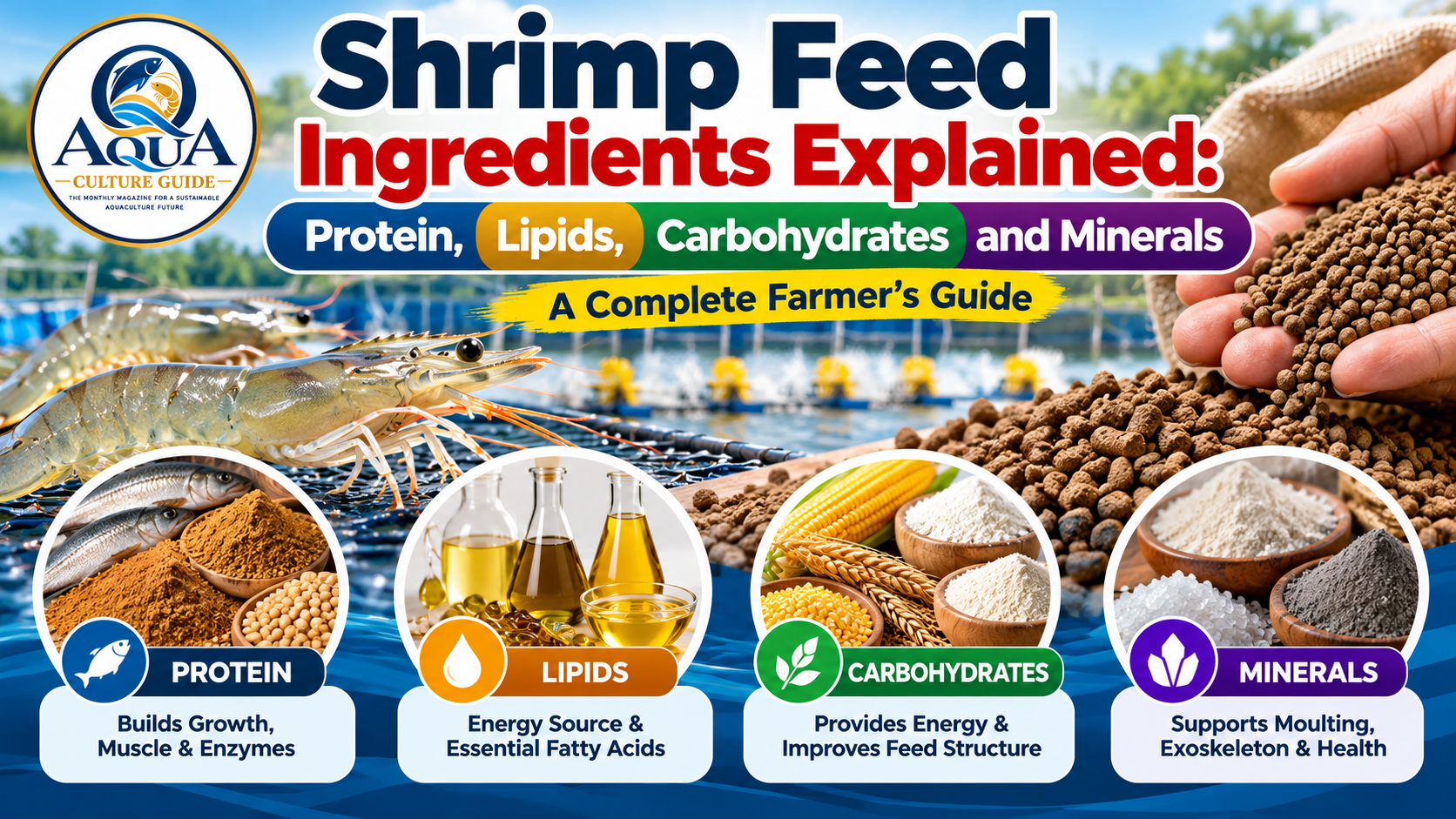
Learn how protein, lipids, carbohydrates and minerals affect shrimp growth, FCR and health. Complete guide to shrimp feed ingredients and quality checks.
Introduction
Feed is one of the most important factors determining the success of commercial shrimp farming. Whether farmers cultivate Pacific white shrimp (Litopenaeus vannamei) or black tiger shrimp (Penaeus monodon), the nutritional composition of feed directly influences growth, feed conversion ratio (FCR), moulting, survival, water quality, and overall production costs.
Shrimp feed is not simply a mixture of fishmeal, soybean meal, and grains. It is a scientifically formulated combination of nutrients designed to meet the specific nutritional and physiological requirements of shrimp at different growth stages.
The four major nutritional components farmers should understand are proteins, lipids, carbohydrates, and minerals. Vitamins, essential amino acids, and other nutritional factors are also important.
Each nutrient has a distinct function:
- Protein supports growth, tissue development, and enzyme production.
- Lipids provide concentrated energy, essential fatty acids, and components required for normal cell function.
- Carbohydrates provide an economical energy source and can contribute to pellet binding.
- Minerals support exoskeleton formation, moulting, osmoregulation, and metabolic functions.
However, more nutrients do not always mean better feed. Excess protein can increase feed cost and nitrogenous waste, while poorly balanced lipids, carbohydrates, and minerals can reduce nutritional efficiency.
Understanding feed ingredients helps farmers select suitable commercial feeds, interpret feed labels, reduce unnecessary expenditure, and improve crop performance.
Why Shrimp Feed Ingredients Matter
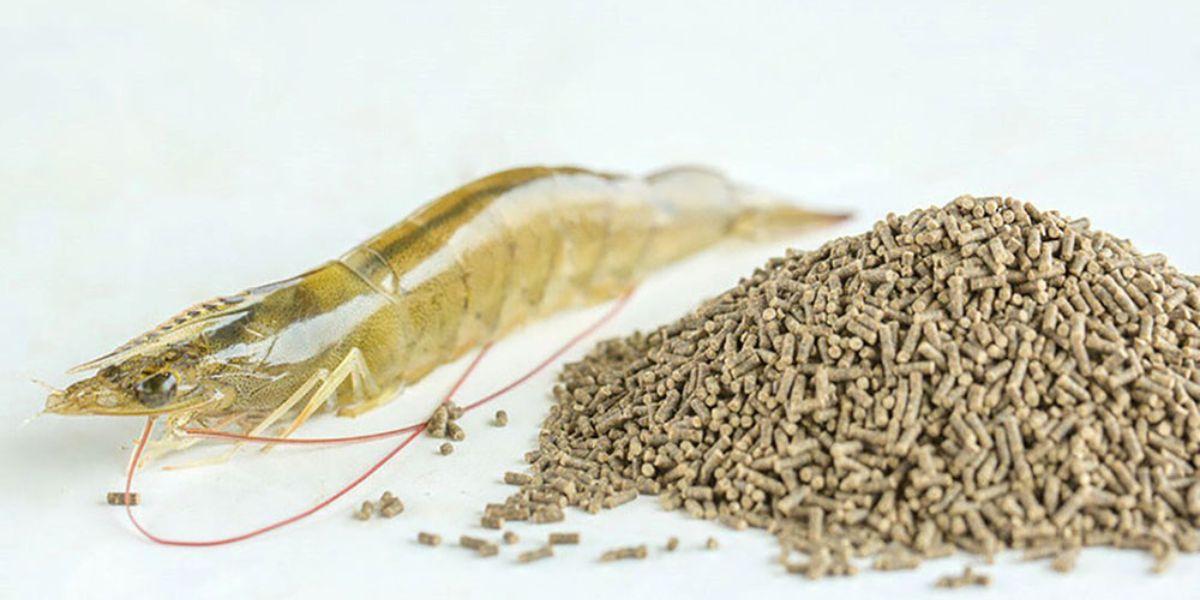
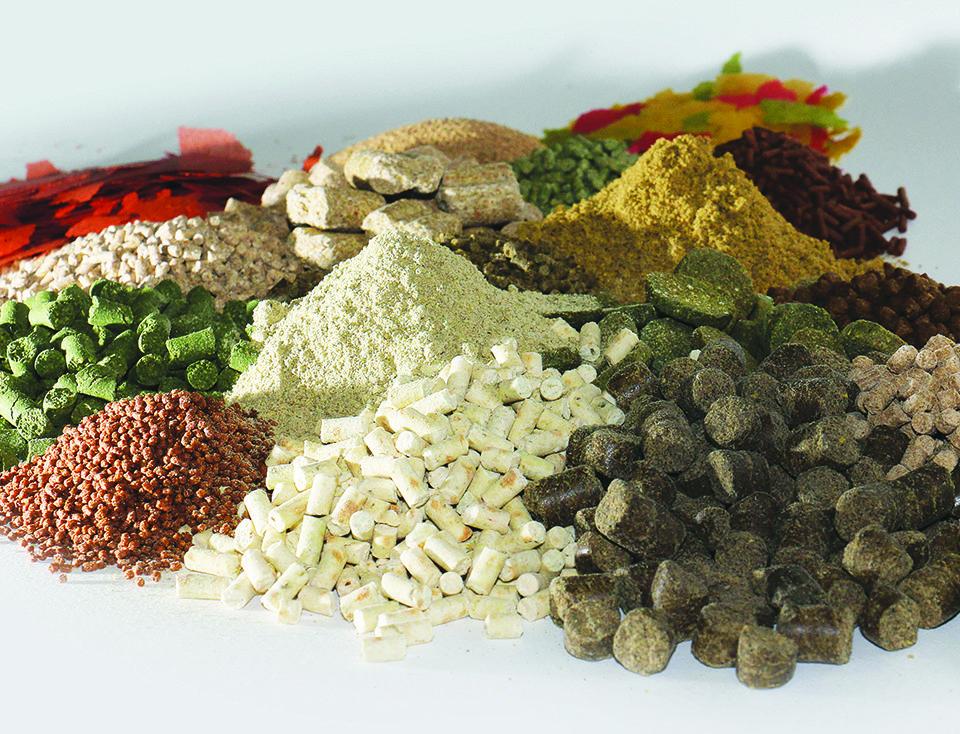
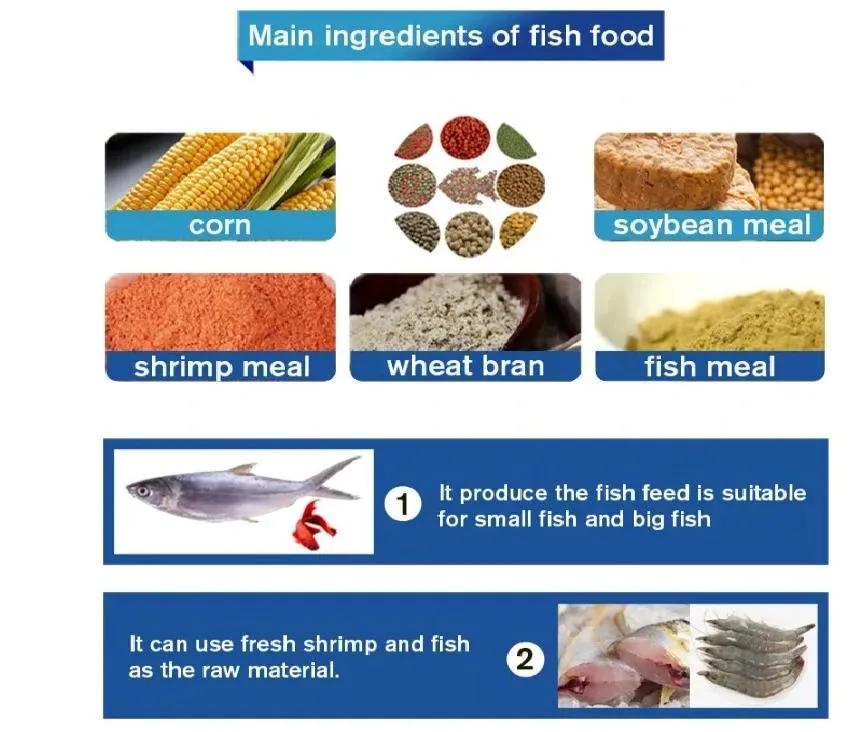
Shrimp require a balanced supply of nutrients to maintain normal biological functions and achieve efficient growth.
Feed ingredients influence:
- Growth rate and body weight gain.
- Feed intake and palatability.
- Feed conversion efficiency.
- Moulting and exoskeleton development.
- Stress tolerance and physiological health.
- Nutrient discharge and pond water quality.
- Production cost and profitability.
A feed containing a high crude protein percentage may still perform poorly if its amino-acid balance, digestibility, energy content, or physical pellet quality is unsuitable.
Therefore, farmers should evaluate overall nutrient balance and feed performance rather than focusing on a single ingredient or percentage.
Protein in Shrimp Feed: The Foundation of Growth
Protein is a major nutrient in commercial shrimp diets. It supplies amino acids required for tissue growth, enzymes, structural proteins, and many metabolic functions.
Common protein sources used in shrimp feed
Protein ingredient Nutritional role Important consideration
Fishmeal Highly digestible protein and essential amino acids Quality, freshness, sustainability and cost
Soybean meal Widely used plant protein source Processing quality and amino-acid balance
Poultry by-product meal Animal protein and amino acids Ingredient quality and processing
Squid meal Protein and potential feeding attractants Price and variable composition
Wheat gluten Concentrated plant protein Amino-acid balance
Corn gluten meal Concentrated protein source Limited lysine relative to shrimp requirements
Insect meal Alternative protein and lipid source Species, processing and digestibility
Single-cell proteins Alternative protein source Product composition and evidence of performance
The value of a protein source depends on its digestibility, essential amino-acid profile, processing, freshness, and suitability within the complete feed formulation.
How much protein do shrimp need?
Protein requirements change with shrimp size, species, culture system, and dietary energy balance.
Shrimp stage Illustrative crude protein range
Post-larvae and early starter 38–45%
Juvenile / grower 35–40%
Larger grower 32–38%
Finisher 30–35%
These ranges are broad examples for commercial penaeid shrimp feeds, not mandatory standards or precise requirements for every crop. Some feeds fall outside these ranges. Consult species-specific formulations and manufacturer recommendations.
Why amino acids are important
Shrimp require essential amino acids that must be supplied through their diet.
Important examples include lysine, methionine, threonine, arginine, and tryptophan.
A feed can contain adequate crude protein but still provide insufficient amounts of certain essential amino acids.
Farmer's tip: Do not assume that a 40% protein feed is automatically better than a 35% protein feed. Compare digestibility, growth performance, FCR, and overall nutrient balance.
Lipids in Shrimp Feed: Energy and Essential Fatty Acids
Lipids include fats and oils. They are concentrated sources of dietary energy and supply essential fatty acids needed for normal shrimp growth and physiological function.
Major functions of lipids
- Supply energy for metabolic activities.
- Provide essential fatty acids.
- Support normal cell membrane structure.
- Help absorb fat-soluble vitamins A, D, E, and K.
- Contribute to normal growth and reproductive physiology.
Common lipid sources
Lipid source Key characteristics
Fish oil Provides marine fatty acids, including EPA and DHA
Soybean oil Plant-derived energy and fatty acids
Canola oil Source of unsaturated fatty acids
Algal oil May provide specific long-chain omega-3 fatty acids
Poultry fat Energy source with variable fatty-acid composition
Other vegetable oils May partially replace marine oils when properly balanced
How much lipid is required?
Many commercial penaeid shrimp feeds contain approximately 5–10% crude lipid, but the optimal level depends on the formulation, shrimp stage, and fatty-acid requirements.
Shrimp also require appropriate dietary cholesterol and phospholipids because of their specific lipid metabolism.
Problems caused by poor lipid balance
Insufficient essential fatty acids: May reduce growth and normal physiological performance.
Excessive dietary energy: Can reduce the balance between protein and energy intake.
Oxidized oils: Rancid fats may reduce feed quality and contribute to oxidative stress.
Improper storage: Heat, oxygen, and prolonged storage can accelerate lipid oxidation.
Farmers should reject feed that smells strongly rancid or shows signs of spoilage.
Carbohydrates in Shrimp Feed: Economical Energy Sources
Carbohydrates are an important part of many commercial shrimp feed formulations.
They can provide energy, reduce the need to use expensive protein for energy, and improve feed processing and pellet formation.
Common carbohydrate sources
- Wheat flour.
- Rice bran.
- Corn and corn-derived ingredients.
- Cassava or tapioca starch.
- Wheat middlings.
- Other processed cereal ingredients.
Functions of carbohydrates
Energy supply: Digestible carbohydrates can contribute to metabolic energy.
Protein sparing: Adequate non-protein energy may allow dietary amino acids to be used more efficiently for growth.
Pellet binding: Starches can improve pellet structure when properly processed.
Feed economics: Cereal and starch ingredients may reduce formulation costs..
How much carbohydrate can shrimp utilize?
There is no single ideal carbohydrate percentage for all shrimp feeds.
Utilization depends on carbohydrate type, starch processing, shrimp species, size, and the overall protein-to-energy balance.
Shrimp generally utilize appropriately processed starches more effectively than some raw or highly fibrous carbohydrate sources.
Excessive poorly digestible carbohydrate or fibre can reduce nutrient utilization and increase waste.
Farmer's tip: A feed with more carbohydrate is not necessarily inferior. Its value depends on digestibility, nutrient balance, and actual growth performance.
Minerals in Shrimp Feed: Essential for Moulting and Exoskeleton Development
Minerals are essential nutrients required for structural development, osmoregulation, enzyme activity, and normal metabolism.
Shrimp can obtain some minerals from both feed and the surrounding water.
However, the availability of minerals in pond water depends on salinity, ionic composition, and other environmental conditions.
Important minerals and their functions
Mineral Major functions
Calcium Exoskeleton mineralization and physiological regulation
Phosphorus Energy metabolism, growth and structural functions
Magnesium Enzyme activity and physiological regulation
Potassium Osmoregulation and cellular function
Sodium Osmoregulation and nerve function
Zinc Enzyme systems and normal growth
Copper Enzyme function and oxygen transport proteins
Manganese Enzyme activity and metabolism
Selenium Antioxidant-related enzyme functions
Iron Metabolic and enzyme functions
Minerals and shrimp moulting
Shrimp periodically shed their exoskeleton to grow.
After moulting, the new exoskeleton must harden through physiological processes involving mineral regulation.
An inappropriate mineral balance, poor water quality, or other stressors may contribute to moulting problems.
However, soft-shell conditions are not always caused by mineral deficiency. They may also relate to the normal post-moult period, environmental stress, nutrition, or disease.
Why water salinity matters
In low-salinity shrimp farming, water may contain insufficient concentrations or unsuitable ratios of important ions such as potassium and magnesium.
Farmers should assess water ionic composition rather than adding minerals indiscriminately.
Excessive or poorly selected mineral supplementation can waste money and may disrupt water chemistry.
Important: Feed mineral premixes and pond-water mineral amendments serve different purposes. One should not automatically be substituted for the other.
Vitamins and Other Essential Feed Components
Although proteins, lipids, carbohydrates, and minerals are central to shrimp nutrition, other components also deserve attention.
Vitamins
Vitamins support normal metabolism, antioxidant functions, growth, and physiological health.
Important examples include vitamin C, vitamin E, B-complex vitamins, and other fat-soluble vitamins.
Phospholipids and cholesterol
These are particularly important in shrimp nutrition and should be considered when evaluating lipid sources and complete formulations
Feed attractants and palatability ingredients
Some formulations use marine-derived ingredients or other compounds to improve feed acceptance.
Functional feed additives
Commercial feeds may include probiotics, prebiotics, enzymes, organic acids, or other functional additives.
Their effectiveness depends on product formulation, application, dosage, and evidence. No additive should be treated as a guaranteed solution for poor growth or disease.
Understanding the Complete Nutritional Composition of Shrimp Feed
The following table summarizes the major nutrients in commercial shrimp feeds.
Nutrient Illustrative feed content Primary function
Crude protein 30–45% Growth and tissue development
Crude lipid 5–10% Energy and essential fatty acids
Carbohydrates Formulation-dependent Energy and pellet structure
Minerals Formulation-dependent Moulting, osmoregulation and metabolism
Vitamins Small, specific quantities Metabolic and physiological functions
Moisture Often around 10–12% or less Storage stability and feed quality
These values are illustrative and must not be added together as a fixed feed recipe. Crude protein, lipid, and moisture values are commonly reported on feed labels, while carbohydrate content is not always directly declared. Mineral premixes and ash content are also not interchangeable measurements.
Complete Step-by-Step Guide to Evaluating Shrimp Feed Ingredients
Step 1: Identify the shrimp species and growth stage
Determine whether the feed is intended for vannamei, black tiger shrimp, or another species. Record average body weight and select the appropriate starter, grower, or finisher formulation.
Step 2: Examine the feed label
Check crude protein, crude fat, fibre, moisture, ash, manufacturing date, batch number, and other declared specifications.
Step 3: Evaluate protein quality
Review the ingredient list, digestibility information where available, and essential amino-acid balance. Do not judge quality by protein percentage alone.
Step 4: Assess lipid sources
Check whether the formulation provides appropriate energy and essential fatty acids. Look for evidence of rancidity or poor storage.
Step 5: Understand carbohydrate ingredients
Identify cereal and starch ingredients where declared. Consider digestibility, processing quality, and their contribution to feed structure.
Step 6: Review mineral and vitamin supplementation
Verify that the feed is formulated for the cultured species and farming conditions. For low-salinity farming, evaluate pond-water mineral requirements separately.
Step 7: Check pellet quality
Examine pellet size, uniformity, dust, water stability, and physical condition. Compare feeds using consistent testing conditions.
Step 8: Compare feeding cost and performance
Record feed price, consumption, shrimp growth, survival, and FCR. Evaluate feed cost per kilogram of biomass gain.
Step 9: Conduct a controlled farm evaluation
Where practical, test a new feed in comparable ponds or production units while keeping other management conditions as consistent as possible.
Step 10: Review results before repeat purchasing
Select feed based on nutritional suitability, reliable quality, shrimp performance, water quality, and total production economics
How Feed Ingredients Affect FCR and Farm Profitability
Feed Conversion Ratio (FCR) measures the amount of feed used relative to biomass gain.
FCR = Feed Consumed (kg)/Net Biomass Gain (kg)
A lower FCR generally indicates better apparent feed efficiency, provided growth, survival, and other farm conditions are comparable.
Example: Comparing two shrimp feeds
Parameter Feed A Feed B
Feed price per kg ₹80 ₹90
Achieved FCR 1.6 1.3
Feed cost per kg biomass gain ₹128 ₹117
In this hypothetical example, Feed B is more expensive per kilogram but produces a lower feed cost per kilogram of biomass gain.
The difference is ₹11 per kilogram of biomass gain.
For a net biomass gain of 5,000 kg, this would represent an illustrative feed-cost difference of ₹55,000.
Actual results depend on feed quality, stocking density, feeding practices, shrimp health, water quality, and crop conditions.
Interactive feed cost calculator
Estimate your shrimp feed cost
Feed price (₹/kg)- 85
Expected FCR - 1.4
Expected net biomass gain (kg) - 5000
Estimated feed required
7,000 kg
Total estimated feed cost
₹5,95,000
Feed cost per kg biomass gain: ₹119. Estimates exclude other farm expenses and depend on achieving the entered FCR.
Common Mistakes Farmers Make When Evaluating Feed Ingredients
Mistake 1: Choosing feed only by crude protein percentage
Protein quality and amino-acid balance matter as much as the declared crude protein concentration.
Mistake 2: Assuming higher fat always improves growth
Excessive or poorly balanced dietary lipids can reduce nutritional efficiency. Essential fatty-acid quality matters.
Mistake 3: Treating all carbohydrates as unnecessary fillers
Appropriately processed carbohydrates can supply useful energy and improve pellet formation.
Mistake 4: Adding mineral supplements without water testing
Mineral supplementation should be based on the farming system, feed formulation, and actual pond-water chemistry.
Mistake 5: Ignoring feed freshness
Oxidized oils, moisture damage, mould, and poor storage can reduce feed quality and create safety concerns.
Mistake 6: Comparing feeds only by price per bag
Farmers should calculate the actual feed cost per kilogram of biomass gain.
Mistake 7: Assuming additives can compensate for poor nutrition
Probiotics, enzymes, and other functional ingredients cannot reliably compensate for an unsuitable basic feed formulation.
Complete Shrimp Feed Ingredient Checklist for Farmers
Use this checklist before selecting or purchasing shrimp feed.
Protein quality
☐ Crude protein percentage checked
☐ Feed matches shrimp species and growth stage
☐ Protein sources reviewed where declared
☐ Amino-acid balance considered
☐ Manufacturer provides reliable nutritional specifications
Lipids and energy
☐ Crude lipid content checked
☐ Appropriate fatty-acid sources considered
☐ No rancid or unusual smell
☐ Feed stored away from heat and sunlight
☐ Energy and protein balance considered
Carbohydrates and pellet quality
☐ Major carbohydrate ingredients reviewed where available
☐ Pellet size suits shrimp body weight
☐ Pellets have consistent shape and size
☐ Excessive dust and fines are absent
☐ Water stability checked appropriately
Minerals and vitamins
☐ Feed contains an appropriate mineral premix
☐ Vitamin supplementation is appropriate
☐ Calcium and phosphorus nutrition considered
☐ Pond-water mineral balance assessed where necessary
☐ No unnecessary mineral supplementation planned
Feed safety and economics
☐ Manufacturing and expiry dates verified
☐ Batch number and manufacturer details recorded
☐ Packaging is intact and dry
☐ No visible mould or contamination
☐ Feed cost and expected FCR compared
☐ Growth, survival and feeding records maintained
Practical Recommendations for Shrimp Farmers
For effective shrimp nutrition and economical feed management, farmers should follow these principles:
- Select a nutritionally balanced feed suitable for the shrimp species and growth stage.
- Evaluate protein quality and amino-acid balance rather than relying only on crude protein percentage.
- Ensure appropriate lipid quality and essential fatty-acid supply.
- Understand the role of digestible carbohydrates in energy supply and pellet formation.
- Monitor pond-water mineral balance, particularly in low-salinity farming systems.
- Check feed freshness, packaging, pellet quality, and storage conditions.
- Maintain accurate feeding, growth, survival, and FCR records.
- Compare feed brands using actual farm performance and total feeding costs.
Conclusion
Understanding shrimp feed ingredients is essential for improving nutrition, feed efficiency, shrimp health, and farm profitability.
Proteins support growth and tissue development, lipids supply energy and essential fatty acids, carbohydrates contribute energy and pellet structure, and minerals support moulting, osmoregulation, and metabolic functions.
However, successful shrimp nutrition depends on more than the quantity of individual nutrients. The correct balance, digestibility, ingredient quality, and suitability for the shrimp's growth stage are equally important.
Farmers who understand feed labels, evaluate ingredient quality, monitor FCR, and maintain proper feeding practices can make better purchasing decisions and reduce unnecessary production costs.
The best shrimp feed is not the one with the highest protein or the most expensive ingredients. It is the feed that delivers balanced nutrition, consistent growth, healthy shrimp, and economical production.
Questions & Answers
Q1.What are the main ingredients used in shrimp feed?
Commercial shrimp feeds commonly contain fishmeal, soybean meal, other protein ingredients, fish or vegetable oils, wheat flour, starch sources, vitamins, minerals, and specialized nutritional additives.
Q2.What is the ideal protein percentage for vannamei shrimp feed?
Many commercial vannamei feeds contain approximately 30–45% crude protein, depending on the growth stage and formulation. Younger shrimp generally require more concentrated nutrition than larger shrimp.
Q3.Why are lipids important in shrimp feed?
Lipids provide energy, essential fatty acids, and components necessary for normal cellular function. Appropriate lipid nutrition also supports the absorption of fat-soluble vitamins.
Q4.Are carbohydrates necessary in shrimp feed?
Carbohydrates can provide useful dietary energy and help improve pellet binding. Their nutritional value depends on the carbohydrate source, processing method, and overall feed formulation.
Q5.Which minerals are most important for shrimp moulting?
Calcium, phosphorus, magnesium, potassium, and other minerals contribute to normal shrimp physiology. Moulting and exoskeleton development depend on both nutrition and suitable water chemistry.
Q6.Can shrimp obtain minerals directly from pond water?
Yes. Shrimp absorb certain ions from their surrounding water. However, the amount and balance of available minerals depend on salinity and water composition.
Related articles
భారతీయ రిజర్వాయర్లలో కేజ్ ఫిష్ ఫార్మింగ్: సాంకేతికత, అనుమతులు మరియు పెట్టుబడి వివరాలు
భారతదేశంలోని రిజర్వాయర్లలో కేజ్ ఫిష్ ఫార్మింగ్ ఎలా ప్రారంభించాలి? అవసరమైన సాంకేతికత, ప్రభుత్వ అనుమతులు, పెట్టుబడి, చేపల జాతులు, మేత నిర్వహణ మరియు లాభనష్టాల గురించి పూర్తి వివరాలు తెలుసుకోండి.
Freshwater Prawn Farming in IndiaFreshwater Prawn Farming in India: రైతులకు పూర్తి సాగు మార్గదర్శిని
భారతదేశంలో మంచినీటి రొయ్యల సాగు ఎలా ప్రారంభించాలి? జెయింట్ ఫ్రెష్వాటర్ ప్రాన్ సీడ్ ఎంపిక, చెరువు తయారీ, స్టాకింగ్, ఆహారం, నీటి నాణ్యత, పెట్టుబడి, మార్కెటింగ్ గురించి పూర్తి వివరాలు తెలుసుకోండి.
Tilapia farming in Indiaభారతదేశంలో తిలాపియా చేపల పెంపకం – మార్కెట్ అవకాశాలు, ప్రభుత్వ నిబంధనలు మరియు ఆధునిక సాగు పద్ధతులు
భారతదేశంలో తిలాపియా చేపల పెంపకం ఎలా చేయాలి? మార్కెట్ అవకాశాలు, ప్రభుత్వ అనుమతులు, చెరువు సాగు, బయోఫ్లాక్, RAS విధానాలు, పిల్లల ఎంపిక, మేత నిర్వహణ మరియు దిగుబడి గురించి పూర్తి సమాచారం.
PCR Testing in Shrimp Hatcheriesరొయ్యల హ్యాచరీల్లో PCR పరీక్షలు: ఫలితాలను రైతులు ఎలా అర్థం చేసుకోవాలి?
WSSV, EHP, AHPND వంటి వ్యాధికారకాలను గుర్తించడంలో PCR పరీక్షల పాత్ర, పరీక్షా నివేదికలను అర్థం చేసుకోవడం, నాణ్యమైన రొయ్య పిల్లలను ఎంపిక చేసుకోవడం గురించి రైతులు తెలుసుకోవాల్సిన పూర్తి సమాచారం.
Explore Aqua Culture Guide
Aqua companies directory
Feed, seed, probiotics & equipment suppliers
Aquaculture calculators
Feed, FCR, stocking & water quality tools
Telugu aqua magazine
Read the latest monthly issue online
All aqua news & articles
Farming, disease control and market updates
List your company free
Get found by farmers across India
Advertise with us
Magazine and website advertising options