Rainfall Management in Shrimp Ponds: Complete Guide
25/10/2026
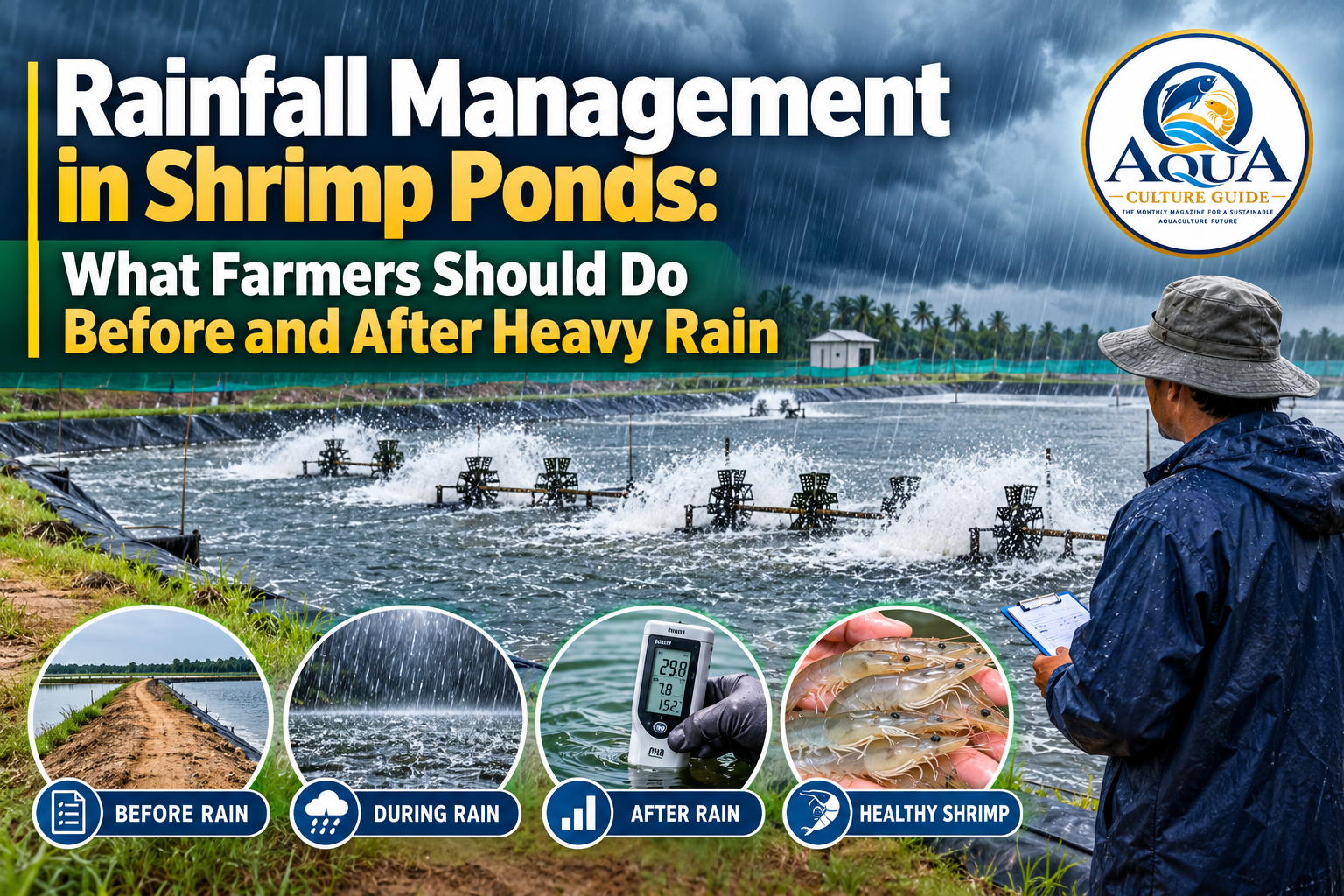
Learn how to protect shrimp ponds before, during and after heavy rain. Step-by-step rainfall management, water quality tips and farmer checklists.
Introduction
Rainfall is a natural part of shrimp farming, especially in coastal aquaculture regions of India such as Andhra Pradesh, Tamil Nadu, Odisha, West Bengal and Gujarat. While moderate rainfall may help replenish water resources, heavy or continuous rainfall can create serious challenges for shrimp farmers.
Sudden changes in salinity, pH, temperature, dissolved oxygen and water chemistry can stress cultured shrimp, reduce feeding activity, weaken their resistance to disease and, in severe situations, contribute to mass mortality.
Rainwater is generally low in dissolved salts and may be acidic depending on atmospheric conditions. When large amounts of rainwater enter a shrimp pond, they can form a temporary layer of relatively fresh water near the surface. This creates water stratification, where the upper and lower layers have different salinity, temperature and oxygen conditions.
If farmers fail to manage these changes, shrimp may experience stress, poor growth, moulting difficulties and increased susceptibility to infections.
Effective rainfall management begins before the first heavy shower and continues until pond water quality becomes stable again.
Why Heavy Rainfall Is Dangerous for Shrimp Ponds
Heavy rainfall can affect almost every important parameter in a shrimp pond.
1.1 Sudden Reduction in Salinity
Rainwater contains very little salt compared with brackish pond water. When heavy rain falls directly into the pond, surface salinity can decrease rapidly.
Possible consequences include:
- Osmotic stress in shrimp.
- Reduced feeding activity.
- Disturbances in moulting and mineral balance.
- Greater physiological stress when salinity changes are rapid.
1.2 Fluctuation in Pond pH
Rainwater and runoff may change pond pH, particularly in poorly buffered ponds. The actual response depends on alkalinity, soil chemistry and the amount of runoff entering the pond.
A rapid decrease in pH can affect shrimp metabolism, feeding and overall pond stability.
1.3 Reduction in Dissolved Oxygen
During prolonged cloudy or rainy conditions, sunlight penetration decreases and photosynthesis by phytoplankton may decline.
At the same time, shrimp, microorganisms and organic matter continue consuming oxygen.
This can result in low dissolved oxygen, particularly during nighttime and early morning.
1.4 Temperature Changes
Heavy rainfall may cool pond surface water. Rapid temperature changes can reduce shrimp activity and feed consumption.
1.5 Pond Water Stratification
Fresh rainwater may temporarily remain above denser saline water.
This layering can prevent normal mixing, creating uneven oxygen and salinity conditions.
Sudden mixing of poorly oxygenated bottom water may further stress shrimp.
1.6 Increased Disease Risk
Rainfall does not automatically cause disease. However, environmental stress, contaminated runoff and poor pond conditions can increase the risk of disease outbreaks.
Farmers should remain alert for signs associated with:
- Vibriosis and other bacterial infections.
- White Spot Syndrome Virus (WSSV).
- Acute Hepatopancreatic Necrosis Disease (AHPND).
- Gill problems and reduced feeding.
- Stress-related mortality.
Important Water-Quality Parameters During Rainfall
The following values are general management reference points for Litopenaeus vannamei culture. Actual targets depend on farm salinity, shrimp age, production system and local water chemistry.
Parameter Practical Reference Rainfall Concern
Dissolved Oxygen Preferably 5 mg/L or higher Oxygen depletion
pH Approximately 7.5–8.5 Sudden fluctuations
Salinity Farm-specific; avoid abrupt changes Rapid dilution
Temperature Approximately 28–32°C Sudden cooling
Total Alkalinity Commonly 100–150 mg/L as CaCO₃ Reduced buffering
Total Ammonia Nitrogen Keep low; interpret with pH and temperature Toxicity risk
Nitrite Keep low; evaluate according to salinity and chloride Gill and physiological stress
Water Level Maintain safe freeboard Overflow and shrimp escape
Important: These are operational reference ranges, not universal safety limits. Farmers should compare current readings with their pond's normal baseline and follow locally validated farm protocols.
What Farmers Should Do Before Heavy Rainfall
Pre-rainfall preparation is the most effective way to reduce damage.
Step 1: Monitor Weather Forecasts
Farmers should regularly check forecasts from the India Meteorological Department (IMD) and local fisheries authorities.
Pay attention to heavy-rain warnings, cyclones, thunderstorms, strong winds and flood alerts.
Recommended action: Begin preparations as soon as significant rainfall is forecast rather than waiting until water levels rise.
Step 2: Inspect Pond Embankments
Check pond bunds for cracks, erosion, seepage, weak sections and animal burrows.
Repair damaged sections and reinforce vulnerable areas.
Ensure that floodwater from nearby fields, canals or roads cannot flow directly into culture ponds.
Step 3: Maintain Adequate Freeboard
Freeboard is the vertical distance between the pond water surface and the top of the embankment.
Lower the water level in advance when necessary and when a safe, screened discharge route is available.
Avoid excessive water exchange or rapid changes in salinity.
Step 4: Inspect Drainage and Overflow Systems
Check that outlets, screens, sluice gates and drainage channels are functional.
Remove accumulated debris and ensure that discharged water cannot enter another culture pond or contaminate natural waterways.
Install or inspect shrimp escape-prevention screens.
Step 5: Check Aerators and Backup Power
Ensure paddlewheel aerators and other oxygenation systems are working properly.
Inspect electrical connections, motors and generators.
Maintain enough fuel and backup power capacity to support aeration during electricity interruptions.
Step 6: Record Baseline Water Quality
Measure and record the following before rainfall:
- Dissolved oxygen.
- pH.
- Salinity.
- Water temperature.
- Alkalinity.
- Pond water level.
- Ammonia and nitrite where testing is available.
These readings will help identify changes after rainfall.
Step 7: Review Feeding Management
Avoid increasing feed just before a predicted heavy-rain event.
Check feeding trays, recent feed consumption and shrimp behaviour.
Prepare to reduce or temporarily suspend feeding if dissolved oxygen falls, water quality changes sharply or shrimp stop feeding.
Step 8: Secure Farm Equipment
Protect feed bags, electrical equipment, medicines and water-testing kits from rain and flooding.
Ensure workers have safe access to essential equipment.
Do not allow staff to handle exposed electrical systems during thunderstorms or flooding.
What Farmers Should Do During Heavy Rainfall
Heavy rainfall requires careful monitoring, but unnecessary pond disturbance should be avoided.
Step 1: Maintain Safe Aeration
Keep adequate aeration operating where electrical and weather conditions are safe.
Aeration helps maintain dissolved oxygen and water circulation.
However, farmers should avoid unnecessarily aggressive mixing when the pond has strong salinity or oxygen stratification. Mixing should be managed using measurements from different depths.
Step 2: Monitor Dissolved Oxygen
Low oxygen can develop during prolonged cloudy weather, particularly at night and early morning.
Measure dissolved oxygen frequently when conditions are unstable.
If DO falls below the farm's action threshold, increase safe aeration and reduce oxygen demand, including feed input.
Step 3: Observe Water Levels
Watch for rapid water-level increases and possible overtopping.
Use protected, screened drainage outlets where available.
Never release pond water through an unprotected opening that allows shrimp to escape.
Step 4: Avoid Unnecessary Chemical Applications
Do not automatically apply lime, disinfectants, minerals or other chemicals simply because it is raining.
Rainfall-related changes should be confirmed through testing.
Incorrect treatment can increase stress or cause harmful changes in water chemistry.
Step 5: Adjust Feeding Based on Pond Conditions
If dissolved oxygen is low or shrimp are inactive, temporarily stop feeding.
Resume cautiously once oxygen and shrimp behaviour recover.
Avoid leaving uneaten feed to accumulate, as decomposition increases oxygen demand.
Step 6: Prevent Contaminated Runoff
Keep agricultural runoff, floodwater and drainage from neighbouring ponds away from culture ponds.
Runoff may carry sediment, pesticides, organic waste or disease-associated material.
What Farmers Should Do Immediately After Heavy Rain
The first several hours after heavy rainfall are particularly important.
Step 1: Inspect the Pond Before Taking Corrective Action
Check pond water level, bund condition, aerators, drainage screens and visible shrimp behaviour.
Look for shrimp gathering near the surface, pond edges or aerators.
Step 2: Measure Water Quality at Different Depths
Rainwater may form a fresher surface layer, so one surface reading may not represent the entire pond.
Measure salinity, temperature and dissolved oxygen at accessible surface and deeper locations where equipment permits.
Compare these values with pre-rainfall readings.
Step 3: Prioritise Dissolved Oxygen
Maintain adequate aeration, especially during the night following heavy rainfall.
If dissolved oxygen is critically low, emergency oxygenation takes priority over feeding or routine pond treatments.
Step 4: Evaluate pH and Alkalinity
Measure pH and alkalinity before deciding whether buffering is required.
If alkalinity has fallen significantly, any corrective treatment should be based on calculated pond volume, water chemistry and a validated farm protocol.
Avoid sudden, large pH corrections.
Step 5: Assess Salinity Changes
Compare current salinity with the pre-rainfall baseline.
If salinity has dropped sharply, avoid attempting to restore it immediately through uncontrolled addition of concentrated saline water or minerals.
Corrective measures should be gradual and guided by water-quality testing.
Step 6: Check Shrimp Feeding Response
Examine feed trays and observe shrimp activity.
Resume feeding gradually after water quality stabilises.
Do not immediately return to the full feeding ration if consumption remains poor.
Step 7: Monitor Ammonia and Nitrite
Rainfall, mixing and changes in microbial activity can alter nitrogen conditions.
Measure total ammonia nitrogen and nitrite, particularly if feeding has been interrupted, water has become turbid or pond-bottom conditions have deteriorated.
Step 8: Observe Shrimp Health
Check for unusual swimming, reduced feed intake, abnormal colour, weak movement, mortalities or moulting difficulties.
If unexplained mortality occurs, collect appropriate samples and consult an aquatic animal health professional.
Do not use antibiotics without a confirmed diagnosis and lawful veterinary direction.
Complete Rainfall Management Checklist for Shrimp Farmers
Use this interactive checklist to review pond readiness and recovery.
Before Heavy Rain
[ ] Check weather forecasts and official warnings
[ ] Inspect and repair pond bunds
[ ] Ensure safe freeboard and pond water level
[ ] Clear drainage channels and inspect outlet screens
[ ] Test aerators, generators and electrical safety
[ ] Record baseline DO, pH, salinity and alkalinity
[ ] Check feed consumption and feeding trays
[ ] Protect feed, equipment and water-testing kits
During Heavy Rain
[ ] Maintain safe aeration and backup power
[ ] Monitor DO, pH and pond water levels
[ ] Check for overflow and bund erosion
[ ] Prevent contaminated runoff from entering
[ ] Reduce or suspend feeding when conditions require
[ ] Avoid untested chemical or mineral treatments
[ ] Keep workers away from electrical and flood hazards
After Heavy Rain
[ ] Inspect bunds, outlets and shrimp behaviour
[ ] Measure surface and deeper water parameters
[ ] Maintain DO at the farm's target level
[ ] Compare salinity and pH with pre-rain values
[ ] Test alkalinity, ammonia and nitrite
[ ] Resume feed gradually based on tray response
[ ] Check for mortality and abnormal moulting
[ ] Record corrective actions and repeat water tests
[ ] Continue health surveillance for at least seven days
Emergency Action Plan: First 24 Hours After Heavy Rain
Time Priority Actions
First 0–2 hours Inspect pond safety, water level, DO, salinity and shrimp behaviour.
2–6 hours Continue aeration, measure pH and alkalinity, assess stratification and review feeding.
6–12 hours Recheck DO, particularly after sunset, and test ammonia and nitrite if indicated.
12–24 hours Check early-morning DO, compare water-quality trends and reassess feeding.
24–72 hours Monitor shrimp health, moulting, plankton stability and water chemistry.
Days 4–7 Continue surveillance for delayed mortality, abnormal feeding and possible disease.
This schedule is a planning guide, not a substitute for continuous or more frequent monitoring during an emergency.
Common Mistakes Farmers Should Avoid
- Overfeeding after rain: Shrimp may eat less while stressed, leaving feed to decompose.
- Applying lime without testing: Excessive treatment can increase pH and worsen water chemistry.
- Ignoring early-morning DO: Oxygen depletion can occur even when the pond appeared normal during the afternoon.
- Draining without screens: Unprotected outlets can allow shrimp escape and spread contaminated water.
- Rapid salinity correction: Abrupt changes may create additional osmotic stress.
- Using antibiotics preventively: Antibiotics are not a solution to rainfall-related stress and should not be used without proper diagnosis and authorisation.
- Assuming the danger ends when rain stops: Oxygen depletion, moulting problems and mortality may appear later.
Practical Example: How Rainfall Can Reduce Pond Salinity
Consider a shrimp pond with:
- Initial water depth: 1.2 metres
- Initial salinity: 20 ppt
- Rainfall: 100 mm (0.1 metre)
Assuming complete mixing, no runoff, no overflow and no other water exchange:
S after = S before x D/D+R
S after=20x 1.2 / 1.2+0.1 = 18.46
The estimated average salinity decreases from 20 ppt to approximately 18.46 ppt.
However, the surface layer may temporarily have much lower salinity before complete mixing occurs. This is why testing at multiple depths is valuable. FAO aquaculture guidance also describes the importance of water depth, drainage and mixing in managing rainfall-induced salinity changes.
Conclusion
Heavy rainfall is one of the most important environmental challenges in shrimp aquaculture. Sudden changes in salinity, pH, dissolved oxygen and temperature can affect shrimp growth, feeding and survival.
However, many rainfall-related losses can be reduced through proper preparation and timely management.
Farmers should inspect pond infrastructure before heavy rain, maintain safe aeration and drainage during rainfall, and carefully monitor water quality and shrimp health afterward.
The key principle is simple: prepare before the rain, protect the pond during the rain and restore stable conditions gradually afterward.
Questions & Answers
Q1.Should farmers feed shrimp during heavy rainfall?
Feeding should depend on dissolved oxygen, water quality and shrimp appetite. When oxygen is low or shrimp are inactive, feeding should be reduced or temporarily suspended. Resume gradually as conditions improve.
Q2.Should lime be applied immediately after rain?
Not automatically. Check pH, alkalinity and pond conditions first. MPEDA provides liming guidance as part of its better management practices, but the appropriate material and dose must reflect the specific pond's water chemistry.
Q3.Why do shrimp stop eating after heavy rain?
Reduced feeding may result from sudden changes in salinity, temperature, dissolved oxygen or pH. Farmers should investigate water quality before assuming the problem is caused by disease.
Q4.Can heavy rain cause shrimp mortality?
Yes. Severe or prolonged rainfall can contribute to mortality through oxygen depletion, osmotic stress, deteriorating pond conditions and secondary health problems. Some adverse effects may appear several days after the rainfall event. Responsible Seafood Advocate
Q5.How long should farmers monitor their ponds after heavy rainfall?
Intensive monitoring is especially important during the first 24–72 hours. Continue shrimp health and mortality surveillance for at least seven days after a significant event, particularly if the pond experienced marked water-quality changes.
Q6.Is water exchange necessary after every heavy rainfall?
No. Unnecessary water exchange may introduce pathogens or cause additional salinity changes. MPEDA recommends minimising exchange when pond water quality and shrimp health are satisfactory.
Q7.Which water-quality parameter is most urgent after heavy rain?
Dissolved oxygen is usually the first emergency priority because severe oxygen depletion can cause rapid mortality. However, salinity, pH, temperature and alkalinity must also be assessed
Related articles
భారతీయ రిజర్వాయర్లలో కేజ్ ఫిష్ ఫార్మింగ్: సాంకేతికత, అనుమతులు మరియు పెట్టుబడి వివరాలు
భారతదేశంలోని రిజర్వాయర్లలో కేజ్ ఫిష్ ఫార్మింగ్ ఎలా ప్రారంభించాలి? అవసరమైన సాంకేతికత, ప్రభుత్వ అనుమతులు, పెట్టుబడి, చేపల జాతులు, మేత నిర్వహణ మరియు లాభనష్టాల గురించి పూర్తి వివరాలు తెలుసుకోండి.
Freshwater Prawn Farming in IndiaFreshwater Prawn Farming in India: రైతులకు పూర్తి సాగు మార్గదర్శిని
భారతదేశంలో మంచినీటి రొయ్యల సాగు ఎలా ప్రారంభించాలి? జెయింట్ ఫ్రెష్వాటర్ ప్రాన్ సీడ్ ఎంపిక, చెరువు తయారీ, స్టాకింగ్, ఆహారం, నీటి నాణ్యత, పెట్టుబడి, మార్కెటింగ్ గురించి పూర్తి వివరాలు తెలుసుకోండి.
Tilapia farming in Indiaభారతదేశంలో తిలాపియా చేపల పెంపకం – మార్కెట్ అవకాశాలు, ప్రభుత్వ నిబంధనలు మరియు ఆధునిక సాగు పద్ధతులు
భారతదేశంలో తిలాపియా చేపల పెంపకం ఎలా చేయాలి? మార్కెట్ అవకాశాలు, ప్రభుత్వ అనుమతులు, చెరువు సాగు, బయోఫ్లాక్, RAS విధానాలు, పిల్లల ఎంపిక, మేత నిర్వహణ మరియు దిగుబడి గురించి పూర్తి సమాచారం.
PCR Testing in Shrimp Hatcheriesరొయ్యల హ్యాచరీల్లో PCR పరీక్షలు: ఫలితాలను రైతులు ఎలా అర్థం చేసుకోవాలి?
WSSV, EHP, AHPND వంటి వ్యాధికారకాలను గుర్తించడంలో PCR పరీక్షల పాత్ర, పరీక్షా నివేదికలను అర్థం చేసుకోవడం, నాణ్యమైన రొయ్య పిల్లలను ఎంపిక చేసుకోవడం గురించి రైతులు తెలుసుకోవాల్సిన పూర్తి సమాచారం.
Explore Aqua Culture Guide
Aqua companies directory
Feed, seed, probiotics & equipment suppliers
Aquaculture calculators
Feed, FCR, stocking & water quality tools
Telugu aqua magazine
Read the latest monthly issue online
All aqua news & articles
Farming, disease control and market updates
List your company free
Get found by farmers across India
Advertise with us
Magazine and website advertising options