
Rainfall Management in Shrimp Ponds: Before and After Heavy Rain
3/11/2026
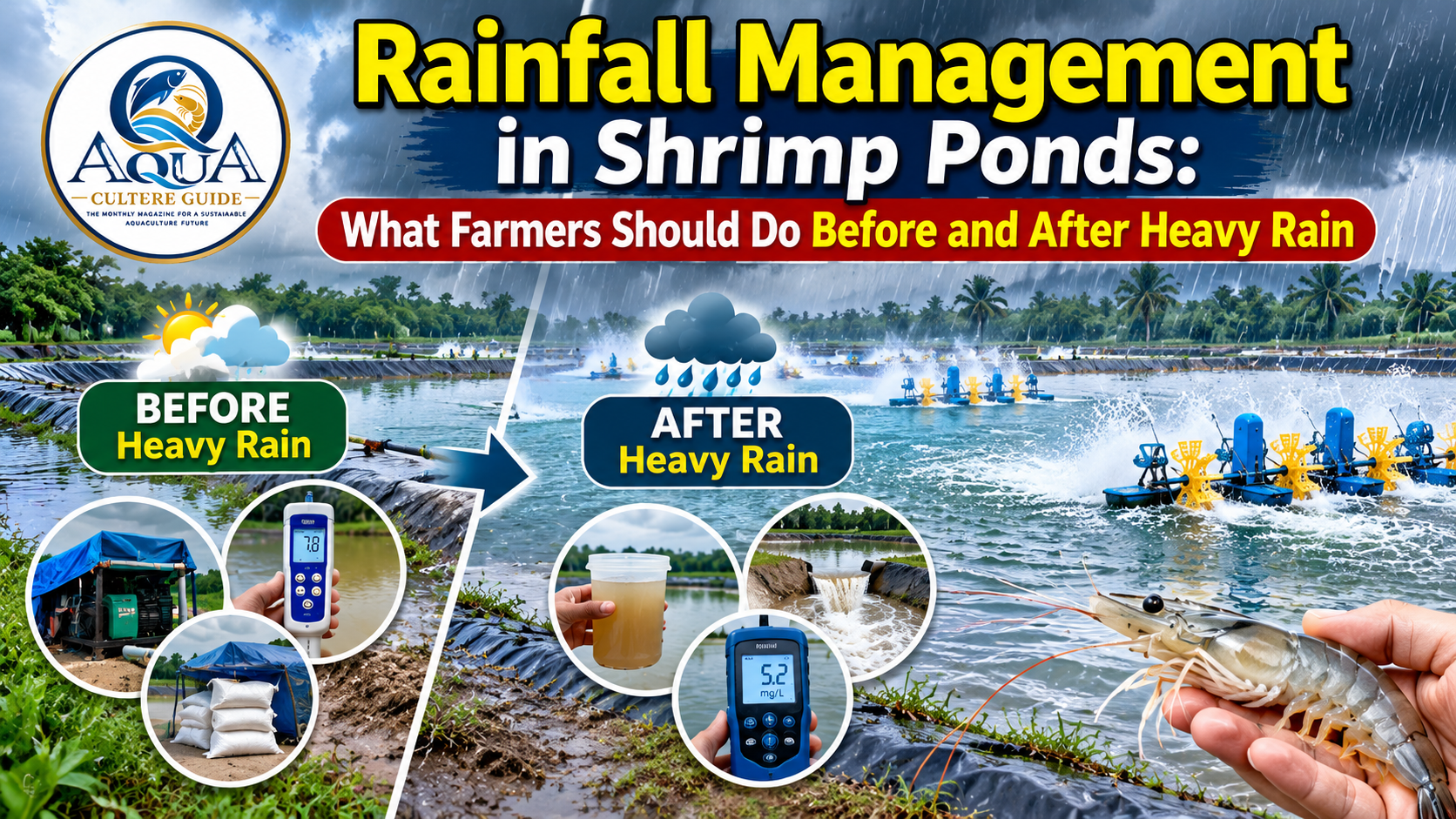
Learn how to manage shrimp ponds during heavy rainfall. Discover the effects of rain on salinity, pH, dissolved oxygen and shrimp health, with a complete checklist and step-by-step guide for farmers.
Introduction
Heavy rainfall is one of the major challenges in shrimp farming. Sudden rain can change pond-water conditions, reduce salinity, affect pH, disturb water circulation and increase stress on shrimp. If farmers do not take proper precautions, heavy rainfall may lead to poor feeding, moulting problems, low dissolved oxygen and, in severe cases, shrimp mortality.
During the rainy season, farmers need to pay close attention to pond water quality, salinity, alkalinity, dissolved oxygen and pond preparation. Rainwater can also carry soil, contaminants and organic materials into ponds through runoff.
Proper rainfall management is not only about taking action after rain. Farmers should prepare their ponds before rainfall, monitor conditions during the rain and follow a planned recovery process afterwards.
How Does Heavy Rainfall Affect Shrimp Ponds?
Heavy rainfall can affect shrimp ponds in several ways. The impact depends on rainfall intensity, pond depth, water exchange, salinity, soil conditions and the condition of the shrimp.
A. Sudden Reduction in Salinity
Rainwater generally contains very little salt compared with seawater or brackish pond water.
When heavy rain enters a shrimp pond, it can dilute the pond water and reduce salinity.
Possible effects include:
Osmotic stress in shrimp.
Changes in mineral balance.
Reduced feeding activity.
Stress during moulting.
Poor performance if salinity changes rapidly.
The impact is often more significant in shallow ponds and ponds with relatively high salinity before rainfall.
B. Changes in pH
Rainwater and runoff can influence pond-water pH.
The effect depends on rainfall chemistry, pond alkalinity, soil conditions and the amount of runoff entering the pond.
Sudden pH changes can stress shrimp and affect the chemical balance of pond water.
C. Reduction in Alkalinity
Rainfall may dilute alkalinity, particularly when a large volume of rainwater enters the pond.
Low alkalinity can reduce the water's ability to resist sudden pH changes.
Farmers should test alkalinity instead of assuming that every rainfall event causes the same change.
D. Dissolved Oxygen Fluctuations
Heavy rainfall, cloudy weather and changes in plankton activity can influence dissolved oxygen.
During prolonged cloudy or rainy weather, photosynthesis may decrease. At the same time, shrimp, plankton and microorganisms continue consuming oxygen.
This can increase the risk of low dissolved oxygen, particularly at night and early morning.
E. Pond Water Mixing and Temperature Changes
Rainwater may be cooler than pond water. Heavy rainfall can create temperature differences and water-column mixing.
These changes may affect shrimp behaviour and pond conditions.
F. Runoff and Pond Contamination
Rainwater flowing from surrounding land may carry:
Soil and silt.
Fertilisers.
Pesticide residues.
Organic waste.
Other contaminants.
Preventing uncontrolled runoff is an important part of pond protection.
G. Pond Overflow and Shrimp Escape
Heavy rainfall can increase pond-water levels.
If pond embankments, drainage channels and outlet screens are not properly maintained, water may overflow and shrimp may escape.
What Should Farmers Do Before Heavy Rainfall?
Preparation is the most important part of rainfall management.
Farmers should inspect their ponds and equipment whenever heavy rain is forecast.
A. Check Pond Water Level
Maintain a suitable water level according to pond design and farm management requirements.
Keep enough freeboard to reduce the risk of overflow.
B. Inspect Pond Bunds
Check pond embankments for:
Cracks
Weak sections.
Erosion.
Low areas.
Signs of seepage.
Repair weak areas before rainfall begins.
C. Check Drainage and Overflow Systems
Ensure that:
Drainage channels are clear.
Outlet pipes are functioning.
Overflow structures are in good condition.
Screens are properly fixed.
Escape-prevention arrangements are secure.
D. Test Pond Water Quality
Before heavy rainfall, record important water-quality parameters.
Check:
Salinity.
pH.
Dissolved oxygen.
Alkalinity.
Temperature.
Total ammonia nitrogen.
Nitrite.
These readings provide a baseline for comparison after rainfall.
E. Check Aerators and Backup Power
Heavy rainfall and cloudy weather may increase the risk of oxygen fluctuations.
Before rain:
Inspect all aerators.
Check motors and electrical connections.
Test backup generators.
Keep essential spare parts ready.
Ensure emergency aeration equipment is available.
F. Review Feeding Management
Avoid unnecessary feeding when shrimp are not consuming feed properly.
Check feeding trays and recent feed consumption. Have a plan to adjust feeding according to shrimp activity and water conditions.
G. Prevent Outside Runoff
Where possible, divert contaminated surface runoff away from the pond.
Check nearby drainage channels and prevent dirty water from entering the pond.
What Should Farmers Do During Heavy Rainfall?
During heavy rainfall, farmers should avoid unnecessary disturbance and closely monitor pond conditions.
A. Maintain Aeration
Operate aerators according to dissolved oxygen readings, pond conditions and the farm's emergency plan.
Pay particular attention to nighttime and early-morning oxygen levels.
B. Observe Shrimp Behaviour
Watch for:
Shrimp moving towards pond edges.
Reduced feeding activity.
Unusual swimming.
Shrimp gathering near water inlets.
Signs of stress.
These signs are not specific to rainfall-related stress. Check dissolved oxygen and other water-quality parameters immediately if unusual behaviour occurs.
C. Monitor Pond Water Level
Check whether water is approaching the pond's safe operating level.
Make sure overflow arrangements and screens are functioning.
D. Avoid Unnecessary Chemical Applications
Do not apply mineral mixtures, disinfectants, probiotics or other pond treatments without understanding the water conditions and product compatibility.
Heavy rainfall may change the concentration of chemicals already present in the pond.
E. Monitor Electrical Safety
Rain and water increase electrical hazards.
Check that:
Electrical panels are protected.
Connections remain dry.
Cables are not damaged.
Aerator equipment is safely installed.
Never handle electrical equipment while standing in water or during unsafe conditions.
What Should Farmers Do After Heavy Rainfall?
After rainfall, farmers should follow a systematic recovery process rather than applying products immediately.
A. Check Salinity
Measure salinity at representative pond locations.
Compare the reading with the value recorded before rainfall.
If salinity has dropped significantly, assess the rate of change and the shrimp's condition.
Do not make sudden corrections without calculating the required change and considering the source-water quality.
B. Check pH and Alkalinity
Measure pH and alkalinity after rainfall.
If alkalinity has reduced, assess whether corrective management is required.
Any treatment should be based on test results and suitable technical guidance.
C. Check Dissolved Oxygen
Measure dissolved oxygen, especially:
Late at night.
Early in the morning.
At different pond locations.
Increase aeration if readings indicate low oxygen or if the shrimp show signs of stress.
D. Observe Shrimp Feeding
Check feed consumption using feeding trays.
If shrimp are feeding poorly, avoid continuing the normal feed quantity without checking the cause.
Adjust feeding according to feeding response and water-quality conditions.
E. Observe Shrimp Health
Check for:
Soft shells.
Weak swimming.
Unusual surface activity.
Reduced feeding.
Abnormal mortality.
Other signs of stress.
If problems continue, consult an aquaculture professional and arrange appropriate laboratory testing when disease is suspected.
F. Check Pond Bottom Conditions
Heavy rainfall and runoff may introduce soil and organic material.
Inspect pond-bottom conditions where practical and continue normal sludge-management practices.
G. Record All Changes
Compare post-rain readings with the values recorded before rainfall.
This helps identify which parameters changed and whether corrective action was effective.
Important Water Quality Parameters to Monitor After Rain
- Salinity
Rainwater can dilute pond water and reduce salinity.
Regular monitoring helps farmers identify sudden changes.
- pH
Check whether rainfall has caused a significant pH change.
The effect depends on alkalinity, soil and rainfall conditions.
- Dissolved Oxygen
Monitor oxygen carefully during cloudy weather and after prolonged rainfall.
Low oxygen requires prompt attention.
- Alkalinity
Alkalinity helps buffer changes in pH.
Test it after heavy rainfall, especially in ponds with low initial alkalinity.
- Temperature
Check water temperature because heavy rainfall can change the temperature of pond water.
- Ammonia and Nitrite
Monitor ammonia and nitrite as part of routine pond management, particularly if feeding, plankton activity or water conditions change.
- Water Transparency
Observe changes in water colour and transparency.
Sudden changes may indicate changes in plankton populations or suspended material.
Mineral Management After Heavy Rainfall
Mineral management is important because rainfall can dilute dissolved ions in pond water.
In low-salinity shrimp farming, changes in calcium, magnesium and potassium may be especially important.
Farmers should:
Test salinity after significant rainfall.
Check calcium, magnesium and potassium where relevant.
Compare readings with pre-rain values.
Identify actual deficiencies before applying mineral products.
Use suitable mineral supplements according to product instructions.
Retest water after correction.
Do not assume that every rainfall event requires the same mineral treatment.
Feeding Management During and After Rainfall
Shrimp feeding activity may change during prolonged rainfall and cloudy weather.
Farmers should manage feeding according to actual consumption.
Before Rainfall
Check feeding response.
Avoid unnecessary excess feeding.
Review feed tray consumption.
Keep feed dry and properly stored.
During Rainfall
Observe shrimp behaviour.
Check feeding trays when conditions are safe.
Reduce or temporarily stop feeding if shrimp show poor feeding response or water quality is unsuitable.
After Rainfall
Check feeding response before returning to normal feed quantities.
Remove uneaten feed where practical.
Adjust feeding according to shrimp biomass, health and water conditions.
Monitor feed consumption over the following days.
Complete Rainfall Management Checklist for Shrimp Farmers
Use this checklist during the rainy season.
A. Before Heavy Rainfall
Check the weather forecast.
Inspect pond water level.
Maintain sufficient freeboard.
Inspect pond bunds and embankments.
Repair cracks and weak areas.
Clean drainage channels.
Check overflow structures.
Inspect outlet screens.
Test salinity.
Test pH and alkalinity.
Check dissolved oxygen.
Check aerator operation.
Test backup power.
Prepare emergency equipment.
Prevent outside runoff from entering the pond.
Review feeding management.
B. During Heavy Rainfall
Observe shrimp behaviour.
Monitor pond water level.
Check overflow arrangements.
Maintain suitable aeration.
Monitor dissolved oxygen when safe.
Avoid unnecessary chemical applications.
Protect electrical equipment.
Watch for dirty runoff entering the pond.
Keep records of rainfall and pond conditions.
C. After Heavy Rainfall
Measure salinity.
Check pH.
Test alkalinity.
Measure dissolved oxygen.
Check water temperature.
Test ammonia and nitrite.
Check mineral levels where necessary.
Observe shrimp feeding activity.
Check shell condition and swimming behaviour.
Inspect pond bunds and drainage.
Check for overflow or shrimp escape.
Adjust feeding based on consumption.
Apply minerals only when justified by testing.
Record all corrective actions.
Monitor pond conditions over the following days.
Step-by-Step Guide to Rainfall Management in Shrimp Ponds
Step 1: Monitor the Weather Forecast
Check reliable weather forecasts and local rainfall warnings.
Pay attention to expected rainfall intensity, duration and possible storms.
Step 2: Inspect the Pond Before Rain
Check the pond bunds, drainage channels, outlet screens and overflow structures.
Repair weak areas before rainfall begins.
Step 3: Record Baseline Water Quality
Measure salinity, pH, dissolved oxygen, alkalinity and temperature.
Record the values so you can compare them after rainfall.
Step 4: Prepare Aeration and Backup Power
Inspect aerators and electrical systems.
Test the generator or backup power arrangement before the storm.
Step 5: Control Outside Runoff
Divert dirty surface water away from the pond.
Make sure drainage systems do not allow contaminated water to enter.
Step 6: Monitor During Rainfall
Observe pond water level, shrimp behaviour and aerator operation.
Avoid unnecessary pond treatments.
Step 7: Check Water Quality After Rain
Once conditions are safe, measure salinity, pH, alkalinity and dissolved oxygen.
Also check temperature, ammonia and nitrite as required.
Step 8: Compare Before-and-After Readings
Compare the new values with the baseline readings.
Identify whether salinity, alkalinity or other parameters have changed significantly.
Step 9: Correct Water Quality Carefully
If a problem is identified:
Improve aeration when dissolved oxygen is low.
Manage salinity changes carefully.
Correct alkalinity only when testing indicates a need.
Apply minerals only when a deficiency is identified.
Avoid sudden, unnecessary water-quality corrections.
Step 10: Adjust Feeding
Check feed trays and shrimp activity.
Reduce or temporarily stop feeding if the shrimp are not feeding normally or if water quality is unsuitable.
Step 11: Observe Shrimp Health
Monitor swimming behaviour, shell condition, feeding response and mortality.
Seek technical advice if abnormal signs continue.
Step 12: Maintain Records
Record rainfall, water-quality readings, feeding changes, treatments and shrimp behaviour.
Use the records to improve preparation for the next rainfall event.
Common Mistakes Farmers Should Avoid During Heavy Rainfall
Ignoring weather forecasts.
Allowing pond water to overflow.
Failing to inspect pond bunds.
Not checking salinity after heavy rain.
Ignoring early-morning dissolved oxygen.
Applying minerals without water testing.
Using chemicals without checking compatibility.
Continuing normal feeding despite poor feeding response.
Allowing contaminated runoff to enter the pond.
Ignoring backup power and aerator maintenance.
Making sudden salinity corrections.
Failing to record before-and-after water-quality readings.
Best Practices for Rainy Season Shrimp Farming
For better farm management during the rainy season:
Monitor weather forecasts regularly.
Maintain strong pond embankments.
Keep drainage and overflow systems functional.
Maintain adequate freeboard.
Test water before and after heavy rainfall.
Monitor dissolved oxygen at night and early morning.
Maintain suitable aeration
Check salinity and important minerals.
Avoid unnecessary chemical applications.
Adjust feeding based on shrimp activity.
Prevent contaminated runoff.
Maintain backup power.
Keep detailed farm records.
Conclusion
Heavy rainfall can affect shrimp pond salinity, pH, alkalinity, dissolved oxygen, mineral balance and overall water quality. Sudden changes may stress shrimp and affect feeding, moulting, growth and survival.
The best rainfall management strategy is to prepare before rain, monitor pond conditions during rainfall and carefully assess water quality afterwards.
Farmers should pay particular attention to pond water levels, embankments, drainage systems, aeration, salinity and dissolved oxygen. Any corrective treatment should be based on water testing rather than guesswork.
Good rainfall management means protecting the pond before the rain, monitoring shrimp during the rain and restoring suitable water conditions after the rain.
Questions & Answers
Q1.How does heavy rainfall affect shrimp ponds?
Heavy rainfall can reduce salinity, change pH and alkalinity, affect dissolved oxygen and introduce contaminated runoff. The impact depends on rainfall intensity and pond conditions.
Q2.Why does salinity decrease after heavy rain?
Rainwater contains very little salt compared with brackish pond water. When rainwater enters the pond, it dilutes the dissolved salts and reduces salinity.
Q3.What should shrimp farmers do before heavy rainfall?
Inspect pond bunds, drainage channels, outlet screens and overflow structures. Test water quality, check aerators and prepare backup power.
Q4.Should farmers apply minerals after heavy rainfall?
Not automatically. Farmers should test relevant mineral concentrations and apply suitable products only when a deficiency or management requirement is identified.
Q5.Does heavy rainfall reduce dissolved oxygen?
Rainfall can contribute to oxygen fluctuations, especially during prolonged cloudy weather when photosynthesis decreases. Farmers should monitor dissolved oxygen, particularly at night and early morning.
Q6.Should shrimp farmers feed during heavy rainfall?
Feeding should depend on shrimp activity and water quality. If shrimp show poor feeding response or water conditions are unsuitable, reduce or temporarily stop feeding according to the farm's management plan.
Q7.Why is alkalinity important after rainfall?
Alkalinity helps buffer changes in pH. Rainfall may dilute alkalinity, making pond water more vulnerable to pH fluctuations.
Related articles
భారతీయ రిజర్వాయర్లలో కేజ్ ఫిష్ ఫార్మింగ్: సాంకేతికత, అనుమతులు మరియు పెట్టుబడి వివరాలు
భారతదేశంలోని రిజర్వాయర్లలో కేజ్ ఫిష్ ఫార్మింగ్ ఎలా ప్రారంభించాలి? అవసరమైన సాంకేతికత, ప్రభుత్వ అనుమతులు, పెట్టుబడి, చేపల జాతులు, మేత నిర్వహణ మరియు లాభనష్టాల గురించి పూర్తి వివరాలు తెలుసుకోండి.
Freshwater Prawn Farming in IndiaFreshwater Prawn Farming in India: రైతులకు పూర్తి సాగు మార్గదర్శిని
భారతదేశంలో మంచినీటి రొయ్యల సాగు ఎలా ప్రారంభించాలి? జెయింట్ ఫ్రెష్వాటర్ ప్రాన్ సీడ్ ఎంపిక, చెరువు తయారీ, స్టాకింగ్, ఆహారం, నీటి నాణ్యత, పెట్టుబడి, మార్కెటింగ్ గురించి పూర్తి వివరాలు తెలుసుకోండి.
Tilapia farming in Indiaభారతదేశంలో తిలాపియా చేపల పెంపకం – మార్కెట్ అవకాశాలు, ప్రభుత్వ నిబంధనలు మరియు ఆధునిక సాగు పద్ధతులు
భారతదేశంలో తిలాపియా చేపల పెంపకం ఎలా చేయాలి? మార్కెట్ అవకాశాలు, ప్రభుత్వ అనుమతులు, చెరువు సాగు, బయోఫ్లాక్, RAS విధానాలు, పిల్లల ఎంపిక, మేత నిర్వహణ మరియు దిగుబడి గురించి పూర్తి సమాచారం.
PCR Testing in Shrimp Hatcheriesరొయ్యల హ్యాచరీల్లో PCR పరీక్షలు: ఫలితాలను రైతులు ఎలా అర్థం చేసుకోవాలి?
WSSV, EHP, AHPND వంటి వ్యాధికారకాలను గుర్తించడంలో PCR పరీక్షల పాత్ర, పరీక్షా నివేదికలను అర్థం చేసుకోవడం, నాణ్యమైన రొయ్య పిల్లలను ఎంపిక చేసుకోవడం గురించి రైతులు తెలుసుకోవాల్సిన పూర్తి సమాచారం.
Explore Aqua Culture Guide
Aqua companies directory
Feed, seed, probiotics & equipment suppliers
Aquaculture calculators
Feed, FCR, stocking & water quality tools
Telugu aqua magazine
Read the latest monthly issue online
All aqua news & articles
Farming, disease control and market updates
List your company free
Get found by farmers across India
Advertise with us
Magazine and website advertising options