Probiotics in Aquaculture: Benefits, Uses and Application Guide
2/11/2026
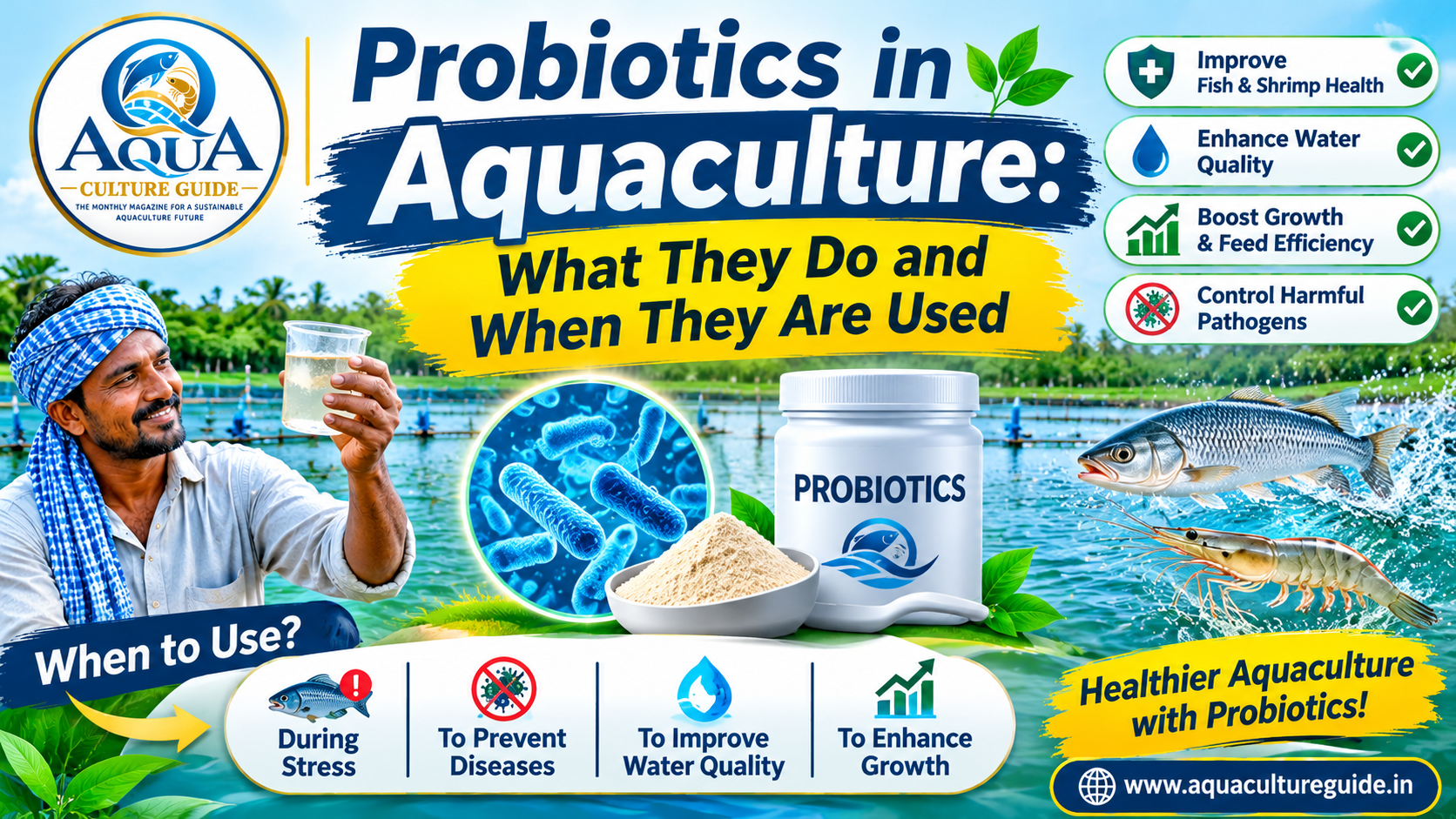
Learn how probiotics work in aquaculture, their benefits for fish and shrimp farming, when to use them, how to select the right product and follow a proper application method.
Introduction
Maintaining healthy water quality and animal health is one of the biggest challenges in aquaculture. Uneaten feed, animal waste, dead plankton and other organic materials can accumulate in ponds and affect the pond environment. Poor water quality and harmful microorganisms can also increase stress in fish and shrimp.
Probiotics are beneficial microorganisms used in aquaculture to support a healthier pond environment and improve animal health. Depending on the bacterial strain and product formulation, they may help break down organic matter, support digestion, compete with harmful microorganisms and improve water-quality management.
Today, probiotics are widely used in shrimp farming, fish farming and other aquaculture systems. However, not every probiotic product works in the same way. The results depend on the bacterial strains, product quality, pond conditions, application method and regular farm management.
In this article, we explain what probiotics are, how they work, their benefits, when farmers should use them, important precautions and a complete step-by-step application guide.
What Are Probiotics in Aquaculture?
Probiotics are live microorganisms that provide a beneficial effect on the host or culture environment when administered in adequate amounts.
In aquaculture, selected bacteria and other microorganisms are used to support fish and shrimp health, digestion and pond microbial balance.
Commonly used probiotic microorganisms include:
Bacillus species: Certain strains produce enzymes that help break down organic materials and may support gut health.
Lactobacillus species: Some strains are used in animal-feed probiotics and may support digestive health.
Nitrosomonas: Certain bacteria in this group help convert ammonia into nitrite as part of biological nitrification.
Nitrospira and Nitrobacter: Members of these groups participate in the conversion of nitrite into nitrate.
Photosynthetic bacteria: Selected strains are used in some aquaculture products for microbial and organic-matter management.
Not all these microorganisms have the same function. Some are used as feed probiotics, while others are intended for water treatment or biological filtration.
Farmers should select products according to their intended use rather than assuming that every probiotic can perform every function.
How Do Probiotics Work in Aquaculture?
Probiotics may work through several biological mechanisms.
A. Competition With Harmful Microorganisms
Certain beneficial bacteria compete with potentially harmful microorganisms for nutrients and space.
This can help influence microbial balance in the pond or digestive system. However, probiotics do not guarantee the elimination of disease-causing bacteria.
B. Breakdown of Organic Matter
Some probiotic strains produce enzymes that help break down organic materials.
These may include:
Uneaten feed.
Faecal matter.
Organic waste.
Dead plankton.
Other biodegradable materials.
The breakdown of organic matter is a biological process and depends on suitable environmental conditions.
C. Support for Digestive Health
Feed-based probiotics may support the digestive system of fish and shrimp.
Some strains can produce enzymes or influence the gut microbial community, potentially helping animals utilise nutrients more efficiently.
D. Support for Biological Filtration
Specific nitrifying microorganisms help convert ammonia into nitrite and then nitrate.
These bacteria are important in biofilters and established biological filtration systems. They require suitable oxygen, pH, alkalinity and other environmental conditions.
E. Support for Animal Health
Certain probiotic strains may influence immune responses and help fish and shrimp cope with environmental stress.
The effects are strain-specific, and not every product has proven benefits for every species.
Major Benefits of Probiotics in Aquaculture
- Support Better Water Quality
Selected water-treatment probiotics may help manage organic matter and support microbial processes in ponds.
They should be used alongside regular water-quality monitoring.
- Support Organic Waste Management
Some bacterial strains produce enzymes that help break down organic materials.
This may support pond-bottom and water-quality management when combined with proper feeding and sludge management.
- Support Digestive Health
Feed probiotics may improve digestive function in certain fish and shrimp species, depending on the strains and formulation.
- Help Maintain Microbial Balance
Beneficial microorganisms may compete with unwanted bacteria and influence the microbial community in the pond or gut.
- Support Animal Health
Some selected strains may help support immune function and improve resistance to certain stress conditions.
This does not mean probiotics can cure bacterial infections.
- Support Better Farm Management
When used correctly, probiotics can become part of an integrated aquaculture management programme that includes feeding, aeration, water testing and biosecurity.
Types of Probiotics Used in Aquaculture
Farmers should understand the different types before selecting a product.
A. Water Probiotics
Water probiotics are designed to be applied directly to pond water.
They may contain selected bacterial strains intended to support microbial balance, organic-matter breakdown or other water-treatment functions.
B. Feed Probiotics
Feed probiotics are added to fish or shrimp feed.
They are intended to deliver selected microorganisms through the digestive system and may support gut health, digestion and nutrient utilisation.
C. Soil or Pond-Bottom Probiotics
Some products are marketed for pond-bottom management.
They may contain microorganisms selected to support the breakdown of organic material in pond sediment.
Their effectiveness depends on the product formulation and pond conditions.
D. Nitrifying Bacteria Products
These products contain selected microorganisms intended to support biological filtration and ammonia and nitrite conversion.
They are especially relevant to biofilters and systems where nitrification is managed.
Farmers should check whether a product contains live, suitable nitrifying organisms rather than assuming that every water probiotic can remove ammonia and nitrite.
When Are Probiotics Used in Aquaculture?
Probiotics may be used at different stages of the farming cycle.
A. During Pond Preparation
Some farmers use suitable microbial products during pond preparation as part of a pond-bottom and water-management programme.
The pond should be prepared properly before stocking, and the product should be selected according to its intended use.
B. After Stocking
Probiotics may be included in the regular farm-management programme after fish or shrimp stocking.
The application should follow product instructions and actual pond conditions.
C. During Culture When Organic Waste Increases
When feed waste, faecal matter and other organic materials accumulate, suitable water or pond-bottom microbial products may be considered.
Farmers should also correct the cause of excess waste, including overfeeding and poor sludge management.
D. After Heavy Rainfall
Heavy rainfall can change pond salinity, pH, alkalinity and other water-quality conditions.
Farmers should test the water first. Probiotics may be used as part of a suitable management plan, but they cannot directly correct sudden salinity changes or low dissolved oxygen.
E. During Stressful Conditions
Some feed probiotics may be used as part of a health-support programme during periods of environmental stress.
Farmers should identify and correct the main stress factor rather than relying only on probiotics.
F. In Recirculating Aquaculture Systems
Selected microorganisms are used in biological filters to support ammonia and nitrite conversion.
In these systems, correct filter operation, oxygen supply, alkalinity and regular monitoring are essential.
Probiotics in Shrimp Farming
Shrimp farming requires careful management of water quality, pond-bottom conditions, feed waste and microbial balance.
Probiotics may be used in shrimp farming for:
Supporting pond microbial management.
Helping manage organic waste.
Supporting digestive health through feed applications.
Supporting selected biological filtration processes.
Complementing regular water-quality management.
However, probiotics should not be treated as a replacement for aeration, water exchange where appropriate, sludge management, biosecurity or disease diagnosis.
Shrimp farmers should also check whether a product is suitable for brackish-water or saline pond conditions.
Probiotics in Fish Farming
In fish farming, probiotics are commonly used in feed and selected water-treatment systems.
Potential applications include:
Supporting gut health.
Improving digestive function.
Supporting nutrient utilisation.
Helping maintain microbial balance.
Supporting biological filtration.
Managing organic matter in suitable systems.
The benefits depend on fish species, bacterial strain, feed formulation, water conditions and application method.
Complete Checklist Before Buying Probiotics
Before purchasing a probiotic product, farmers should check the following points.
Product Quality Checklist
Check the product name and manufacturer.
Identify the bacterial strains included.
Check the viable cell count, such as CFU, where provided.
Confirm whether the product is intended for water, feed or pond-bottom application.
Check whether it is suitable for shrimp or fish farming.
Review the product's technical specifications
Check manufacturing and expiry dates.
Check batch number and packaging condition.
Read the storage instructions.
Check whether the manufacturer provides technical support.
Avoid products with unclear strain information or unsupported claims.
Pond Condition Checklist
Check dissolved oxygen.
Measure pH.
Check water temperature.
Test total ammonia nitrogen.
Check nitrite levels.
Measure alkalinity.
Check salinity in shrimp ponds.
Observe water colour and transparency.
Check pond-bottom sludge.
Review feeding activity and animal behaviour.
Application Checklist
Identify the purpose of application.
Select the correct type of probiotic.
Read the manufacturer's instructions.
Calculate the required quantity.
Check product compatibility with other treatments.
Check whether aeration is required during application.
Follow the recommended preparation method.
Apply at the recommended time.
Monitor water quality after application.
Record the application details and results.
Step-by-Step Guide: How to Use Probiotics in Aquaculture
Step 1: Identify the Main Problem
Before using probiotics, identify what you want to manage.
Is the problem related to organic waste, digestive health, pond microbial balance or ammonia and nitrite in a biological filtration system?
Different problems require different products.
Step 2: Test the Pond Water
Check important water-quality parameters, including:
Dissolved oxygen.
pH.
Temperature.
Total ammonia nitrogen.
Nitrite.
Alkalinity.
Salinity, where applicable.
Testing helps identify whether water conditions are suitable for the selected probiotic and whether another problem needs immediate attention.
Step 3: Select the Right Probiotic
Choose a product according to its intended application.
For example:
Water probiotics for selected pond-water applications.
Feed probiotics for digestive-health support.
Pond-bottom products for selected sediment-management applications.
Nitrifying bacteria for suitable biological filtration systems.
Do not use a product for a purpose that is not supported by its technical specifications.
Step 4: Check Product Quality
Review the strain names, viable cell count, expiry date, storage conditions and application instructions.
A high CFU value alone does not prove that a product is effective. The strain identity, viability and suitability for the farming system also matter.
Step 5: Calculate the Required Quantity
Calculate the pond area or water volume as specified by the manufacturer.
Use the recommended dosage for the particular product and application.
Do not increase the quantity to achieve faster results
Step 6: Prepare the Probiotic
Some products require activation or mixing, while others can be applied directly.
Follow the manufacturer's preparation instructions carefully.
Important precautions:
Use clean containers.
Use suitable water as directed.
Avoid untreated chemicals or disinfectants in the preparation mixture.
Do not use hot water unless specifically instructed.
Do not keep prepared mixtures longer than the recommended period.
Step 7: Apply at the Recommended Time
Apply the product according to the label.
For water applications, follow the recommended distribution method and pond conditions.
For feed applications, follow the manufacturer's coating, mixing and feeding instructions.
For biofilter applications, follow the system's technical guidance.
Step 8: Maintain Suitable Pond Conditions
Beneficial microorganisms need suitable environmental conditions.
Maintain:
Adequate dissolved oxygen.
Suitable pH.
Appropriate alkalinity.
Proper aeration.
Good feed management.
Suitable water circulation.
If pond conditions are poor, the probiotic may not perform as expected.
Step 9: Monitor Fish and Shrimp Behaviour
Observe:
Feeding response.
Swimming activity.
Surface behaviour.
Signs of stress.
Unusual mortality.
Changes in pond water.
If animals show signs of distress, check water quality immediately. Do not wait for a probiotic treatment to work.
Step 10: Retest Water Quality
Repeat the relevant tests after the period recommended for the product or treatment programme.
Compare the results with the readings recorded before application.
Monitor ammonia, nitrite, dissolved oxygen and other relevant parameters.
Step 11: Maintain Regular Farm Records
Record the following information:
Date of application.
Product name.
Manufacturer.
Batch number.
Quantity applied.
Pond number.
Water-quality readings.
Animal behaviour.
Feeding response.
Results after application.
These records help farmers understand whether the product is providing a measurable benefit.
Common Mistakes Farmers Should Avoid
Buying probiotics without checking the bacterial strains.
Using the same probiotic for every pond condition.
Applying products without testing water quality.
Ignoring dissolved oxygen levels.
Using expired or poorly stored products.
Mixing probiotics with disinfectants without checking compatibility.
Applying excessive quantities.
Assuming probiotics can cure all bacterial diseases.
Expecting immediate results.
Ignoring overfeeding and organic waste accumulation.
Using feed probiotics as a replacement for water-treatment products.
Applying nitrifying bacteria without maintaining suitable biofilter conditions.
Probiotics vs Water Treatments: What Is the Difference?
Probiotics and chemical water treatments serve different purposes.
Probiotics introduce selected beneficial microorganisms to support biological processes, microbial balance or digestive health.
Water treatments may include products intended to adjust water chemistry, manage particular contaminants or disinfect water and equipment.
The two should not be treated as interchangeable.
Some chemicals, particularly disinfectants, can kill or reduce the viability of probiotic microorganisms. Farmers should check product compatibility and follow appropriate application intervals.
- Best Practices for Better Results
For effective probiotic management, farmers should follow these practices:
Purchase products from reliable manufacturers.
Select products with clearly identified strains.
Store products according to label instructions.
Test water quality regularly.
Maintain adequate dissolved oxygen.
Avoid overfeeding.
Manage pond-bottom waste.
Follow the correct application method.
Avoid mixing incompatible products.
Monitor results rather than depending on marketing claims.
Consult an aquaculture professional when water-quality or health problems persist.
Conclusion
Probiotics are useful tools in modern aquaculture when the right microorganisms are selected and applied correctly. They can support digestive health, microbial balance, organic-matter management and biological filtration, depending on the product and its intended purpose.
However, probiotics are not a quick solution for every pond problem and cannot replace good farm management.
Fish and shrimp farmers should select products based on their bacterial strains, quality and application purpose. Regular water testing, proper feeding, sufficient aeration, biosecurity and pond-bottom management remain essential.
The best results come from combining suitable probiotics with consistent and scientific aquaculture management.
Questions & Answers
Q1.What are probiotics used for in aquaculture?
Probiotics are used to support digestive health, microbial balance, organic-matter management and selected biological filtration processes in fish and shrimp farming.
Q2.Are probiotics good for shrimp farming?
Suitable probiotics may support shrimp gut health, pond microbial management and organic-waste breakdown. Their effectiveness depends on the bacterial strains, product quality and pond conditions.
Q3.When should farmers apply probiotics in shrimp ponds?
Application may be considered during pond preparation, after stocking or during the culture period, depending on the product's purpose and pond conditions. Follow the manufacturer's instructions.
Q4.Can probiotics reduce ammonia in aquaculture?
Certain nitrifying microorganisms help convert ammonia into nitrite and then nitrate. However, not all probiotic products contain nitrifying bacteria. Farmers should check the product specifications and maintain suitable conditions for biological filtration.
Q5.Do probiotics improve fish and shrimp growth?
Some probiotic strains may support digestion and nutrient utilisation, which can contribute to better growth under suitable conditions. Results are not guaranteed and vary by species and product.
Q6.Can probiotics prevent diseases in shrimp?
Some selected probiotic strains may help support animal health and compete with certain harmful microorganisms. However, probiotics cannot guarantee disease prevention or replace proper diagnosis and biosecurity.
Q7.Can farmers use probiotics every day?
There is no single daily application schedule for all products. Follow the manufacturer's recommended dosage and frequency.
Related articles
భారతీయ రిజర్వాయర్లలో కేజ్ ఫిష్ ఫార్మింగ్: సాంకేతికత, అనుమతులు మరియు పెట్టుబడి వివరాలు
భారతదేశంలోని రిజర్వాయర్లలో కేజ్ ఫిష్ ఫార్మింగ్ ఎలా ప్రారంభించాలి? అవసరమైన సాంకేతికత, ప్రభుత్వ అనుమతులు, పెట్టుబడి, చేపల జాతులు, మేత నిర్వహణ మరియు లాభనష్టాల గురించి పూర్తి వివరాలు తెలుసుకోండి.
Freshwater Prawn Farming in IndiaFreshwater Prawn Farming in India: రైతులకు పూర్తి సాగు మార్గదర్శిని
భారతదేశంలో మంచినీటి రొయ్యల సాగు ఎలా ప్రారంభించాలి? జెయింట్ ఫ్రెష్వాటర్ ప్రాన్ సీడ్ ఎంపిక, చెరువు తయారీ, స్టాకింగ్, ఆహారం, నీటి నాణ్యత, పెట్టుబడి, మార్కెటింగ్ గురించి పూర్తి వివరాలు తెలుసుకోండి.
Tilapia farming in Indiaభారతదేశంలో తిలాపియా చేపల పెంపకం – మార్కెట్ అవకాశాలు, ప్రభుత్వ నిబంధనలు మరియు ఆధునిక సాగు పద్ధతులు
భారతదేశంలో తిలాపియా చేపల పెంపకం ఎలా చేయాలి? మార్కెట్ అవకాశాలు, ప్రభుత్వ అనుమతులు, చెరువు సాగు, బయోఫ్లాక్, RAS విధానాలు, పిల్లల ఎంపిక, మేత నిర్వహణ మరియు దిగుబడి గురించి పూర్తి సమాచారం.
PCR Testing in Shrimp Hatcheriesరొయ్యల హ్యాచరీల్లో PCR పరీక్షలు: ఫలితాలను రైతులు ఎలా అర్థం చేసుకోవాలి?
WSSV, EHP, AHPND వంటి వ్యాధికారకాలను గుర్తించడంలో PCR పరీక్షల పాత్ర, పరీక్షా నివేదికలను అర్థం చేసుకోవడం, నాణ్యమైన రొయ్య పిల్లలను ఎంపిక చేసుకోవడం గురించి రైతులు తెలుసుకోవాల్సిన పూర్తి సమాచారం.
Explore Aqua Culture Guide
Aqua companies directory
Feed, seed, probiotics & equipment suppliers
Aquaculture calculators
Feed, FCR, stocking & water quality tools
Telugu aqua magazine
Read the latest monthly issue online
All aqua news & articles
Farming, disease control and market updates
List your company free
Get found by farmers across India
Advertise with us
Magazine and website advertising options