Pangasius Farming: Pond Preparation, Feeding and Harvest Management
12/10/2026
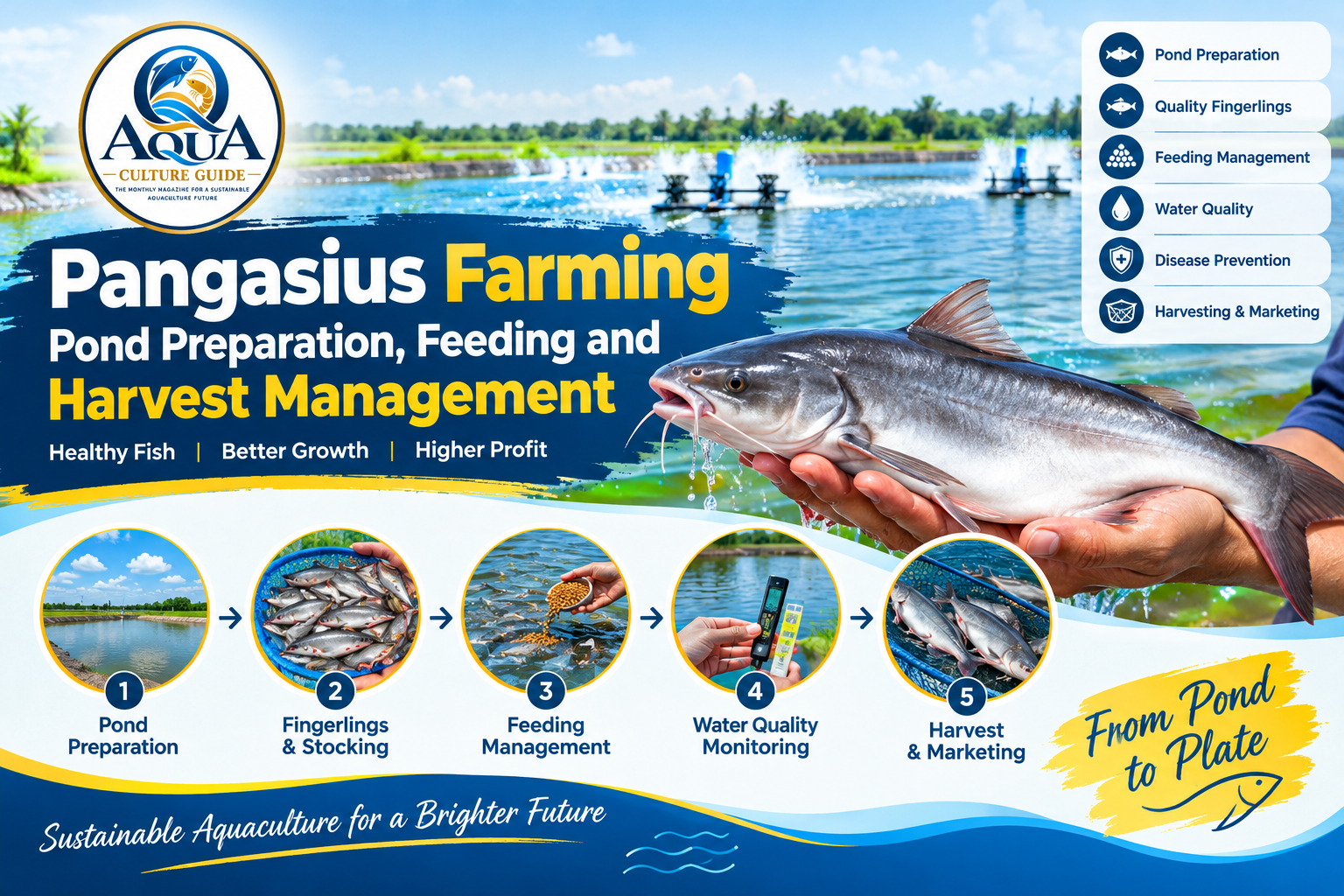
Learn pangasius farming step by step, including pond preparation, fingerling selection, stocking density, feed management, water quality, disease prevention and harvesting.
Pangasius Farming: Pond Preparation, Feeding and Harvest Management
Introduction
Pangasius farming is an important freshwater aquaculture activity in parts of Asia, including India. Pangasius catfish are popular in commercial fish farming because they can grow well under suitable conditions and are produced in pond-based systems for domestic and processing markets.
For Indian farmers, pangasius farming can provide an opportunity to diversify fish production. However, successful farming depends on more than stocking fingerlings and providing feed. Farmers must prepare ponds correctly, select healthy seed, maintain suitable stocking densities, monitor water quality, manage feeding costs and plan the harvest according to market demand.
Poor pond preparation, excessive stocking, unsuitable feed and inadequate oxygen management can reduce growth, increase mortality and affect profitability.
What Is Pangasius Farming?
Pangasius farming is the commercial rearing of freshwater catfish, commonly associated with striped catfish (Pangasianodon hypophthalmus), in ponds and other suitable aquaculture systems.
The fish is valued in commercial markets for its white flesh, relatively mild flavour and suitability for processing. It can tolerate some environmental conditions that are challenging for certain other farmed fish, but it still requires good water quality, suitable nutrition and responsible farm management.
Why do farmers consider pangasius farming?
- Potential for commercial-scale freshwater fish production.
- Ability to use formulated feeds.
- Suitability for appropriately managed pond systems.
- Demand from local fish markets and some processing supply chains.
- Opportunity to integrate fish production into an existing aquaculture business.
Important: Pangasius species and farming practices should be confirmed with the relevant state fisheries department. Use legally sourced fingerlings and follow applicable rules for fish culture, water use, transport and movement of live fish.
Requirements Before Starting Pangasius Farming
Before investing in a pond or purchasing fingerlings, evaluate the following.
Requirement What farmers should check
Land Suitable location, soil and drainage
Pond Reliable water retention and manageable depth
Water supply Adequate quantity and acceptable quality
Fingerlings Healthy seed from a reliable, authorized supplier
Feed Consistent supply of suitable commercial fish feed
Electricity Aeration and pumping where required
Market Buyer demand, preferred size and expected price
Finance Pond preparation, seed, feed, labour and operating costs
Biosecurity Prevention of disease entry and fish escape
Permissions Applicable fisheries and environmental requirements
Market research is especially important because feed commonly represents a major portion of operating expenses. Confirm buyer specifications and likely selling prices before stocking.
Step-by-Step Guide to Pangasius Farming
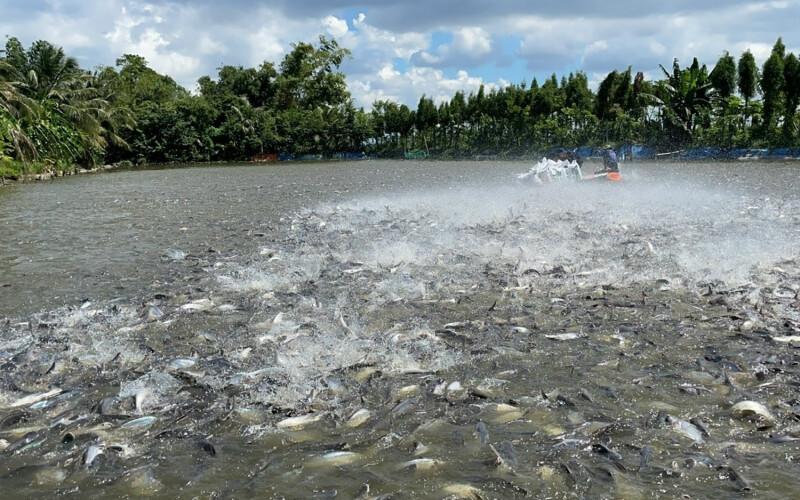
Step 1: Select a suitable pond site
Choose a location with dependable water, suitable soil, drainage facilities, road access and proximity to fish markets.
Check the following before construction or stocking:
- The pond can retain water without excessive seepage.
- The water source is not contaminated by industrial waste, sewage or pesticide runoff.
- The pond can be filled and drained in a controlled manner.
- Inlets and outlets can be screened to prevent unwanted fish entry and fish escape.
- There is sufficient space for feed storage and harvest operations.
- Aeration and pumping equipment can be operated when necessary.
Avoid sites that are vulnerable to flooding, particularly where farmed fish could escape into natural water bodies.
Step 2: Prepare the pond properly
Pond preparation creates a suitable environment for stocking and helps reduce risks from unwanted fish, excessive organic waste and predators.
Follow these steps:
- Remove existing fish and unwanted aquatic animals where practical.
- Drain the pond if the system allows it.
- Remove excessive accumulated sludge, especially from areas where organic waste has built up.
- Repair pond bunds, water inlets, outlets and drainage structures.
- Install appropriate screens on inlet and outlet pipes.
- Test soil and water quality.
- Apply agricultural lime only when indicated by soil testing and local technical guidance.
- Fill the pond with suitable water.
- Check water quality and confirm that the pond is ready before introducing fingerlings.
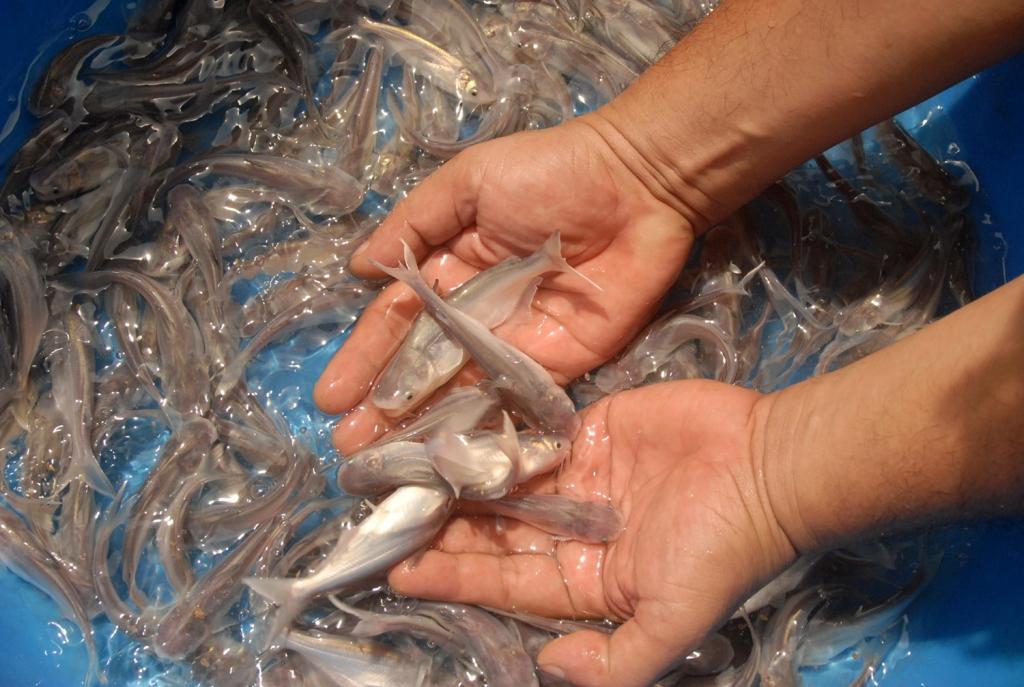
Step 3: Select healthy pangasius fingerlings
Fingerling quality directly influences growth, survival and final production.
Purchase fingerlings from a reliable supplier that can provide information about the species, source, health condition and applicable permissions.
Before stocking, check that:
- Fish are active and swim normally.
- Fingerlings are reasonably uniform in size.
- There are no obvious wounds, ulcers or deformities.
- Fish show no unusual loss of balance or abnormal swimming.
- The supplier can provide the agreed quantity and size.
- Transport and acclimatization arrangements are suitable.
Avoid purchasing fish of unknown origin or mixing batches of uncertain health status without suitable quarantine and health precautions.
Step 4: Decide the stocking density
Stocking density means the number of fish stocked per unit of pond area or water volume.
The appropriate density depends on:
- Pond area and depth.
- Fingerling size.
- Water supply and water exchange.
- Aeration capacity.
- Feed quality and feeding practices.
- Expected harvest size.
- Farm management experience and market requirements.
Practical recommendation: Obtain a stocking plan from your state fisheries department or a qualified aquaculture specialist based on your actual pond conditions. Do not adopt an intensive farm's stocking rate for a traditional earthen pond without checking its carrying capacity.
Example: Calculate fingerlings for one acre
One acre is approximately 4,047 square metres.
If a farm-specific plan recommends 2 fish per square metre:
4,047x2=8,094 fingerlings
This example demonstrates the calculation only. It is not a universal pangasius stocking recommendation.
Step 5: Acclimatize fingerlings before release
Sudden changes in temperature or water chemistry can stress fish and increase stocking losses.
- Transport fingerlings in suitable containers with appropriate oxygen management.
- Compare transport-water temperature with pond-water temperature.
- Gradually acclimatize fish according to the supplier's instructions and transport method.
- Avoid releasing transport water into the pond if it may carry contaminants or pathogens.
- Release the fish gently and avoid overcrowding them during handling.
- Observe swimming and behaviour after stocking.
- Record the date, pond number, source and quantity stocked.
Step 6: Choose the right feed
Commercial pangasius farming generally relies on formulated fish feed. Feed should provide suitable protein, energy, essential amino acids, vitamins and minerals for the fish's growth stage.
Select feed based on:
- Fish size and mouth opening.
- Feed protein and energy content.
- Pellet size and water stability.
- Feed freshness and storage conditions.
- Supplier recommendations for pangasius.
- Expected growth and production targets.
Growth stage Feeding approach
Small fingerlings Small pellets or crumble suited to fish size
Juvenile fish Appropriate starter or juvenile grower feed
Growing fish Adjust pellet size and ration as body weight increases
Near harvest Continue a suitable grower or finishing feed according to the production plan
Store feed in a dry, well-ventilated place, away from moisture, direct sunlight, pests and chemicals. Discard feed that is visibly mouldy or spoiled.
Step 7: Manage daily feeding correctly
Feeding should be based on fish biomass, feeding response, water temperature, fish health and the feed manufacturer's recommendations.
The basic formula is:
Daily feed (kg)}=Estimated biomass (kg)x Feeding rate(%)/100
Example: If the estimated standing biomass is 1,000 kg and the selected feeding rate for that particular situation is 2%:
1,000x 2/100=20kg/day
The calculated feed allowance is 20 kg per day. This is an example of the formula, not a recommended ration for all fish sizes or farming conditions.
Daily feeding procedure
- Estimate fish biomass using representative sample weights and a realistic survival estimate.
- Calculate a starting feed allowance using suitable feed guidance.
- Distribute feed consistently across appropriate feeding areas.
- Observe how quickly the fish consume the feed.
- Check for uneaten feed and changes in appetite.
- Reduce or suspend feeding when fish show abnormal behaviour or water quality is unsafe.
- Record daily feed consumption and investigate unusual changes.
Overfeeding increases feed costs and organic waste, which can worsen oxygen depletion and water-quality problems. Underfeeding can slow growth and create size variation.
Step 8: Maintain suitable water quality
Pangasius can tolerate some low-oxygen conditions better than certain other farmed fish, but this does not mean that low dissolved oxygen is safe for production. Water quality must be monitored throughout the culture cycle.
Parameter Practical management guidance
Water temperature Keep within a suitable warm-water range and avoid sudden changes
Dissolved oxygen Aim for at least 5 mg/L where practical, particularly in intensive systems
pH Approximately 6.5–8.5 is a useful general target
Ammonia Keep toxic unionized ammonia low; interpret results alongside pH and temperature
Nitrite Monitor and maintain within safe limits for the system
Water appearance Watch for sudden changes in colour, excessive foam or unusual odours
Daily water-quality checklist
- Observe fish behaviour early in the morning.
- Check dissolved oxygen where a suitable meter is available.
- Record temperature and pH.
- Check aerators, pumps and backup power.
- Observe for unusual water colour or odour.
- Remove dead fish promptly and investigate the cause.
- Test ammonia and nitrite when conditions change or fish show signs of stress.
If fish gather near water inlets, gasp at the surface or suddenly stop feeding, check dissolved oxygen and other water-quality parameters immediately. Take corrective action based on measured conditions and qualified technical advice.
Step 9: Monitor growth and biomass
Regular sampling helps farmers assess whether fish are growing as expected and whether feed management needs adjustment.
Calculate average body weight (ABW) using:
ABW (g)=Total sample weight (g)/Number of fish sampled
For example, if 50 fish weigh 5,000 g in total:
ABW=5,000/50=100g
The average body weight is 100 g per fish.
Estimated standing biomass can be calculated as:
Biomass (kg)}=Estimated live fish count x ABW (g)/1000
Step 10: Prevent disease and maintain biosecurity
Good biosecurity reduces the risk of pathogens entering the farm and spreading between ponds.
Important precautions include:
- Purchase fingerlings from reliable suppliers.
- Avoid mixing fish from unknown sources.
- Clean and disinfect shared equipment appropriately.
- Keep pond inlets and outlets protected.
- Remove dead or visibly sick fish promptly.
- Monitor appetite, swimming and mortality daily.
- Maintain accurate records of water quality, feed use and health problems.
- Seek help from a qualified aquatic animal health professional if unusual mortality occurs.
Step 11: Plan harvest management
Harvesting should be planned according to fish size, buyer requirements, standing biomass, production costs and market prices.
Follow these steps:
- Contact buyers and confirm preferred fish size and quantity.
- Sample fish to estimate average harvest weight.
- Estimate standing biomass and likely harvest quantity.
- Prepare nets, labour, transport and suitable holding containers.
- Plan water-level reduction or drainage if appropriate for the pond.
- Harvest carefully to minimize injury and stress.
- Maintain hygienic handling and suitable temperature control after harvest.
- Weigh the harvested fish and record the total quantity sold.
How Long Does Pangasius Take to Reach Harvest Size?
The culture period depends on fingerling size, strain, water temperature, feed quality, stocking density, survival and farm management.
Commercial ponds may plan for a grow-out period of several months, often around 6–10 months in suitable conditions, but this is only a broad planning estimate. Some crops take longer to reach the buyer's preferred size.
Farmers should assess:
- Average body weight and recent growth.
- Fish health and survival.
- Feed consumption and feed conversion ratio (FCR).
- Market demand for different fish sizes.
- Current selling price and remaining production expenses.
Avoid deciding the harvest date from culture days alone. Use growth records and market information to determine whether continued feeding is likely to be economically worthwhile.
How to Calculate Pangasius Production
Harvest production can be estimated using the number of fish harvested and their average harvest weight.
Harvest biomass (kg)}=Number of fish harvested x Average weight (g)/1000
Example:
Suppose a farmer harvests 7,000 fish at an average weight of 800 g.
7,000x800/ 1000=5,600kg
The total harvested biomass is 5,600 kg, or 5.6 tonnes.
Pangasius Farming Cost and Profit Calculation
Before stocking, prepare a budget covering the full production cycle. Feed costs, fingerling prices, survival, electricity, labour and the selling price all influence the final result.
Major production expenses
- Pond preparation or lease.
- Fingerlings and transport.
- Commercial fish feed.
- Electricity, aeration and pumping.
- Labour and routine maintenance.
- Water testing and fish-health management.
- Harvesting, handling and transport.
- Equipment depreciation, financing and other overheads.
Profit formula
Operating profit=Total sales revenue-Total operating costs
For example, if a farm sells 5,600 kg of pangasius at ₹100 per kg:
5,600x100=₹5,60,000
If the total operating cost for that crop is ₹4,50,000:
₹5,60,000-₹4,50,000=₹1,10,000
The illustrative operating profit is ₹1,10,000
How to Improve Pangasius Farming Performance
Farmers can improve production efficiency by focusing on the following practices:
- Use healthy fingerlings: Good seed quality supports uniform growth and reduces avoidable losses.
- Select a suitable stocking density: Match the fish population to pond capacity, water supply and aeration.
- Manage feed carefully: Adjust feeding according to fish biomass, appetite and water conditions.
- Monitor water quality: Record dissolved oxygen, temperature, pH and other relevant parameters.
- Maintain biosecurity: Reduce the movement of pathogens between ponds and farms.
- Sample fish regularly: Track average body weight and growth trends.
- Keep accurate records: Compare feed input, mortality, biomass and harvest output.
8. Plan the market early: Confirm buyer requirements before the fish reach market size.
- Prevent fish escape: Maintain pond bunds and screened inlets and outlets.
- Review every crop: Use production and cost records to improve the next cycle.
Complete Pangasius Farming Checklist
Use this checklist before stocking and throughout the production cycle.
[ ] Confirm applicable permissions and the correct pangasius species.
[ ] Check local buyer demand, preferred fish size and likely selling price.
[ ] Assess pond suitability, water supply and drainage.
[ ] Repair bunds and install appropriate inlet and outlet screens.
[ ] Remove excessive sludge and unwanted fish where practical.
[ ] Test soil and water before deciding on pond treatments.
[ ] Purchase healthy fingerlings from a reliable, authorized supplier.
[ ] Calculate a stocking density suitable for the pond and management system.
[ ] Acclimatize fingerlings and record the stocked quantity.
[ ] Select suitable feed for the fish's size and growth stage.
[ ] Record daily feed use and observe feeding response.
[ ] Monitor dissolved oxygen, temperature, pH and other relevant water parameters.
[ ] Inspect fish behaviour and appetite daily.
[ ] Sample fish regularly and record average body weight.
[ ] Estimate standing biomass and update survival estimates.
[ ] Remove dead fish promptly and investigate unusual mortality.
[ ] Maintain equipment, biosecurity and backup aeration where required.
[ ] Confirm harvest arrangements, labour, handling and transport.
[ ] Record harvested weight, sales, feed costs and other expenses.
[ ] Review production results and operating profit after harvest.
Conclusion
Pangasius farming can be an opportunity for freshwater fish farmers in India, but successful production requires careful planning and consistent management.
Start with suitable pond preparation and healthy fingerlings. Choose a stocking density appropriate to your system, provide balanced feed, monitor water quality, maintain biosecurity and sample fish regularly. Plan harvesting around fish growth and buyer demand, and maintain complete records of feed use, production and costs.
The key to successful pangasius farming is to manage the entire production cycle—not just stocking and feeding.
Questions & Answers
Q1.Is pangasius farming profitable in India?
Pangasius farming can be profitable when seed quality, stocking density, feed management, survival and market access are well managed. Profitability varies by location, feed prices, production costs and the price received at harvest.
Q2.How many pangasius fingerlings can be stocked in one acre?
There is no single stocking density suitable for every pond. The appropriate number depends on pond depth, fingerling size, water exchange, aeration, feed management and target harvest weight. Obtain a farm-specific stocking recommendation before stocking.
Q3.How long does pangasius take to grow to market size?
Some commercial crops may reach market size in approximately 6–10 months under suitable conditions, but the duration can vary. Track average body weight and buyer requirements rather than relying on a fixed timeline.
Q4.Which feed is best for pangasius?
Use nutritionally complete commercial feed formulated for pangasius or a suitable catfish feed recommended by a qualified aquaculture professional. Select the correct pellet size and nutritional specifications for the fish's growth stage.
Q5.What is the ideal water quality for pangasius farming?
Maintain stable water quality, adequate dissolved oxygen, a suitable pH and low toxic ammonia levels. Monitor temperature, dissolved oxygen and pH regularly, and check ammonia and nitrite when conditions change or fish show signs of stress.
Q6.Can pangasius survive in low dissolved oxygen?
Pangasius can tolerate some low-oxygen conditions better than many other farmed fish, but prolonged oxygen depletion can still cause stress, poor feeding, reduced growth and mortality. Do not rely on the fish's tolerance as a substitute for aeration and water-quality management.
Related articles
భారతీయ రిజర్వాయర్లలో కేజ్ ఫిష్ ఫార్మింగ్: సాంకేతికత, అనుమతులు మరియు పెట్టుబడి వివరాలు
భారతదేశంలోని రిజర్వాయర్లలో కేజ్ ఫిష్ ఫార్మింగ్ ఎలా ప్రారంభించాలి? అవసరమైన సాంకేతికత, ప్రభుత్వ అనుమతులు, పెట్టుబడి, చేపల జాతులు, మేత నిర్వహణ మరియు లాభనష్టాల గురించి పూర్తి వివరాలు తెలుసుకోండి.
Freshwater Prawn Farming in IndiaFreshwater Prawn Farming in India: రైతులకు పూర్తి సాగు మార్గదర్శిని
భారతదేశంలో మంచినీటి రొయ్యల సాగు ఎలా ప్రారంభించాలి? జెయింట్ ఫ్రెష్వాటర్ ప్రాన్ సీడ్ ఎంపిక, చెరువు తయారీ, స్టాకింగ్, ఆహారం, నీటి నాణ్యత, పెట్టుబడి, మార్కెటింగ్ గురించి పూర్తి వివరాలు తెలుసుకోండి.
Tilapia farming in Indiaభారతదేశంలో తిలాపియా చేపల పెంపకం – మార్కెట్ అవకాశాలు, ప్రభుత్వ నిబంధనలు మరియు ఆధునిక సాగు పద్ధతులు
భారతదేశంలో తిలాపియా చేపల పెంపకం ఎలా చేయాలి? మార్కెట్ అవకాశాలు, ప్రభుత్వ అనుమతులు, చెరువు సాగు, బయోఫ్లాక్, RAS విధానాలు, పిల్లల ఎంపిక, మేత నిర్వహణ మరియు దిగుబడి గురించి పూర్తి సమాచారం.
PCR Testing in Shrimp Hatcheriesరొయ్యల హ్యాచరీల్లో PCR పరీక్షలు: ఫలితాలను రైతులు ఎలా అర్థం చేసుకోవాలి?
WSSV, EHP, AHPND వంటి వ్యాధికారకాలను గుర్తించడంలో PCR పరీక్షల పాత్ర, పరీక్షా నివేదికలను అర్థం చేసుకోవడం, నాణ్యమైన రొయ్య పిల్లలను ఎంపిక చేసుకోవడం గురించి రైతులు తెలుసుకోవాల్సిన పూర్తి సమాచారం.
Explore Aqua Culture Guide
Aqua companies directory
Feed, seed, probiotics & equipment suppliers
Aquaculture calculators
Feed, FCR, stocking & water quality tools
Telugu aqua magazine
Read the latest monthly issue online
All aqua news & articles
Farming, disease control and market updates
List your company free
Get found by farmers across India
Advertise with us
Magazine and website advertising options