
Low Dissolved Oxygen in Shrimp Ponds: Night and Early Morning Management
3/11/2026
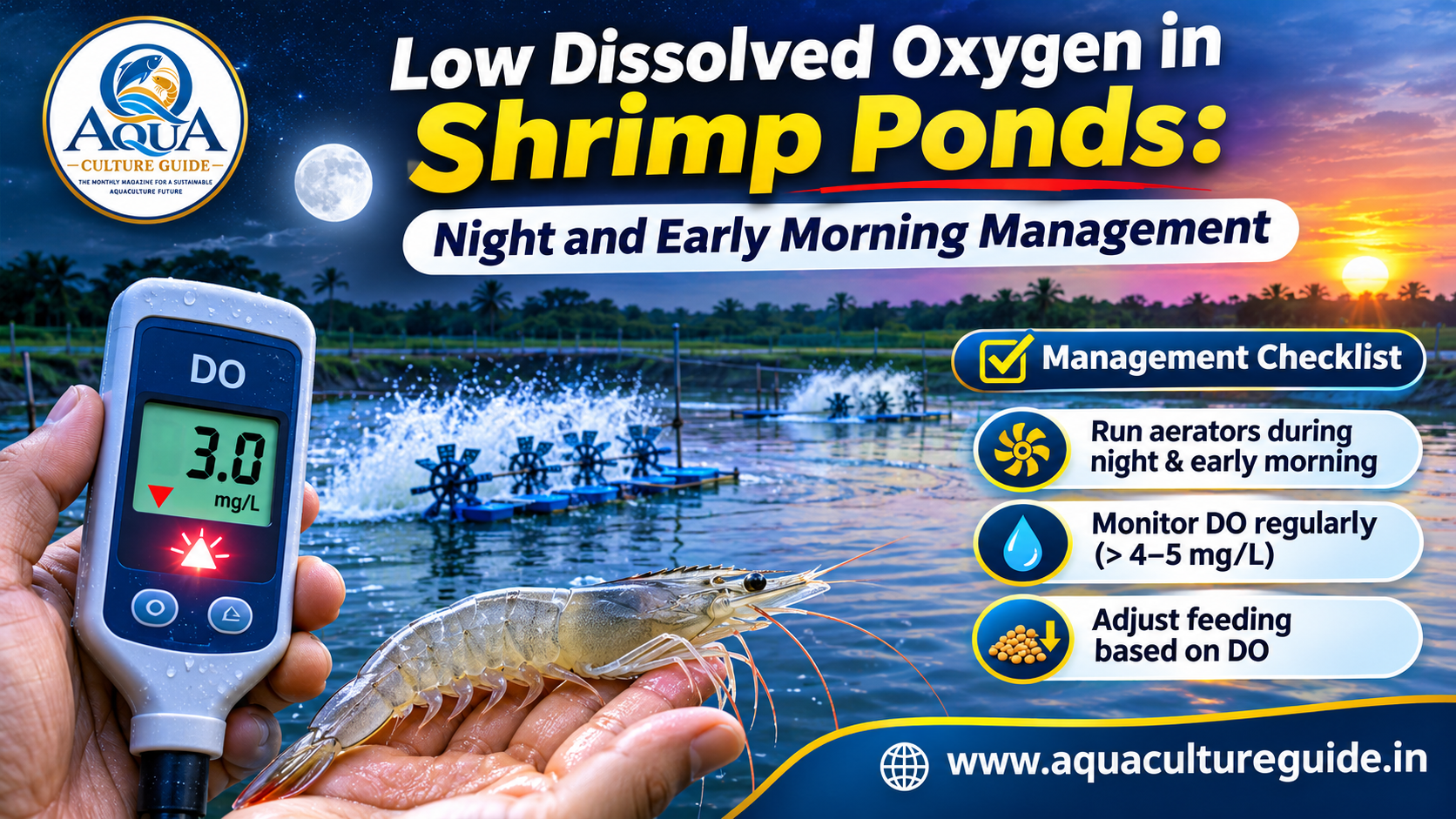
Learn how to manage low dissolved oxygen in shrimp ponds during night and early morning. Explore warning signs, emergency aeration, prevention methods, a complete checklist and a step-by-step guide.
Introduction
Dissolved oxygen (DO) is one of the most important water-quality parameters in shrimp farming. Shrimp need sufficient oxygen for respiration, feeding, digestion, growth and normal body functions. When oxygen levels fall, shrimp may become stressed, reduce their feed consumption, show unusual swimming behaviour and, in severe cases, die.
Low dissolved oxygen is a common problem during nighttime and early morning. During daylight, phytoplankton produce oxygen through photosynthesis. After sunset, photosynthesis stops, but shrimp, plankton, bacteria and other organisms continue consuming oxygen. As a result, dissolved oxygen gradually decreases and often reaches its lowest level just before sunrise.
Farmers who monitor only daytime oxygen levels may miss this risk. Proper aeration, regular DO testing, feeding management and pond-bottom maintenance are essential to prevent oxygen depletion.
This article explains why dissolved oxygen drops at night, how to identify early warning signs, what farmers should do during an emergency, and how to maintain suitable oxygen levels throughout the culture period.
What Is Dissolved Oxygen in Shrimp Farming?
Dissolved oxygen is the amount of oxygen present in water and available to aquatic animals.
It is generally measured in:
Milligrams per litre (mg/L).
Parts per million (ppm).
A dissolved oxygen meter is commonly used to measure oxygen levels in shrimp ponds.
Maintaining suitable DO is important because shrimp depend on oxygen dissolved in water. When oxygen becomes insufficient, shrimp may experience stress and reduced feeding activity.
Why Does Dissolved Oxygen Decrease During Nighttime?
There are several reasons why oxygen levels decrease after sunset.
A. Photosynthesis Stops at Night
During daylight, phytoplankton use sunlight to produce oxygen through photosynthesis.
After sunset, this oxygen production stops. However, oxygen consumption continues.
B. Shrimp Continue Respiration
Shrimp consume oxygen throughout the day and night.
As shrimp grow and biomass increases, the total oxygen demand of the pond also increases.
C. Plankton Consume Oxygen
Phytoplankton produce oxygen during daylight, but they also consume oxygen through respiration at night.
A dense plankton population can contribute to significant nighttime oxygen consumption.
D. Bacterial Activity Increases Oxygen Demand
Bacteria break down uneaten feed, faecal matter, dead plankton and other organic materials.
This decomposition process can consume large amounts of oxygen, particularly in ponds with high organic loads.
E. Excessive Feeding
Uneaten feed and waste increase the amount of organic matter in the pond.
Microorganisms breaking down this material consume oxygen.
F. Heavy Cloud Cover and Rainfall
Prolonged cloudy weather reduces sunlight and can decrease daytime photosynthesis.
Heavy rainfall may also change water conditions and contribute to oxygen fluctuations.
G. Algal Bloom Crash
A sudden decline or crash in a dense phytoplankton population can create additional oxygen demand as dead algae decompose.
This can lead to a rapid decline in dissolved oxygen.
What Is the Ideal Dissolved Oxygen Level for Shrimp Ponds?
Many shrimp farms aim to maintain dissolved oxygen around 5 mg/L or higher where practical.
The appropriate operating target depends on shrimp species, stocking density, biomass, temperature, salinity and farm conditions.
Use the following values as general management guidance, not as universal biological limits:
5 mg/L and above: A commonly preferred management target.
4–5 mg/L: Monitor carefully and review aeration, particularly when readings are falling.
3–4 mg/L: Low oxygen conditions; take prompt corrective action.
Below 3 mg/L: Serious oxygen stress risk; activate emergency aeration and monitor closely.
Very low oxygen: Can cause severe stress and mortality, depending on exposure duration and other pond conditions.
Do not wait for shrimp to show visible stress before responding to falling DO readings.
Warning Signs of Low Dissolved Oxygen in Shrimp Ponds
Farmers should observe shrimp behaviour, especially during late night and early morning.
Common warning signs include:
A. Shrimp Gathering Near Pond Edges
Shrimp may move towards pond edges or areas with better water movement when oxygen becomes insufficient.
B. Shrimp Coming to the Water Surface
Shrimp may swim near the surface or gather near water inlets and aerators.
C. Reduced Feeding Activity
Shrimp may consume less feed when oxygen levels are low.
D. Unusual Swimming Behaviour
Shrimp may show abnormal movement, weak swimming or reduced activity.
E. Shrimp Gathering Near Aerators
Shrimp may move towards areas with better oxygen availability.
F. Sudden Mortality
Severe oxygen depletion can cause shrimp mortality, especially when it continues for an extended period.
Important: These signs are not exclusive to low oxygen. Check dissolved oxygen immediately and investigate other possible water-quality or health problems.
How to Prevent Low Dissolved Oxygen During Nighttime
Prevention is better than emergency treatment. Farmers should prepare a nighttime oxygen-management plan.
A. Use Proper Aeration
Aeration is one of the most important ways to maintain dissolved oxygen.
Common systems include:
Paddlewheel aerators.
Aspirator aerators.
Diffuser aeration systems.
Other suitable mechanical aerators.
Select equipment based on pond size, depth, shrimp biomass and oxygen demand.
B. Operate Aerators Before Oxygen Becomes Low
Do not wait until shrimp gather near pond edges
Start aerators according to DO readings, pond conditions and the farm's operating plan.
C. Monitor Dissolved Oxygen at Night
Measure DO at:
Late evening.
Midnight, when risk conditions require it.
Early morning before sunrise.
Monitoring helps farmers understand how quickly oxygen levels are declining.
D. Manage Feeding Properly
Excess feeding increases organic waste and oxygen demand.
Farmers should:
Follow appropriate feed schedules.
Check feeding trays.
Avoid unnecessary excess feed.
Adjust feeding according to shrimp biomass and feeding response.
E. Control Organic Matter
Accumulated feed waste, faecal matter and dead plankton can increase oxygen consumption.
Maintain good pond-bottom management and avoid excessive organic loading
F. Maintain Suitable Plankton Conditions
Sudden changes in plankton populations can affect oxygen levels.
Monitor water colour and transparency, and avoid uncontrolled fertiliser or nutrient applications.
G. Prepare Backup Power
Power failure during nighttime can create a serious emergency.
Keep generators, standby aerators and emergency power arrangements ready.
What Should Farmers Do When Dissolved Oxygen Becomes Low?
If dissolved oxygen falls, farmers should respond immediately.
Immediate Actions
Measure dissolved oxygen to confirm the problem.
Start available aerators immediately.
Activate backup power if electricity is unavailable.
Check DO at different pond locations.
Observe shrimp behaviour.
Stop or temporarily reduce feeding while shrimp are stressed.
Check whether aerators are working properly.
Continue monitoring DO until conditions improve.
Investigate possible causes such as excess organic matter, algal bloom changes or equipment failure.
Seek technical support if oxygen levels do not recover.
Do not apply chemicals or other pond treatments as a substitute for emergency aeration.
How to Manage Low Dissolved Oxygen During Early Morning
Early morning is a critical period because oxygen levels are often at their lowest just before sunrise.
Farmers should follow these practices:
Measure DO before sunrise.
Check different pond locations.
Keep aerators running when readings indicate a need.
Observe shrimp movement and feeding response.
Check for dead plankton or sudden water-colour changes.
Avoid feeding if shrimp are stressed or not consuming feed.
Continue monitoring until oxygen levels are stable.
Do not switch off aerators simply because daylight has started. Wait until measured oxygen levels and pond conditions indicate that reducing aeration is safe.
Factors That Increase the Risk of Nighttime Oxygen Depletion
High Stocking Density
More shrimp in a pond means greater total oxygen demand.
High Shrimp Biomass
Oxygen demand generally increases as shrimp grow.
High Feeding Rate
More feed can produce more waste and increase microbial oxygen consumption.
Dense Plankton Population
A dense bloom may produce substantial oxygen during daylight but also consume oxygen at night. A bloom crash can make the situation worse.
High Organic Matter
Uneaten feed, faecal matter and dead organisms increase decomposition-related oxygen demand.
High Water Temperature
Warmer water holds less dissolved oxygen than cooler water, while shrimp and microbial oxygen demand may increase.
Cloudy or Rainy Weather
Reduced sunlight can limit daytime oxygen production through photosynthesis.
Poor Aerator Maintenance
Damaged motors, worn components or poorly positioned aerators can reduce effective aeration.
Complete Checklist for Nighttime and Early Morning Oxygen Management
Use this checklist as part of your daily shrimp farm management routine.
A. Before Sunset
Check the latest dissolved oxygen reading.
Observe shrimp behaviour.
Check water colour and transparency.
Review daily feed consumption.
Inspect aerators.
Check motors, paddles and electrical connections.
Confirm backup power availability.
Check whether any pond has unusually high organic loading.
Review weather conditions and cloud cover.
Plan nighttime aeration based on pond conditions.
B. During Nighttime
Measure dissolved oxygen at scheduled times.
Check DO in different pond locations.
Observe shrimp movement.
Keep suitable aeration running.
Check aerator operation.
Watch for unusual surface activity.
Avoid unnecessary feeding.
Keep emergency equipment ready.
Record DO readings and aerator operating hours.
C. Early Morning
Measure DO before sunrise.
Compare the reading with nighttime values.
Check shrimp behaviour
Observe feeding response.
Check water colour and transparency.
Continue aeration if required.
Inspect for unusual mortality.
Record all observations.
D. Weekly Management
Review dissolved oxygen trends.
Inspect all aerators and electrical systems.
Check pond-bottom organic matter
Review feeding quantity and feed-tray records.
Monitor water quality.
Check backup generator operation.
Review stocking biomass and oxygen demand.
Update the emergency response plan.
Step-by-Step Guide to Managing Low Dissolved Oxygen at Night and Early Morning
Step 1: Understand Your Pond's Oxygen Pattern
Measure dissolved oxygen at different times for several days.
Record readings during the afternoon, evening, late night and early morning.
This helps identify when oxygen levels usually start declining.
Step 2: Monitor Shrimp Biomass
Estimate the current shrimp biomass.
As shrimp grow, their oxygen requirements increase. Review whether the existing aeration system is suitable for the expected biomass.
Step 3: Check Water Quality
Monitor:
Dissolved oxygen.
Temperature.
pH.
Salinity.
Alkalinity.
Ammonia.
Nitrite.
Also observe plankton condition and water transparency.
Step 4: Inspect Aeration Equipment
Check paddlewheels, aspirators, blowers, diffusers and other equipment.
Repair damaged parts and maintain motors regularly.
Step 5: Prepare an Aeration Schedule
Develop an operating schedule based on actual DO readings, shrimp biomass, feeding rate and weather conditions.
Increase aeration when oxygen demand is high.
Step 6: Start Aeration Before Critical Oxygen Levels
Do not wait until shrimp show signs of stress.
Start or increase aeration when DO readings show a declining trend and the pond's operating target is at risk.
Step 7: Monitor DO During the Night
Take readings at planned intervals.
Increase monitoring frequency during cloudy weather, high biomass, heavy feeding or unstable plankton conditions.
Step 8: Take Immediate Action if DO Falls
If oxygen becomes low:
Start all available suitable aerators.
Activate backup power if needed.
Reduce or temporarily stop feeding.
Check DO at multiple locations.
Observe shrimp behaviour.
Step 9: Check the Cause
After the immediate risk is controlled, investigate:
Excess feed and organic waste.
Plankton bloom changes.
High shrimp biomass.
Aerator failure.
Weather changes.
Poor pond circulation.
Step 10: Review Feeding and Pond Management
Adjust feeding based on shrimp response and water quality.
Improve waste management and avoid unnecessary nutrient inputs.
Step 11: Maintain Emergency Equipment
Keep a generator, standby aerator and essential spare parts ready.
Test emergency equipment regularly rather than waiting for a power failure.
Step 12: Record and Improve
Maintain a daily record of:
DO readings.
Time of measurement.
Number of aerators operating.
Aerator operating hours.
Feed quantity.
Weather conditions.
Shrimp behaviour.
Corrective actions.
Use these records to improve the next night's aeration plan.
Common Mistakes Farmers Should Avoid
Checking dissolved oxygen only during daytime.
Ignoring early-morning DO readings.
Starting aeration only after shrimp show stress.
Switching off aerators too early.
Operating damaged or poorly maintained aerators.
Feeding excessively during poor oxygen conditions.
Ignoring organic waste accumulation.
Having no backup power.
Depending only on shrimp behaviour instead of DO testing.
Increasing stocking density without reviewing aeration capacity.
Ignoring cloudy weather and algal bloom changes.
Applying unnecessary pond treatments instead of correcting the oxygen problem.
Best Practices for Maintaining Dissolved Oxygen in Shrimp Ponds
Maintain a suitable aeration system.
Monitor DO during nighttime and early morning.
Keep sufficient aeration capacity for expected peak biomass.
Manage feeding according to shrimp consumption.
Control organic matter accumulation.
Maintain suitable plankton conditions.
Inspect aerators regularly.
Keep backup power ready.
Monitor weather conditions.
Maintain accurate farm records.
Take action before oxygen reaches dangerous levels.
Conclusion
Low dissolved oxygen during nighttime and early morning is a serious challenge in shrimp farming. Oxygen levels often decrease after sunset because photosynthesis stops while shrimp, plankton and microorganisms continue consuming oxygen.
Farmers can reduce the risk through regular DO monitoring, proper aeration, feeding management, organic waste control and reliable backup power.
The most important practice is to identify falling oxygen levels before shrimp show signs of stress. Measure dissolved oxygen at night and before sunrise, maintain suitable aeration and respond immediately when readings become unsafe.
Good oxygen management protects shrimp health, supports feeding activity and helps farmers maintain a more stable culture environment.
Questions & Answers
Q1.Why does dissolved oxygen decrease at night in shrimp ponds?
Photosynthesis stops after sunset, but shrimp, plankton and microorganisms continue consuming oxygen. This causes dissolved oxygen to decrease during nighttime.
Q2.When is dissolved oxygen usually lowest in shrimp ponds?
Dissolved oxygen is often lowest just before sunrise, although the exact pattern depends on pond conditions, weather and aeration.
Q3.What is a good dissolved oxygen level for shrimp farming?
What is a good dissolved oxygen level for shrimp farming? Many farms aim for around 5 mg/L or higher where practical. The appropriate target depends on shrimp species, biomass, water temperature and culture conditions.
Q4.What happens when dissolved oxygen becomes low?
Shrimp may experience stress, reduced feeding, abnormal swimming, poor growth and, in severe cases, mortality.
Q5.Should aerators run throughout the night?
Aeration requirements depend on DO readings, shrimp biomass, pond conditions and weather. Aerators should operate whenever needed to maintain suitable oxygen levels.
Q6.How often should farmers check dissolved oxygen at night?
Farmers should establish a monitoring schedule based on pond risk. More frequent checks are important during high biomass, cloudy weather, heavy feeding and unstable plankton conditions.
Q7.What should farmers do if DO falls below 3 mg/L?
Treat it as an urgent situation. Start available aerators immediately, activate backup power if needed, reduce or stop feeding temporarily and monitor oxygen levels closely.
Related articles
భారతీయ రిజర్వాయర్లలో కేజ్ ఫిష్ ఫార్మింగ్: సాంకేతికత, అనుమతులు మరియు పెట్టుబడి వివరాలు
భారతదేశంలోని రిజర్వాయర్లలో కేజ్ ఫిష్ ఫార్మింగ్ ఎలా ప్రారంభించాలి? అవసరమైన సాంకేతికత, ప్రభుత్వ అనుమతులు, పెట్టుబడి, చేపల జాతులు, మేత నిర్వహణ మరియు లాభనష్టాల గురించి పూర్తి వివరాలు తెలుసుకోండి.
Freshwater Prawn Farming in IndiaFreshwater Prawn Farming in India: రైతులకు పూర్తి సాగు మార్గదర్శిని
భారతదేశంలో మంచినీటి రొయ్యల సాగు ఎలా ప్రారంభించాలి? జెయింట్ ఫ్రెష్వాటర్ ప్రాన్ సీడ్ ఎంపిక, చెరువు తయారీ, స్టాకింగ్, ఆహారం, నీటి నాణ్యత, పెట్టుబడి, మార్కెటింగ్ గురించి పూర్తి వివరాలు తెలుసుకోండి.
Tilapia farming in Indiaభారతదేశంలో తిలాపియా చేపల పెంపకం – మార్కెట్ అవకాశాలు, ప్రభుత్వ నిబంధనలు మరియు ఆధునిక సాగు పద్ధతులు
భారతదేశంలో తిలాపియా చేపల పెంపకం ఎలా చేయాలి? మార్కెట్ అవకాశాలు, ప్రభుత్వ అనుమతులు, చెరువు సాగు, బయోఫ్లాక్, RAS విధానాలు, పిల్లల ఎంపిక, మేత నిర్వహణ మరియు దిగుబడి గురించి పూర్తి సమాచారం.
PCR Testing in Shrimp Hatcheriesరొయ్యల హ్యాచరీల్లో PCR పరీక్షలు: ఫలితాలను రైతులు ఎలా అర్థం చేసుకోవాలి?
WSSV, EHP, AHPND వంటి వ్యాధికారకాలను గుర్తించడంలో PCR పరీక్షల పాత్ర, పరీక్షా నివేదికలను అర్థం చేసుకోవడం, నాణ్యమైన రొయ్య పిల్లలను ఎంపిక చేసుకోవడం గురించి రైతులు తెలుసుకోవాల్సిన పూర్తి సమాచారం.
Explore Aqua Culture Guide
Aqua companies directory
Feed, seed, probiotics & equipment suppliers
Aquaculture calculators
Feed, FCR, stocking & water quality tools
Telugu aqua magazine
Read the latest monthly issue online
All aqua news & articles
Farming, disease control and market updates
List your company free
Get found by farmers across India
Advertise with us
Magazine and website advertising options