How to Choose the Right Aquaculture Feed: Farmer's Guide
26/10/2026
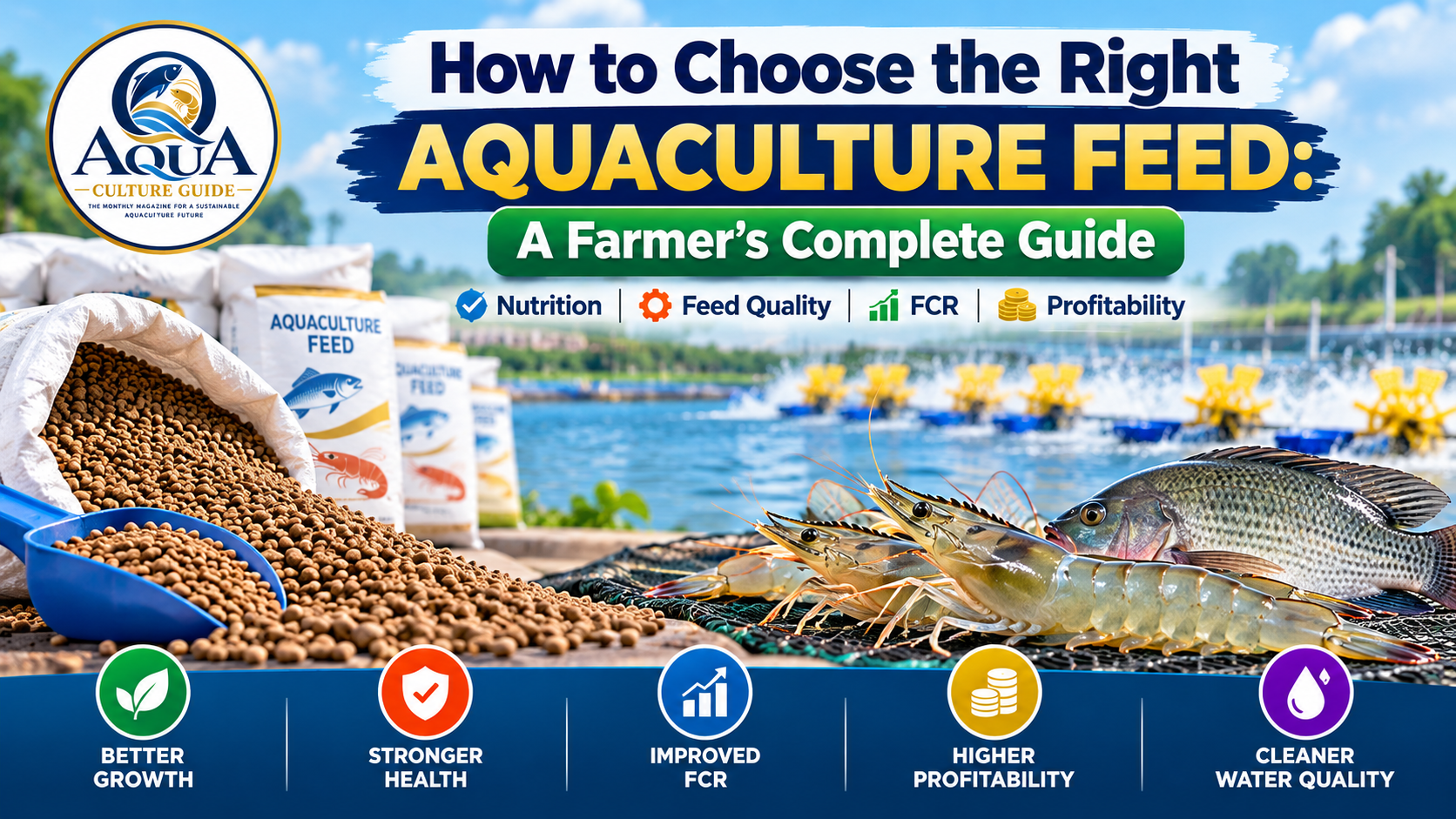
how to choose the best aquaculture feed for shrimp and fish. Compare protein, pellet size, FCR, feed quality, cost and storage with our farmer's guide.
Introduction
Feed is one of the most important investments in aquaculture farming. Whether cultivating Pacific white shrimp (Litopenaeus vannamei), black tiger shrimp (Penaeus monodon), tilapia, carp, or other commercially important aquatic species, choosing the right feed directly influences growth, survival, feed conversion ratio (FCR), water quality, and farm profitability.
Feed often accounts for approximately 40–60% or more of operating costs in many intensive aquaculture systems, although the actual percentage varies by species, production system, feed price, and farm management.
Despite its importance, many farmers select feed primarily based on brand reputation, dealer recommendations, or price per bag. However, the cheapest feed does not necessarily provide the lowest production cost, and the most expensive feed is not automatically the best.
The right aquaculture feed should provide suitable nutrition, match the species and growth stage, maintain good physical quality, support efficient feed utilization, and deliver economical growth under actual farm conditions.
Why Choosing the Right Aquaculture Feed Matters
Selecting suitable feed affects almost every stage of production.
Key benefits of proper feed selection
- Improved growth: Balanced nutrition supports healthy tissue development and weight gain.
- Better feed conversion: Efficient feeds help produce more biomass per kilogram of feed.
- Improved survival: Appropriate nutrition supports normal physiological and immune functions.
- Better water quality: Good feed management reduces uneaten feed and nutrient waste.
- Lower production costs: Better feed efficiency can offset a higher purchase price.
- Consistent crop performance: Reliable feed quality reduces unnecessary variability.
- Reduced environmental impact: Efficient nutrient utilization can lower nutrient discharge.
Understand the Nutritional Requirements of Your Species
Different aquatic species have different nutritional requirements. Even within the same species, feed requirements change with size, life stage, temperature, and farming conditions.
General protein ranges for common aquaculture species
Species / Stage Illustrative crude protein range
Vannamei shrimp – starter 38–45%
Vannamei shrimp – grower 32–40%
Vannamei shrimp – finisher 30–35%
Black tiger shrimp 35–45%
Tilapia – juvenile 30–40%
Tilapia – grower 25–32%
Carp – grower 22–30%
Many carnivorous fish 40–50% or more
Protein is important, but not everything
Farmers often compare feeds using crude protein percentages alone.
However, two feeds with identical crude protein levels may perform differently because of differences in:
- Protein digestibility and ingredient quality.
- Essential amino-acid balance.
- Lipid and energy content.
- Vitamin and mineral availability.
- Feed processing quality.
- Nutrient stability in water.
A feed containing 35% crude protein is not necessarily superior to another feed containing 32% protein if its digestibility, amino-acid balance, and actual farm performance are poorer.
Farmer's tip: Compare complete nutritional specifications rather than selecting feed based only on protein percentage.
Choose Feed According to the Growth Stage
Shrimp and fish require different feed sizes and nutritional formulations as they grow.
Shrimp feed selection by growth stage
Growth stage Feed type Main consideration
Post-larvae Microdiet or fine crumble Small particle size and high nutrient availability
Early juvenile Crumble or small pellet Suitable size and good water stability
Juvenile Grower pellet Balanced nutrition and efficient consumption
Sub-adult Grower pellet Growth performance and feed efficiency
Market-size shrimp Finisher pellet Economical growth and suitable nutrition
Feed particle size should be matched to shrimp size, feeding behaviour, and the manufacturer's recommendations.
Pellets that are too large may be difficult for small shrimp to consume, while excessively fine feed may increase losses.
Fish feed selection
For many surface-feeding and mid-water fish species, floating or slow-sinking feed can make feeding response easier to observe.
Bottom-feeding species may require sinking pellets.
However, feed buoyancy should match the natural feeding behaviour of the cultured species rather than being treated as a universal quality indicator.
Check the Nutritional Information on the Feed Bag
Before purchasing aquaculture feed, examine the product label carefully.
Important nutrients and specifications
Parameter Why it matters
Crude protein Supports growth and tissue maintenance
Crude fat / lipid Supplies energy and essential fatty acids
Crude fibre Helps assess ingredient composition and suitability
Moisture Influences storage stability and spoilage risk
Ash Indicates total mineral content
Calcium and phosphorus Support mineral nutrition
Amino-acid profile Helps assess protein nutritional quality
Pellet size Determines suitability for the cultured animal
Manufacturing date Helps assess product freshness
Batch number Enables product traceability
Farmers should also examine the ingredient declaration, feeding instructions, manufacturer details, and any applicable quality certifications.
Check the ingredients
Aquaculture feed may contain fishmeal, soybean meal, cereal ingredients, oils, vitamin-mineral premixes, and other nutritional components.
Ingredient quality, digestibility, processing, and nutrient balance are more important than the presence of any single ingredient.
Avoid assuming that feed with a higher fishmeal percentage is always better.
Evaluate Physical Feed Quality
Good aquaculture feed should have consistent physical characteristics and remain suitable for consumption under pond conditions.
Important physical quality indicators
Pellet uniformity: Pellets should be reasonably consistent in size and shape for the intended growth stage.
Water stability: Shrimp feed must remain sufficiently intact in water to allow feeding while minimizing nutrient leaching. Excessively hard pellets, however, may reduce accessibility or consumption.
Dust and fines: Excessive broken pellets or powder can indicate handling or manufacturing problems and may increase feed losses.
Odour: Feed should have a normal, characteristic smell. Rancid, sour, or mouldy odours are warning signs.
Appearance: Unusual discoloration, visible mould, insect infestation, or excessive clumping may indicate deterioration.
Packaging condition: Bags should be properly sealed and protected from moisture.
Simple on-farm water stability observation
- Take a representative sample of pellets.
- Place them in a clean container containing pond water.
- Observe the pellets at intervals recommended for that feed type.
- Record swelling, fragmentation, and visible disintegration.
- Compare different feeds under identical conditions.
This is only a practical screening test, not a laboratory measurement of digestibility, nutrient leaching, or complete feed quality.
Understand Feed Conversion Ratio (FCR)
Feed Conversion Ratio is one of the most useful indicators of feed efficiency in aquaculture.
It measures how much feed is used to produce a unit of biomass gain.
FCR formula
FCR=Total Feed Used (kg)/Biomass Gain (kg)
For example, if a shrimp crop consumes 1,500 kg of feed and produces a net biomass gain of 1,000 kg:
FCR= 1500 / 1000=1.5
This means 1.5 kg of feed was used for each kilogram of net biomass gain.
In commercial ponds, farmers often calculate an apparent crop FCR using harvested biomass, adjusted for stocked biomass where relevant. Mortality, natural pond productivity, and biomass estimation errors can affect the result.
Interactive FCR calculator
Calculate your farm's feed efficiency
Feed consumed (kg)- 1500
Net biomass gain (kg) - 1000
Feed price (₹/kg) - 80
Feed conversion ratio
1.50
Feed cost per kg gain
₹120
This calculation excludes other farming costs and assumes the entered biomass gain is accurate.
A lower FCR generally indicates better feed utilization, but FCR should be evaluated alongside survival, growth rate, water quality, crop duration, and profitability.
Compare Feed Price with Actual Production Cost
The lowest feed price does not necessarily result in the lowest feed cost per kilogram of shrimp or fish produced.
Consider this illustrative comparison:
Parameter Feed A Feed B
Feed price per kg ₹75 ₹85
Achieved FCR 1.7 1.4
Feed cost per kg biomass gain ₹127.50 ₹119.00
Although Feed B costs ₹10 more per kilogram, it produces a lower feed cost per kilogram of biomass gain under these assumptions.
This comparison demonstrates why farmers should evaluate feed performance, not only purchase price.
Important: The FCR values above are hypothetical examples, not verified performance claims for commercial feed brands.
Complete Step-by-Step Guide to Choosing the Right Feed
**Identify the cultured species
**Confirm whether the feed is intended for vannamei shrimp, black tiger shrimp, tilapia, carp, or another species.
Determine the current growth stage
Estimate average body weight through representative sampling and select an appropriate starter, grower, or finisher feed.
Compare nutritional specifications
Examine protein, lipid, moisture, ash, amino acids, minerals, and other relevant nutrient information.
Inspect physical feed quality
Check pellet uniformity, dust, smell, packaging, and water stability.
Evaluate the manufacturer and supplier
Prefer traceable products from reliable manufacturers with technical support and clear product specifications.
Calculate the expected feeding cost
Compare the feed price, realistic FCR expectations, and feed cost per kilogram of biomass gain.
Conduct a controlled on-farm evaluation
Where practical, compare suitable feeds in comparable ponds or controlled production units. Record stocking, feeding, growth, survival, water quality, and other management differences.
Monitor actual performance
Use growth sampling, feeding trays, consumption records, and biomass estimates to evaluate the feed.
Select based on total crop performance
Consider feed efficiency, shrimp health, survival, growth, water quality, and final profitability.
Proper Feed Storage and Handling
Even high-quality feed can deteriorate when stored incorrectly.
Farmers should:
- Store feed in a cool, dry, clean, well-ventilated area.
- Keep bags on pallets rather than directly on the floor.
- Protect feed from direct sunlight, rainfall, and moisture.
- Keep bags away from pesticides, fuels, chemicals, and other contaminants.
- Prevent access by rodents, insects, and birds.
- Follow manufacturer storage instructions and expiry dates.
- Use first-expiring-first-out stock rotation.
- Seal opened bags properly and use them promptly.
- Never feed visibly mouldy, contaminated, or rancid feed.
Poor storage can reduce nutritional quality and create food safety risks, including possible mycotoxin contamination.
Common Mistakes Farmers Should Avoid
Selecting feed only by price
Low-cost feed may have a higher FCR or poorer performance, resulting in greater total feeding expenses.
Choosing feed only by protein percentage
High protein does not automatically mean better growth. Digestibility, amino-acid balance, energy, and ingredient quality are equally important.
Using the wrong pellet size
Inappropriate pellets may increase feeding difficulty and feed wastage.
Changing feed without evaluating performance
Frequent brand changes without records make it difficult to assess feed effectiveness. Any necessary change should be monitored carefully.
Overfeeding to accelerate growth
Excess feeding does not guarantee faster growth. It increases cost and may worsen pond water quality.
Ignoring feed storage
Moisture, heat, and prolonged storage can damage feed quality.
Relying only on dealer claims
Marketing claims should be supported by appropriate product information, reliable technical data, and actual farm performance.
Complete Aquaculture Feed Selection Checklist
Farmers can use this checklist before purchasing a new feed brand or formulation.
Species and nutritional suitability
☐ Feed is suitable for the cultured species
☐ Formulation matches the current growth stage
☐ Protein and lipid specifications have been checked
☐ Pellet size is suitable for the animal's size
☐ Relevant nutrient information is available
Feed quality and safety
☐ Pellets are uniform and not excessively broken
☐ No unusual rancid or mouldy smell
☐ No visible mould, insects, or contamination
☐ Packaging is sealed and undamaged
☐ Manufacturing date, batch and expiry details are checked
Manufacturer and supplier
☐ Manufacturer identity and traceability are clear
☐ Supplier provides reliable product specifications
☐ Feed is sourced from an authorized supplier
☐ Technical support and feeding instructions are available
Cost and performance
☐ Price per kilogram has been compared
☐ Expected FCR has been evaluated realistically
☐ Feed cost per kilogram of gain has been calculated
☐ Growth and survival performance will be monitored
☐ Feed-tray and consumption records are maintained
Storage and management
☐ Storage area is dry, cool, and ventilated
☐ Bags are kept off the floor
☐ Feed is protected from pests and chemicals
☐ Stock is rotated by expiry date
☐ Feeding quantities are adjusted using farm records
Conclusion
Choosing the right aquaculture feed is a critical management decision that directly influences crop productivity, shrimp and fish health, and farm profitability.
Farmers should not select feed solely based on price, protein percentage, or brand reputation. Instead, they should evaluate nutritional suitability, physical quality, manufacturer reliability, feeding performance, and actual production costs.
A scientifically informed feed-selection strategy, combined with proper feeding practices and good pond management, can improve feed efficiency, reduce waste, and support more sustainable aquaculture production.
Remember: The best aquaculture feed is not necessarily the cheapest or the most expensive. It is the feed that consistently delivers healthy growth, efficient nutrient utilization, and profitable production under your farm conditions.
Questions & Answers
Q1.Which feed is best for vannamei shrimp farming?
The best feed is a nutritionally balanced, species-appropriate formulation that provides consistent growth, good survival, suitable pellet quality, and economical FCR under actual farm conditions. No single brand is universally best.
Q2.How much protein is required in shrimp feed?
Protein requirements depend on shrimp species, size, digestibility, and formulation. Vannamei starter feeds may contain around 38–45% crude protein, while grower and finisher feeds may contain lower percentages.
Q3.Is expensive aquaculture feed always better?
No. A higher feed price does not guarantee better performance. Farmers should compare actual FCR, growth, survival, and feed cost per kilogram of biomass gain.
Q4.What is a good FCR in shrimp farming?
There is no universal ideal FCR. Performance varies by species, stocking density, survival, feeding practices, and pond conditions. Farmers should compare results with similar farming systems and calculate FCR consistently.
Q5.Should shrimp farmers use floating or sinking feed?
Shrimp generally feed near the pond bottom, so appropriately formulated sinking or bottom-accessible feed is commonly used. Feed behaviour should match the species and culture system.
Q6.How can farmers identify poor-quality feed?
Warning signs include excessive powder, damaged pellets, unusual odour, mould, moisture damage, inconsistent pellet size, and poor packaging. Laboratory testing may be necessary to confirm nutritional or contamination problems.
Q7.Can farmers change feed brands during a crop?
Yes, when necessary. However, changes should be managed carefully, and farmers should monitor feed acceptance, growth, water quality, and feeding response. Avoid making multiple management changes simultaneously.
Related articles
భారతీయ రిజర్వాయర్లలో కేజ్ ఫిష్ ఫార్మింగ్: సాంకేతికత, అనుమతులు మరియు పెట్టుబడి వివరాలు
భారతదేశంలోని రిజర్వాయర్లలో కేజ్ ఫిష్ ఫార్మింగ్ ఎలా ప్రారంభించాలి? అవసరమైన సాంకేతికత, ప్రభుత్వ అనుమతులు, పెట్టుబడి, చేపల జాతులు, మేత నిర్వహణ మరియు లాభనష్టాల గురించి పూర్తి వివరాలు తెలుసుకోండి.
Freshwater Prawn Farming in IndiaFreshwater Prawn Farming in India: రైతులకు పూర్తి సాగు మార్గదర్శిని
భారతదేశంలో మంచినీటి రొయ్యల సాగు ఎలా ప్రారంభించాలి? జెయింట్ ఫ్రెష్వాటర్ ప్రాన్ సీడ్ ఎంపిక, చెరువు తయారీ, స్టాకింగ్, ఆహారం, నీటి నాణ్యత, పెట్టుబడి, మార్కెటింగ్ గురించి పూర్తి వివరాలు తెలుసుకోండి.
Tilapia farming in Indiaభారతదేశంలో తిలాపియా చేపల పెంపకం – మార్కెట్ అవకాశాలు, ప్రభుత్వ నిబంధనలు మరియు ఆధునిక సాగు పద్ధతులు
భారతదేశంలో తిలాపియా చేపల పెంపకం ఎలా చేయాలి? మార్కెట్ అవకాశాలు, ప్రభుత్వ అనుమతులు, చెరువు సాగు, బయోఫ్లాక్, RAS విధానాలు, పిల్లల ఎంపిక, మేత నిర్వహణ మరియు దిగుబడి గురించి పూర్తి సమాచారం.
PCR Testing in Shrimp Hatcheriesరొయ్యల హ్యాచరీల్లో PCR పరీక్షలు: ఫలితాలను రైతులు ఎలా అర్థం చేసుకోవాలి?
WSSV, EHP, AHPND వంటి వ్యాధికారకాలను గుర్తించడంలో PCR పరీక్షల పాత్ర, పరీక్షా నివేదికలను అర్థం చేసుకోవడం, నాణ్యమైన రొయ్య పిల్లలను ఎంపిక చేసుకోవడం గురించి రైతులు తెలుసుకోవాల్సిన పూర్తి సమాచారం.
Explore Aqua Culture Guide
Aqua companies directory
Feed, seed, probiotics & equipment suppliers
Aquaculture calculators
Feed, FCR, stocking & water quality tools
Telugu aqua magazine
Read the latest monthly issue online
All aqua news & articles
Farming, disease control and market updates
List your company free
Get found by farmers across India
Advertise with us
Magazine and website advertising options