
Godavari Shrimp Farmers Face Power Crisis, Rising Costs and Falling Prices
1/11/2026
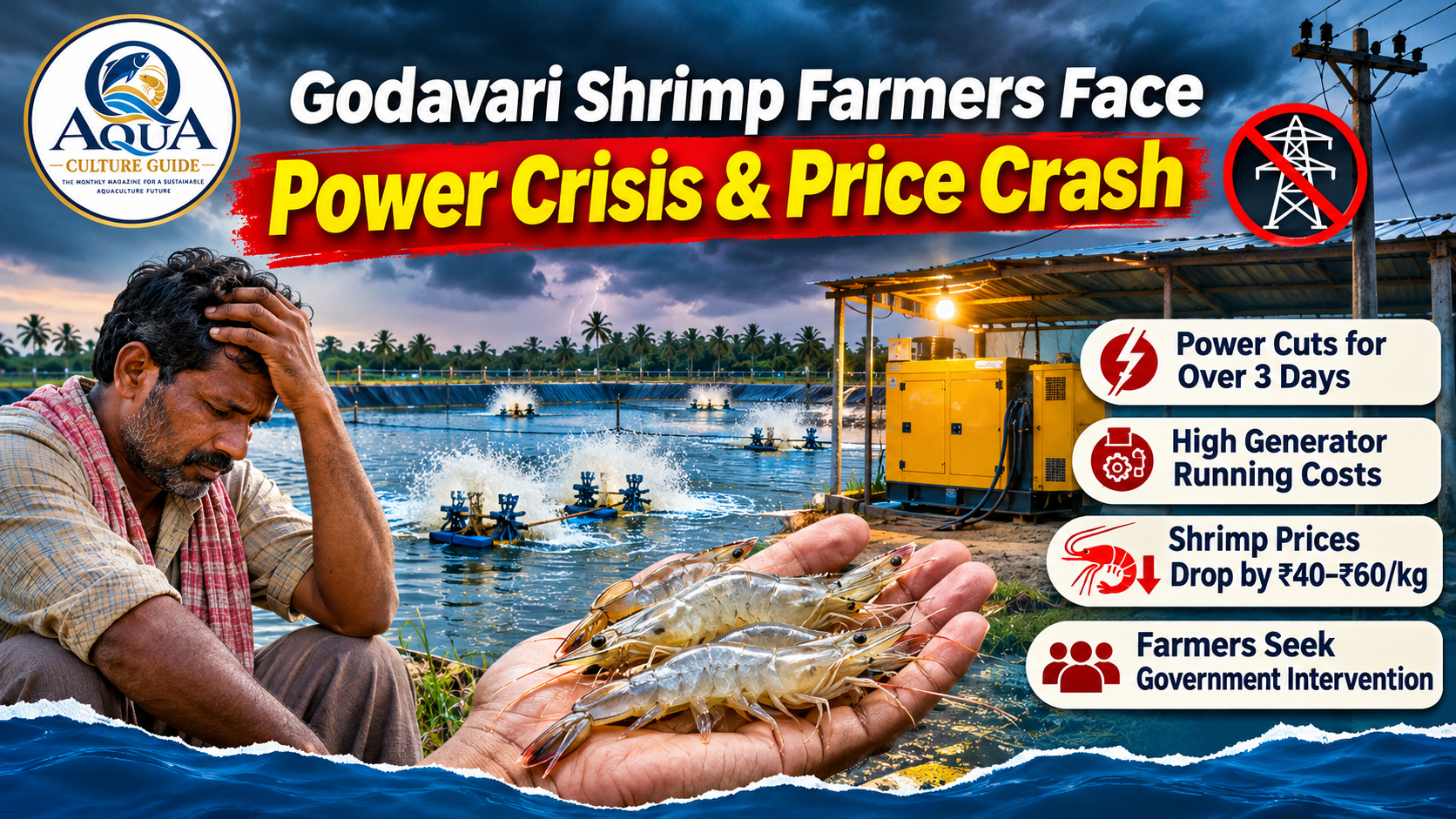
Shrimp farmers in Andhra Pradesh's Godavari districts face prolonged power cuts, rising generator expenses and falling shrimp prices amid trader syndicate allegations.
Introduction
Shrimp farmers in Andhra Pradesh's Godavari region are facing mounting financial pressure following reports of prolonged electricity interruptions, rising operational expenses and declining farm-gate shrimp prices.
According to concerns raised by the farming community, electricity disruptions extending beyond three days have forced aquaculture operators to depend heavily on diesel generators to maintain aeration and other essential pond operations.
The situation has reportedly become more difficult as farmers face reduced shrimp purchase prices, with allegations that groups of traders are taking advantage of their financial vulnerability.
Farmers are calling for urgent intervention from the Andhra Pradesh government to restore reliable electricity, investigate pricing practices and protect the livelihoods of aquaculture-dependent communities.
Cyclone Arnab Adds to the Crisis
The immediate crisis follows Cyclone Arnab, which brought heavy rainfall, strong winds and widespread disruption to parts of coastal Andhra Pradesh in late October 2026.
Reports from West Godavari and Eluru indicate that electricity supply remained interrupted for approximately three days in several aquaculture areas. The adverse weather also affected pond infrastructure, transportation and harvesting activities.
According to an October 30 report by S&P Global, power outages disrupted shrimp pond operations and contributed to distress harvesting as farmers attempted to reduce the risk of losing their crops.
S&P Global
The combined effect of damaged infrastructure, unreliable electricity and falling market prices has created an unusually difficult situation for shrimp producers.
Three-Day Power Outages Threaten Shrimp Survival
Electricity is one of the most critical requirements for intensive shrimp aquaculture.
Paddlewheel aerators, aspirators, pumps and other equipment depend on reliable power to maintain suitable pond conditions.
When electricity supply is interrupted for extended periods, dissolved oxygen levels can decline rapidly, particularly in ponds with high stocking densities and substantial organic loads.
Insufficient dissolved oxygen can result in:
- Reduced feeding activity and slower shrimp growth.
- Increased physiological stress and vulnerability to disease.
- Deteriorating water quality and higher mortality risk.
- Emergency harvesting before shrimp reach the desired market size.
- Significant financial losses when aeration cannot be restored.
The problem can become particularly serious during the night and early morning, when photosynthesis stops and oxygen consumption continues.
For farmers who have already invested substantial amounts in seed, feed, pond preparation and disease management, losing electricity during the later stages of cultivation can put an entire crop at risk.
Generator Expenses Create an Additional Financial Burden
To protect their shrimp, affected farmers are reportedly hiring high-capacity diesel generators to operate aerators and maintain water circulation.
Illustrative emergency generator expenses
Reported daily rental
₹30–40K
Three-day rental
₹90K–1.2L
These costs are particularly difficult to absorb when farmers are already struggling with rising feed prices, labour charges, electricity-related expenses and fluctuating shrimp market rates.
Farmers operating smaller ponds may face even greater difficulties because they have fewer resources to absorb unexpected expenses.
Shrimp Prices Fall by ₹40–₹60 per Kilogram
While farmers are spending heavily to protect their crops, declining shrimp prices have created a second major challenge.
Local media reports indicate that some buyers have reduced purchase offers by approximately ₹40–₹60 per kilogram during the disruption.
Independent market reporting supports the broader picture of falling prices.
S&P Global reported on October 30 that 100-count head-on, shell-on shrimp were being offered at approximately ₹240 per kilogram. It also reported that 40-count farm-gate shrimp were assessed at ₹415 per kilogram on October 29, down ₹15 per kilogram from the previous week
The magnitude of the price decline varies depending on shrimp size, location, quality, market demand and transaction conditions.
Potential revenue loss from lower farm-gate prices
Illustrative calculation based on the reported ₹40–₹60/kg decline
Harvest quantity5 tonnes
Price decline per kg₹50
Estimated gross revenue reduction
₹2,50,000
Assumes the entire harvest is sold at the reduced price. This is a scenario calculation, not a verified loss for an individual farmer.
Farmers Raise Concerns Over Trader Syndicates
A major concern expressed by affected farmers is the alleged involvement of trader syndicates in reducing shrimp purchase prices.
Farmers argue that limited purchasing options, transportation interruptions and urgent harvesting requirements weaken their bargaining position.
However, the allegations of coordinated price manipulation require investigation. A decline in prices alone does not establish the existence of a syndicate.
Market participants have also identified other factors, including sudden increases in shrimp arrivals due to distress harvesting and disruptions in logistics.
Exporters cited by S&P Global suggested that the recent price decline could be temporary, noting that processing facilities had largely continued operating with backup power
A transparent examination of procurement records, shrimp count-wise prices, buyer practices and processing demand would help distinguish market-driven price changes from potential anti-competitive conduct.
An Already Struggling Aquaculture Industry
The latest disruption comes at a time when Andhra Pradesh's aquaculture sector is already dealing with several economic challenges.
According to information provided by the Union Ministry of Fisheries, Animal Husbandry and Dairying in August 2026, Andhra Pradesh had approximately 2.16 lakh aquaculture farmers operating across around 5.79 lakh acres of freshwater and brackish-water aquaculture.
The state government had acknowledged difficulties arising from declining market prices and increasing feed costs.
The ministry also reported that registered aquaculture farmers were being provided electricity at a subsidised tariff of ₹1.50 per unit and that shrimp feed manufacturers had agreed to a ₹4-per-kilogram price reduction
However, subsidised electricity tariffs provide limited protection when physical power supply is unavailable during emergencies.
Earlier in September, aquaculture farmers' associations had raised concerns about rising cultivation costs and low shrimp prices, warning that continued losses could force farmers to suspend cultivation during future crop cycles.
Impact on Andhra Pradesh's Shrimp Supply Chain
The effects of prolonged power interruptions extend beyond individual shrimp ponds.
Hatcheries and input suppliers: Financially stressed farmers may postpone stocking new crops, affecting demand for seed, feed, minerals and other aquaculture inputs.
Processing plants and exporters: Distress harvesting can create sudden increases in raw material arrivals, followed by reduced availability in subsequent weeks.
Transporters and ice suppliers: Electricity disruptions and damaged transport networks can interrupt harvesting schedules and cold-chain operations.
Rural employment: Farm workers, harvest teams, technicians, drivers and other service providers depend on continuous aquaculture activity.
Financial institutions: Repeated crop losses can affect farmers' ability to repay loans and finance subsequent production cycles.
Because Andhra Pradesh is a major contributor to India's shrimp production, sustained disruptions in the state could have implications for the wider seafood value chain.
Farmers Seek Immediate Government Intervention
Aquaculture farmers and their representatives are calling for measures to protect the industry and prevent further losses.
Key areas requiring attention include:
- Priority restoration of electricity: Repair damaged distribution infrastructure and restore reliable supply to aquaculture clusters, particularly areas where intensive aeration is essential.
- Emergency generator support: Consider temporary diesel assistance, generator availability or targeted financial relief for verified cyclone-affected farmers.
- Transparent shrimp pricing: Monitor farm-gate procurement prices and investigate allegations of coordinated price suppression through appropriate regulatory authorities.
- Crop damage assessment: Conduct field-level surveys to document mortality, infrastructure damage, additional operating expenses and premature harvesting losses.
- Financial assistance: Evaluate crop-loss compensation, credit restructuring and emergency working-capital support for eligible farmers.
- Long-term power resilience: Encourage reliable backup power arrangements and strengthen electricity infrastructure serving major aquaculture areas.
The effectiveness of these measures will depend on timely implementation, transparent eligibility criteria and coordination among electricity utilities, fisheries authorities, farmer organisations and seafood industry stakeholders.
Emergency Pond Management: What Shrimp Farmers Should Do During Power Cuts
Farmers facing prolonged electricity interruptions should prioritise maintaining dissolved oxygen and reducing avoidable stress on shrimp.
Emergency shrimp pond management checklist
- Check dissolved oxygen frequently, especially at night and before sunrise.
- Prioritise available aeration for high-biomass and low-oxygen ponds.
- Inspect generator fuel, load capacity, connections and electrical safety.
- Adjust feeding based on measured oxygen, shrimp behaviour and technical guidance.
- Monitor pH, temperature, salinity and ammonia after heavy rainfall.
- Remove damaged or waterlogged feed and protect remaining stocks.
- Record mortality, generator costs and other cyclone-related losses.
- Contact fisheries officials or qualified aquaculture professionals if water quality deteriorates.
Conclusion: Reliable Power and Fair Market Access Are Essential
The aquaculture crisis in Andhra Pradesh's Godavari region highlights how extreme weather, infrastructure disruptions and market volatility can combine to threaten shrimp farming livelihoods.
Prolonged electricity interruptions have forced farmers to incur substantial emergency operating expenses, while falling shrimp prices have reduced their ability to recover production costs.
The immediate priorities are restoring reliable electricity, assessing cyclone-related damage, maintaining access to essential farm services and ensuring transparent market transactions.
A coordinated response from government departments, electricity utilities, farmers' associations, processors and exporters will be important for stabilising the sector.
For the longer term, strengthening aquaculture infrastructure, emergency preparedness, price transparency and farmer financial resilience will help reduce vulnerability to similar disruptions.
As the Godavari region works to recover, the situation serves as a reminder that reliable electricity and fair market access are fundamental to sustainable shrimp farming.
Questions & Answers
Q1.Why are shrimp farmers in the Godavari districts facing a crisis?
Shrimp farmers in Andhra Pradesh's Godavari region are facing financial difficulties due to prolonged electricity interruptions, increased generator operating costs and falling shrimp prices. Weather-related disruptions have also affected harvesting, transportation and pond management.
Q2.How do power cuts affect shrimp farming?
Power cuts interrupt the operation of paddlewheel aerators, pumps and other essential aquaculture equipment. Without sufficient aeration, dissolved oxygen levels can decline, causing stress, reduced growth and potentially increased shrimp mortality.
Q3.How much are shrimp farmers spending on diesel generators?
According to local media reports, some affected farmers have reported generator rental expenses of approximately ₹30,000–₹40,000 per day for five-acre pond operations. Actual expenses vary depending on generator capacity, fuel consumption, rental charges and operating hours.
Q4.Why are shrimp prices falling in Andhra Pradesh?
Shrimp prices can decline due to increased harvesting volumes, weak buyer demand, transportation disruptions and changes in export market conditions. Some Godavari farmers have also alleged that trader syndicates are suppressing purchase prices, although these allegations require independent investigation.
Q5.How much have shrimp prices dropped in the Godavari region?
Local reports indicate that some farmers have experienced purchase-price reductions of approximately ₹40–₹60 per kilogram. The actual price difference depends on shrimp count, quality, harvesting conditions and market location.
Q6.What is the impact of Cyclone Arnab on aquaculture in Andhra Pradesh?
Reports indicate that Cyclone Arnab caused electricity interruptions and disrupted shrimp farming activities in parts of coastal Andhra Pradesh. These disruptions reportedly increased generator expenses, affected harvesting operations and contributed to financial pressure on farmers.
Related articles
భారతీయ రిజర్వాయర్లలో కేజ్ ఫిష్ ఫార్మింగ్: సాంకేతికత, అనుమతులు మరియు పెట్టుబడి వివరాలు
భారతదేశంలోని రిజర్వాయర్లలో కేజ్ ఫిష్ ఫార్మింగ్ ఎలా ప్రారంభించాలి? అవసరమైన సాంకేతికత, ప్రభుత్వ అనుమతులు, పెట్టుబడి, చేపల జాతులు, మేత నిర్వహణ మరియు లాభనష్టాల గురించి పూర్తి వివరాలు తెలుసుకోండి.
Freshwater Prawn Farming in IndiaFreshwater Prawn Farming in India: రైతులకు పూర్తి సాగు మార్గదర్శిని
భారతదేశంలో మంచినీటి రొయ్యల సాగు ఎలా ప్రారంభించాలి? జెయింట్ ఫ్రెష్వాటర్ ప్రాన్ సీడ్ ఎంపిక, చెరువు తయారీ, స్టాకింగ్, ఆహారం, నీటి నాణ్యత, పెట్టుబడి, మార్కెటింగ్ గురించి పూర్తి వివరాలు తెలుసుకోండి.
Tilapia farming in Indiaభారతదేశంలో తిలాపియా చేపల పెంపకం – మార్కెట్ అవకాశాలు, ప్రభుత్వ నిబంధనలు మరియు ఆధునిక సాగు పద్ధతులు
భారతదేశంలో తిలాపియా చేపల పెంపకం ఎలా చేయాలి? మార్కెట్ అవకాశాలు, ప్రభుత్వ అనుమతులు, చెరువు సాగు, బయోఫ్లాక్, RAS విధానాలు, పిల్లల ఎంపిక, మేత నిర్వహణ మరియు దిగుబడి గురించి పూర్తి సమాచారం.
PCR Testing in Shrimp Hatcheriesరొయ్యల హ్యాచరీల్లో PCR పరీక్షలు: ఫలితాలను రైతులు ఎలా అర్థం చేసుకోవాలి?
WSSV, EHP, AHPND వంటి వ్యాధికారకాలను గుర్తించడంలో PCR పరీక్షల పాత్ర, పరీక్షా నివేదికలను అర్థం చేసుకోవడం, నాణ్యమైన రొయ్య పిల్లలను ఎంపిక చేసుకోవడం గురించి రైతులు తెలుసుకోవాల్సిన పూర్తి సమాచారం.
Explore Aqua Culture Guide
Aqua companies directory
Feed, seed, probiotics & equipment suppliers
Aquaculture calculators
Feed, FCR, stocking & water quality tools
Telugu aqua magazine
Read the latest monthly issue online
All aqua news & articles
Farming, disease control and market updates
List your company free
Get found by farmers across India
Advertise with us
Magazine and website advertising options