Fish Feed Management: Reduce Waste & Improve FCR
15/10/2026
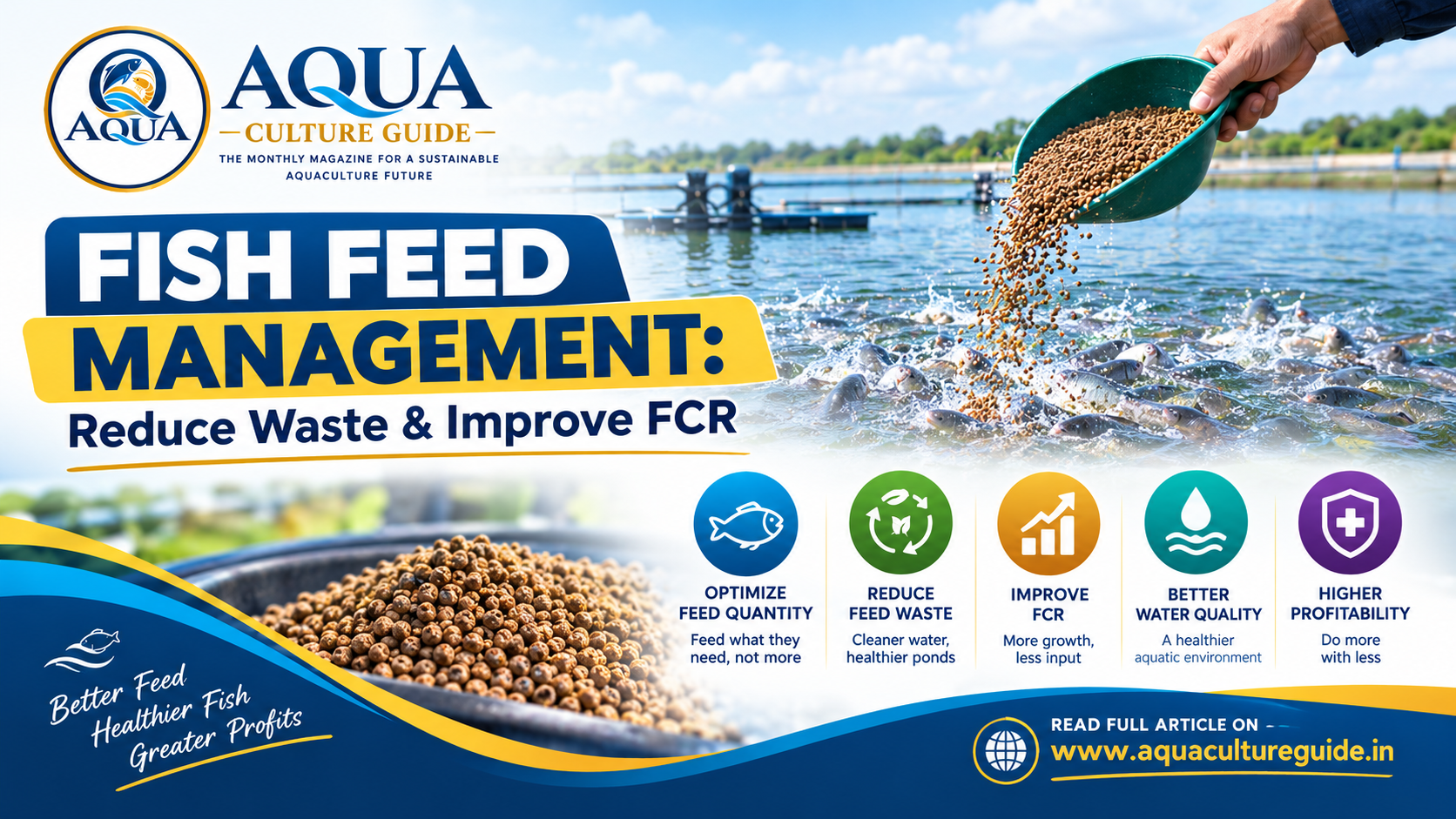
Learn how to reduce fish feed waste and improve Feed Conversion Ratio (FCR) with practical feeding strategies, a complete checklist, and a step-by-step guide for fish farmers.
Introduction
Fish feed is one of the most important operating costs in commercial fish farming. Poor feeding practices can increase production expenses, reduce fish growth, and affect pond water quality. For farmers who want to improve profitability, effective fish feed management is essential.
Giving fish more feed does not always mean faster growth. When feed is supplied in excess, fish may not consume it completely. Uneaten feed can decompose, increase organic waste, affect dissolved oxygen, and create conditions that put fish under stress.
The key is to provide the right feed, in the right quantity, at the right time, and in the right way.
One important measurement used to evaluate feeding efficiency is the Feed Conversion Ratio (FCR). Understanding FCR and controlling feed waste can help farmers make better feeding decisions, manage costs, and improve production.
What Is Fish Feed Management?
Fish feed management is the process of planning, storing, distributing, and monitoring feed to meet the nutritional requirements of fish while minimising unnecessary losses.
Good feed management includes:
- Selecting suitable, nutritionally balanced feed.
- Matching pellet size to fish size and feeding behaviour.
- Calculating daily feed quantities.
- Feeding at appropriate times and intervals.
- Observing fish feeding activity.
- Monitoring growth and adjusting feed quantities.
- Maintaining proper feed storage.
- Recording feed consumption, growth, and mortality.
What Is FCR in Fish Farming?
FCR stands for Feed Conversion Ratio. It measures how much feed is used to produce a given amount of fish biomass gain.
The basic formula is:
FCR=Total feed used (kg)/Fish biomass gain (kg)
For example, if a farmer uses 120 kg of feed and the fish biomass increases by 100 kg:
FCR=120/100=1.2
This means 1.2 kg of feed was used for every 1 kg of biomass gain under the calculation method used.
In general, a lower FCR indicates better feed conversion, provided the figures are calculated consistently and fish health and production outcomes remain satisfactory.
Actual FCR depends on the species, feed quality, fish size, water temperature, dissolved oxygen, stocking density, natural food availability, and farm management. There is no single ideal FCR for every fish farming system.
Why Is Improving FCR Important?
Improving FCR can help farmers use feed more efficiently and control production costs. Feed that is not eaten or converted into fish growth represents a potential economic loss.
The main benefits of effective feed management include:
- Lower feed costs: Less feed is wasted unnecessarily.
- Better growth: Fish receive suitable nutrition in appropriate quantities.
- Improved water quality: Reduced uneaten feed can lower organic waste accumulation.
- Better farm profitability: Efficient feed use can improve the cost of producing each kilogram of fish.
- Better production monitoring: Feed records help farmers identify problems before they become costly.
Common Causes of Feed Waste in Fish Farming
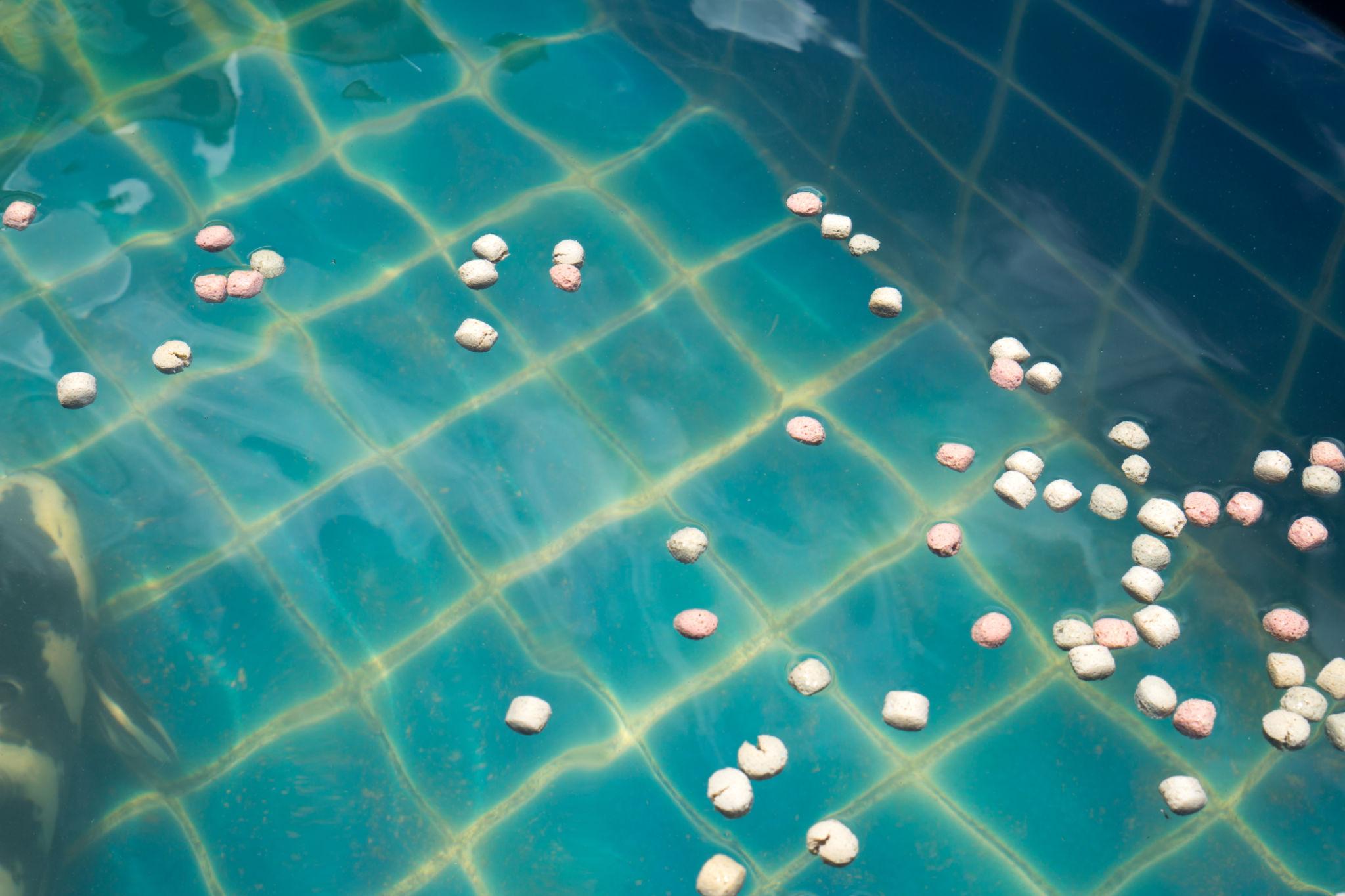
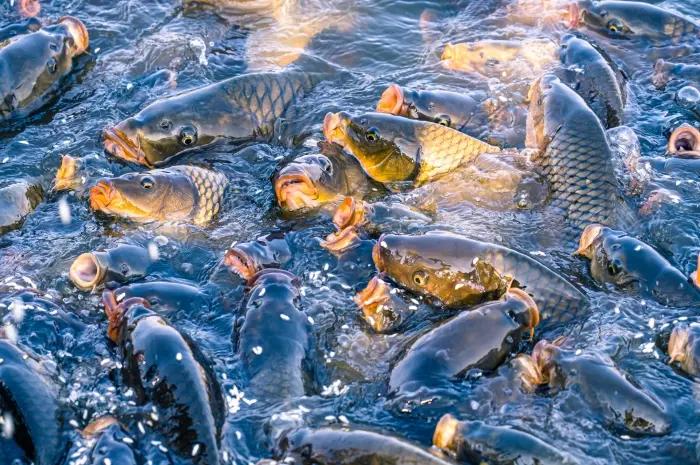
- Overfeeding
Providing more feed than fish can consume results in uneaten pellets and unnecessary costs.
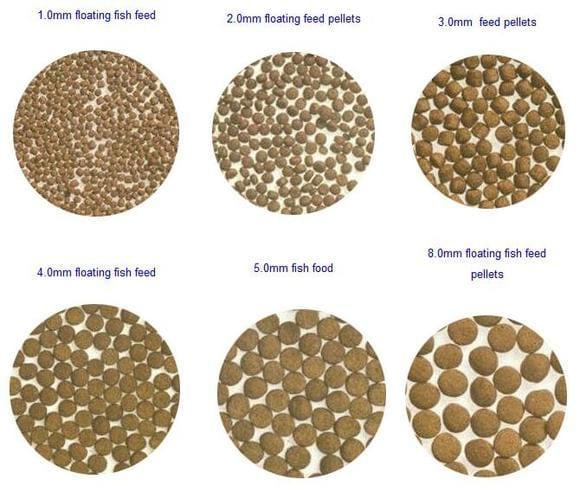
- Incorrect pellet size
Pellets that are too large, too small, or difficult for the fish to consume can reduce feeding efficiency.
- Poor feeding schedule
Feeding at unsuitable times or without considering species behaviour and water conditions can reduce feed intake.
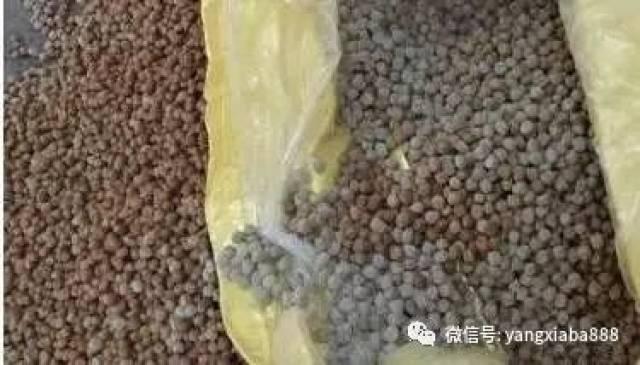
- Improper feed storage
Moisture, heat, pests, and prolonged storage can damage feed quality and reduce nutritional value.
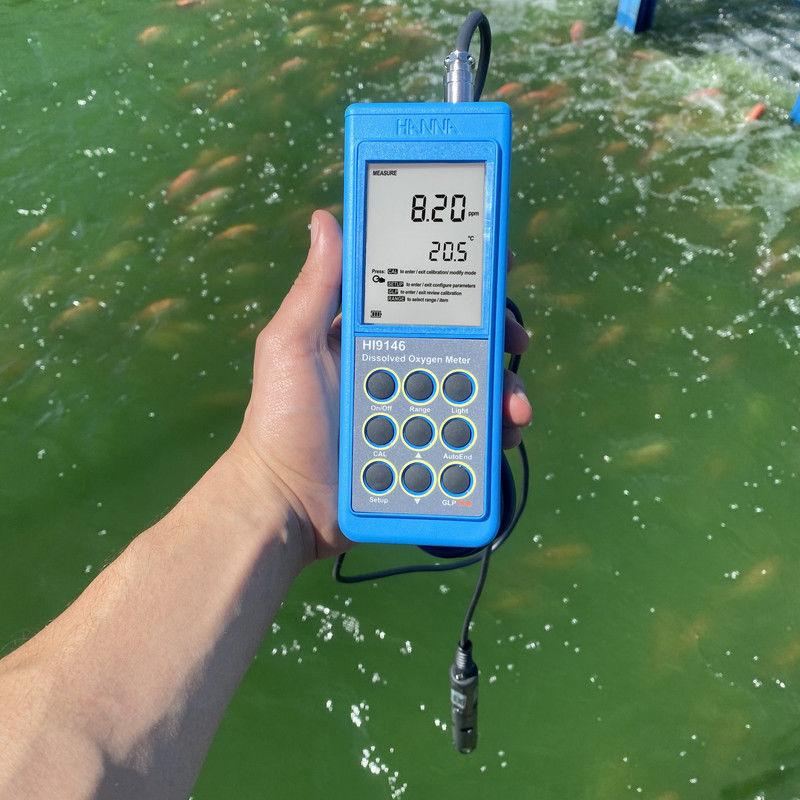
- Poor water quality
Low dissolved oxygen, unsuitable temperature, and other water quality problems may reduce appetite and digestion.
6. Incorrect feed quantity calculations
Using outdated fish biomass estimates can lead to feeding too much or too little as fish grow.
Step-by-Step Guide to Reduce Feed Waste and Improve FCR
Step 1: Select the Right Quality Feed
Choose feed that matches the species, fish size, life stage, and farming system.
Before purchasing, check:
- Protein and energy levels appropriate for the species and growth stage.
- Pellet size and texture.
- Feed freshness and expiry date.
- Packaging condition and storage history.
- Whether the feed is suitable for floating or sinking feeding behaviour.
Do not select feed based on price alone. Cheap feed may be less economical if it produces poor growth, excessive waste, or inconsistent results.
Step 2: Estimate Fish Biomass Correctly
Fish biomass is the estimated total weight of live fish in the pond or culture unit.
The formula is:
Fish biomass (kg)=Number of live fish\Average fish weight (kg)
For example, if a pond contains an estimated 5,000 live fish with an average weight of 100 grams:
5000x0.1=500kg
The estimated fish biomass is 500 kg.
To improve accuracy, sample fish periodically using appropriate handling methods. Update the estimate for growth, mortality, harvests, and transfers.
Step 3: Calculate the Daily Feed Requirement
Daily feed requirements are often calculated as a percentage of estimated fish biomass. The appropriate percentage depends on the species, fish size, water temperature, feed type, and culture conditions.
The formula is:
Daily feed (kg)=Fish biomass (kg)xFeeding rate (%)/100
Example: Suppose estimated fish biomass is 500 kg and the farm's species-specific feeding plan recommends a rate of 2% of biomass per day.
500x2/100=10kg/day.
The calculated daily allowance is 10 kg.
This is an example, not a universal feeding recommendation. The farmer should adjust the allowance according to actual feed intake, fish size, water quality, and professional or manufacturer guidance.
Step 4: Divide Feed Into Suitable Meals
Instead of giving the entire daily allowance at once, divide it into suitable meals based on the species and production system.
A practical routine is to:
- Follow a consistent feeding schedule.
- Distribute feed evenly across suitable feeding areas.
- Avoid feeding during conditions that significantly reduce appetite.
- Consider dissolved oxygen and temperature, especially during hot weather or low-oxygen periods.
- Monitor whether fish consume feed normally.
Some species feed more actively during particular periods of the day. Use species-specific guidance rather than assuming all fish need the same schedule.
Step 5: Observe Feeding Behaviour
Watch fish during feeding and look for changes in their response.
Healthy feeding behaviour generally includes active feeding appropriate to the species, normal swimming, and consistent consumption.
If fish suddenly eat less:
- Check dissolved oxygen and water temperature.
- Observe fish for unusual swimming or respiratory signs.
- Check for disease, stress, or recent handling.
- Inspect the feed for spoilage or quality problems.
- Reduce or pause feeding when conditions warrant it, then investigate the cause.
Step 6: Avoid Overfeeding
Overfeeding is one of the most avoidable causes of feed waste.
To reduce it:
- Begin with a suitable calculated ration.
- Observe consumption during each meal.
- Use feeding trays or other monitoring methods where suitable.
- Adjust subsequent meals based on actual consumption.
- Remove accumulated waste where practical and safe.
- Avoid automatically increasing feed quantities without checking biomass and feeding response.
Remember that visible uneaten feed is only one sign of waste. Some pellets may sink or break apart before they can be observed.
Step 7: Monitor Water Quality
Feed management and water quality are closely connected. Uneaten feed and fish waste contribute organic matter and can increase oxygen demand during decomposition.
Monitor relevant parameters such as:
- Dissolved oxygen
- Water temperature
- pH
- Ammonia, where appropriate
- Other parameters based on the species and farming system
If water quality deteriorates or fish show signs of oxygen stress, address the underlying problem before returning to the normal feeding routine. Seek local fisheries guidance for species-specific target ranges.
Step 8: Sample Fish Growth Regularly
Sample a representative group of fish at suitable intervals to estimate average body weight and growth.
Compare the new average weight with earlier records. If growth is slower than expected, investigate feed quality, quantity, fish health, stocking density, and water conditions before increasing the ration.
Use careful handling to minimise stress and injury during sampling.
Step 9: Store Feed Properly
Good storage protects feed quality and reduces spoilage.
- Store feed in a dry, clean, well-ventilated place.
- Keep bags off the floor and away from damp walls.
- Protect feed from direct sunlight, rain, pests, and rodents.
- Keep bags sealed when not in use.
- Follow the manufacturer's storage instructions.
- Use older suitable stock first, while checking expiry dates and condition.
- Discard feed that is mouldy, contaminated, or clearly spoiled
Step 10: Maintain Daily Feed Records
Record the quantity of feed supplied, fish sampling results, mortality, unusual feeding behaviour, and relevant water quality observations.
Review these records regularly to identify whether feed use is rising faster than biomass or whether growth is falling despite increased feeding.
Accurate records are essential for calculating FCR and comparing performance between production cycles.
Complete Fish Feed Management Checklist
Use this checklist daily and during routine farm reviews
Feed quality and storage
[ ] Feed matches the species and growth stage
[ ] Pellet size is suitable for fish size
[ ] Feed bags are dry, sealed, and correctly stored
[ ] Expiry date and product condition are checked
[ ] No mould, pests, or contamination are present
Feeding plan
[ ] Current fish biomass estimate is available
[ ] Daily feed allowance is calculated correctly
[ ] Feeding times follow the species-specific plan
[ ] Feed is distributed appropriately across the pond
[ ] Actual consumption is checked at each meal
Fish health and water
[ ] Fish show normal feeding behaviour
[ ] Dissolved oxygen and temperature are monitored as needed
[ ] Water quality is suitable for the species
[ ] Unusual mortality or stress is investigated
[ ] Feeding is adjusted when fish appetite or conditions change
Growth and FCR records
[ ] Representative fish samples are weighed periodically
[ ] Mortality, harvests, and transfers are recorded
[ ] Daily feed quantities are recorded
[ ] FCR is calculated using a consistent method
[ ] Feed costs and fish growth are reviewed regularly
How to Calculate and Improve FCR: Practical Example
Consider a fish farm that uses 1,000 kg of feed during a production period and records a net fish biomass gain of 800 kg.
FCR=1000/800=1.25
The farm's FCR is 1.25.
Now suppose the farmer improves feeding practices and uses 960 kg of feed to achieve the same 800 kg biomass gain.
FCR=960/800=1.20
The FCR has improved from 1.25 to 1.20. The farm has used 40 kg less feed for the same recorded biomass gain.
At a feed price of ₹40 per kg, the direct feed cost saving would be:
40x₹40=₹1600
This is an illustrative calculation, not a guaranteed result. Compare FCR only when the accounting method and production conditions are consistent. Include stocking biomass, mortality, harvests, and other relevant biomass changes when calculating commercial farm performance.
Common Fish Feed Management Mistakes to Avoid
Mistake Recommended solution
Feeding the same amount throughout the cycle Update feed allowances as fish biomass changes
Increasing feed without checking appetite Observe consumption and fish health first
Using unsuitable pellet sizes Match feed size to fish size and feeding behaviour
Ignoring water quality Monitor relevant parameters and correct problems promptly
Storing feed in damp conditions Use dry, clean, protected storage
Calculating FCR using inconsistent records Use a consistent biomass and feed accounting method
Trying to improve FCR by underfeeding Balance feed efficiency with healthy growth and survival
Conclusion
Effective fish feed management is essential for reducing unnecessary feed costs, maintaining water quality, and supporting healthy fish growth. By selecting suitable feed, calculating daily rations correctly, observing feeding behaviour, monitoring water conditions, and maintaining accurate records, farmers can identify waste and improve feeding efficiency.
Remember: The goal is not to feed more fish feed, but to help fish convert the right amount of quality feed into healthy growth.
Follow Aqua Culture Guide for more practical information on fish farming, aquaculture management, feed nutrition, and industry developments.
Questions & Answers
Q1.What is a good FCR in fish farming?
A good FCR depends on species, fish size, feed quality, production system, and farm conditions. Lower FCR generally means less feed is used per unit of biomass gain, but it should be assessed alongside growth, survival, and harvest results.
Q2.How can I reduce fish feed waste?
Calculate feed quantities using current biomass estimates, select suitable pellets, distribute feed properly, observe feeding behaviour, maintain good water quality, and store feed correctly.
Q3.How many times should fish be fed per day?
The appropriate feeding frequency depends on species, size, temperature, feed type, and culture system. Follow species-specific recommendations and adjust the schedule based on actual feeding response.
Q4.Why is my fish FCR increasing?
An increasing FCR may be associated with overfeeding, poor feed quality, unsuitable water conditions, disease, slow growth, inaccurate biomass estimates, or incomplete production records. Investigate the cause before changing the feeding rate.
Q5.Does floating feed help reduce feed waste?
Floating feed can make feeding activity and uneaten pellets easier to observe in suitable systems. However, its effectiveness depends on the species' feeding behaviour, feed quality, water conditions, and feeding method. Floating feed is not automatically better for every species.
Q6.Can overfeeding affect pond water quality?
Yes. Uneaten feed and fish waste can increase organic matter and oxygen demand during decomposition. Excessive feeding can contribute to poor water quality, stress, and health problems.
Related articles
భారతీయ రిజర్వాయర్లలో కేజ్ ఫిష్ ఫార్మింగ్: సాంకేతికత, అనుమతులు మరియు పెట్టుబడి వివరాలు
భారతదేశంలోని రిజర్వాయర్లలో కేజ్ ఫిష్ ఫార్మింగ్ ఎలా ప్రారంభించాలి? అవసరమైన సాంకేతికత, ప్రభుత్వ అనుమతులు, పెట్టుబడి, చేపల జాతులు, మేత నిర్వహణ మరియు లాభనష్టాల గురించి పూర్తి వివరాలు తెలుసుకోండి.
Freshwater Prawn Farming in IndiaFreshwater Prawn Farming in India: రైతులకు పూర్తి సాగు మార్గదర్శిని
భారతదేశంలో మంచినీటి రొయ్యల సాగు ఎలా ప్రారంభించాలి? జెయింట్ ఫ్రెష్వాటర్ ప్రాన్ సీడ్ ఎంపిక, చెరువు తయారీ, స్టాకింగ్, ఆహారం, నీటి నాణ్యత, పెట్టుబడి, మార్కెటింగ్ గురించి పూర్తి వివరాలు తెలుసుకోండి.
Tilapia farming in Indiaభారతదేశంలో తిలాపియా చేపల పెంపకం – మార్కెట్ అవకాశాలు, ప్రభుత్వ నిబంధనలు మరియు ఆధునిక సాగు పద్ధతులు
భారతదేశంలో తిలాపియా చేపల పెంపకం ఎలా చేయాలి? మార్కెట్ అవకాశాలు, ప్రభుత్వ అనుమతులు, చెరువు సాగు, బయోఫ్లాక్, RAS విధానాలు, పిల్లల ఎంపిక, మేత నిర్వహణ మరియు దిగుబడి గురించి పూర్తి సమాచారం.
PCR Testing in Shrimp Hatcheriesరొయ్యల హ్యాచరీల్లో PCR పరీక్షలు: ఫలితాలను రైతులు ఎలా అర్థం చేసుకోవాలి?
WSSV, EHP, AHPND వంటి వ్యాధికారకాలను గుర్తించడంలో PCR పరీక్షల పాత్ర, పరీక్షా నివేదికలను అర్థం చేసుకోవడం, నాణ్యమైన రొయ్య పిల్లలను ఎంపిక చేసుకోవడం గురించి రైతులు తెలుసుకోవాల్సిన పూర్తి సమాచారం.
Explore Aqua Culture Guide
Aqua companies directory
Feed, seed, probiotics & equipment suppliers
Aquaculture calculators
Feed, FCR, stocking & water quality tools
Telugu aqua magazine
Read the latest monthly issue online
All aqua news & articles
Farming, disease control and market updates
List your company free
Get found by farmers across India
Advertise with us
Magazine and website advertising options