El Niño and Aquaculture: Rising Heat, Water Quality and Disease Risks for Shrimp Farmers
27/9/2026
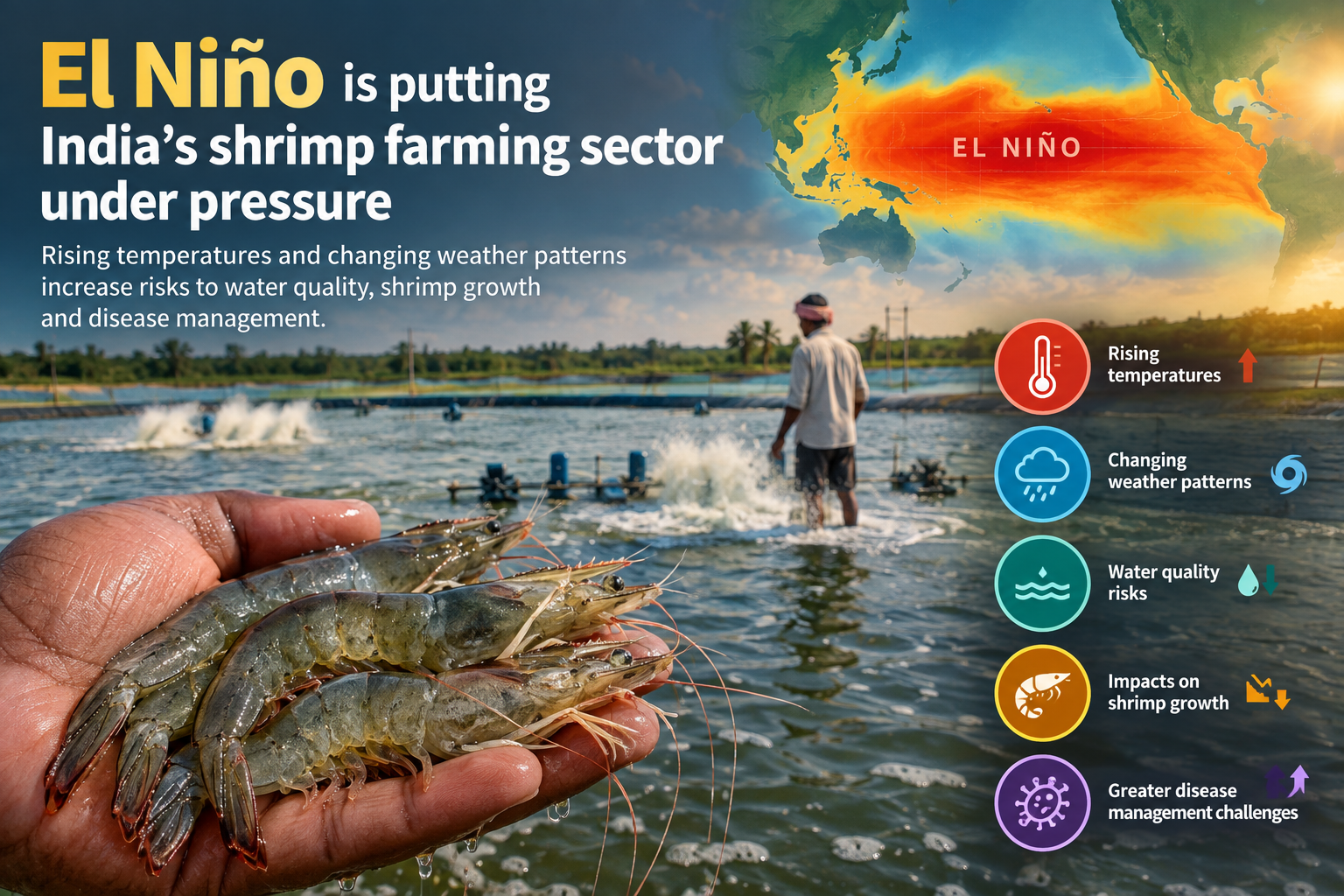
El Niño is putting India’s shrimp farming sector under pressure, with rising temperatures and changing weather patterns increasing risks to water quality, shrimp growth and disease management.
El Niño Impact on Aquaculture: What Aqua Farmers Need to Know in 2026
El Niño is emerging as an important climate factor for India’s aquaculture sector in 2026, with rising temperatures, changing rainfall patterns and increasing pressure on pond ecosystems creating new challenges for shrimp and fish farmers.**
For an industry that depends heavily on stable water quality and favourable environmental conditions, changes in temperature and rainfall can have a direct impact on shrimp growth, feeding, disease management and farm profitability.
What is El Niño?
El Niño is a climate phenomenon associated with unusually warm sea-surface temperatures in the central and eastern tropical Pacific Ocean. These changes can influence weather patterns across different parts of the world, including the Indian monsoon.
The India Meteorological Department (IMD) reported in June 2026 that El Niño conditions were present over the equatorial Pacific and were expected to strengthen during the Southwest Monsoon season. IMD also forecast below-normal rainfall for the 2026 monsoon season.
For aquaculture, the concern is not only rainfall. Higher temperatures and changes in water conditions can affect the entire pond environment.
How Can El Niño Affect Shrimp Farming?
- Rising Water Temperature
One of the major concerns during prolonged hot conditions is an increase in pond-water temperature.
Shrimp are sensitive to changes in their environment. When water temperatures rise beyond suitable levels, shrimp can experience stress, changes in feeding behaviour and slower growth.
Reports from Andhra Pradesh in 2026 have linked prolonged heat conditions with slower shrimp growth and increased disease problems in some farming areas.
- Dissolved Oxygen Can Become a Major Concern
Higher water temperatures can reduce the amount of dissolved oxygen that water can hold.
Low dissolved oxygen can place additional stress on shrimp and fish, particularly during early morning hours. Farmers therefore need to pay close attention to pond aeration and regularly monitor water parameters.
Maintaining adequate oxygen levels becomes especially important when stocking densities are high or when pond conditions change rapidly.
- Disease Risk
Environmental stress can make shrimp more vulnerable to disease-related problems.
Recent reporting from Andhra Pradesh has highlighted concerns involving diseases and infections such as White Spot Syndrome Virus (WSSV), Vibrio-related problems and White Gut, alongside high temperatures and poor pond conditions.
This does not mean that El Niño automatically causes a particular disease. Rather, changing environmental conditions can create additional stress and may contribute to conditions in which disease problems become more difficult to manage.
Impact on Fish Production
The effects of El Niño can extend beyond shrimp ponds and into marine fisheries.
Research and reporting in 2026 have highlighted concerns about warmer ocean temperatures affecting marine productivity and fish species. TV9 Telugu, citing CMFRI-related findings, reported concerns about the effect of rising sea temperatures on sardine reproduction and fish availability.
ISRO observations have also identified reduced marine productivity associated with developing El Niño conditions in parts of the equatorial Pacific. Reduced nutrient upwelling can lower phytoplankton productivity, affecting the marine food chain.
These changes can potentially influence the availability of fishery resources and, indirectly, inputs used by the aquaculture industry.
What Does This Mean for Aqua Farmers?
The changing climate makes regular pond monitoring more important than ever.
Farmers should pay particular attention to:
Water temperature
Dissolved oxygen
pH
Salinity
Alkalinity
Ammonia
Nitrite
Plankton conditions
Shrimp feeding response
Shrimp behavior and activity
Mortality or unusual swimming behavior
Regular monitoring can help farmers identify changes before they develop into larger problems.
Quality Seed Becomes Even More Important
Good-quality seed is an important part of successful shrimp farming under any conditions, but it becomes particularly important when environmental stress is high.
Farmers should source seed from reliable hatcheries and consider appropriate health screening and PCR testing as recommended by fisheries professionals.
Recent reports from Andhra Pradesh have also highlighted concerns over poor-quality or inadequately tested shrimp seed contributing to farming losses.
Feed Management Needs Attention
Temperature and water-quality fluctuations can affect shrimp feeding behavior.
Farmers should avoid blindly increasing feed when shrimp are not responding normally. Feed management should be based on feeding trays, shrimp activity, water conditions and biomass.
Overfeeding can increase organic load in the pond and contribute to deterioration of water quality.
Climate Risk Is Also an Economic Risk
The impact of El Niño is not limited to biological production.
Aquaculture farmers are also facing higher input costs, fluctuating shrimp prices and challenges in the international seafood market.
A September 2026 report from The New Indian Express highlighted the combined pressure of El Niño-related environmental conditions, higher feed costs, quality-seed shortages, subdued prices and export uncertainty on Andhra Pradesh's aquaculture sector.
This means farmers increasingly need to look at both production management and financial risk management.
Practical Steps for Farmers During Hot and Unstable Conditions
Farmers can consider the following preventive approach:
- Monitor water parameters regularly
Do not depend only on visual observation of the pond.
- Maintain proper aeration
Pay special attention to early-morning dissolved oxygen levels.
- Avoid unnecessary stress on shrimp
Minimize excessive handling and sudden changes in pond conditions.
- Manage feeding carefully
Adjust feed according to shrimp response and pond conditions.
- Maintain biosecurity
Restrict unnecessary movement between ponds and follow good farm hygiene.
- Use healthy, quality-tested seed
Choose reliable hatcheries and follow recommended health-screening practices.
- Watch for early disease symptoms
Unusual swimming, reduced feeding, empty gut, colour changes or unexpected mortality should not be ignored.
- Take expert advice early
Consult fisheries officers, aquatic animal health professionals or experienced technical personnel when abnormal conditions appear.
Looking Ahead
El Niño is a large-scale climate phenomenon, and its effects can vary by region and season. Therefore, farmers should not assume that every aquaculture farm will experience the same impact.
However, the 2026 situation highlights an important lesson for the aquaculture industry: climate variability is becoming an increasingly important part of farm management.
Better water-quality monitoring, stronger biosecurity, quality seed selection, responsible feeding and timely technical advice can help farmers respond to changing environmental conditions.
For India's shrimp and fish farmers, staying informed about weather and ocean conditions is no longer just useful—it is becoming an important part of modern aquaculture management.
Aqua Culture Guide
Aqua Culture Guide brings farmers, aqua professionals, hatcheries, feed companies, product manufacturers and the wider aquaculture community the latest aquaculture news, farming information, aqua products, industry updates and business opportunities.
Stay informed. Farm smarter. Grow sustainably.
Related articles
భారతీయ రిజర్వాయర్లలో కేజ్ ఫిష్ ఫార్మింగ్: సాంకేతికత, అనుమతులు మరియు పెట్టుబడి వివరాలు
భారతదేశంలోని రిజర్వాయర్లలో కేజ్ ఫిష్ ఫార్మింగ్ ఎలా ప్రారంభించాలి? అవసరమైన సాంకేతికత, ప్రభుత్వ అనుమతులు, పెట్టుబడి, చేపల జాతులు, మేత నిర్వహణ మరియు లాభనష్టాల గురించి పూర్తి వివరాలు తెలుసుకోండి.
Freshwater Prawn Farming in IndiaFreshwater Prawn Farming in India: రైతులకు పూర్తి సాగు మార్గదర్శిని
భారతదేశంలో మంచినీటి రొయ్యల సాగు ఎలా ప్రారంభించాలి? జెయింట్ ఫ్రెష్వాటర్ ప్రాన్ సీడ్ ఎంపిక, చెరువు తయారీ, స్టాకింగ్, ఆహారం, నీటి నాణ్యత, పెట్టుబడి, మార్కెటింగ్ గురించి పూర్తి వివరాలు తెలుసుకోండి.
Tilapia farming in Indiaభారతదేశంలో తిలాపియా చేపల పెంపకం – మార్కెట్ అవకాశాలు, ప్రభుత్వ నిబంధనలు మరియు ఆధునిక సాగు పద్ధతులు
భారతదేశంలో తిలాపియా చేపల పెంపకం ఎలా చేయాలి? మార్కెట్ అవకాశాలు, ప్రభుత్వ అనుమతులు, చెరువు సాగు, బయోఫ్లాక్, RAS విధానాలు, పిల్లల ఎంపిక, మేత నిర్వహణ మరియు దిగుబడి గురించి పూర్తి సమాచారం.
PCR Testing in Shrimp Hatcheriesరొయ్యల హ్యాచరీల్లో PCR పరీక్షలు: ఫలితాలను రైతులు ఎలా అర్థం చేసుకోవాలి?
WSSV, EHP, AHPND వంటి వ్యాధికారకాలను గుర్తించడంలో PCR పరీక్షల పాత్ర, పరీక్షా నివేదికలను అర్థం చేసుకోవడం, నాణ్యమైన రొయ్య పిల్లలను ఎంపిక చేసుకోవడం గురించి రైతులు తెలుసుకోవాల్సిన పూర్తి సమాచారం.
Explore Aqua Culture Guide
Aqua companies directory
Feed, seed, probiotics & equipment suppliers
Aquaculture calculators
Feed, FCR, stocking & water quality tools
Telugu aqua magazine
Read the latest monthly issue online
All aqua news & articles
Farming, disease control and market updates
List your company free
Get found by farmers across India
Advertise with us
Magazine and website advertising options