Climate Change and Aquaculture: How to Build Climate-Resilient Fish and Shrimp Farms
1/11/2026
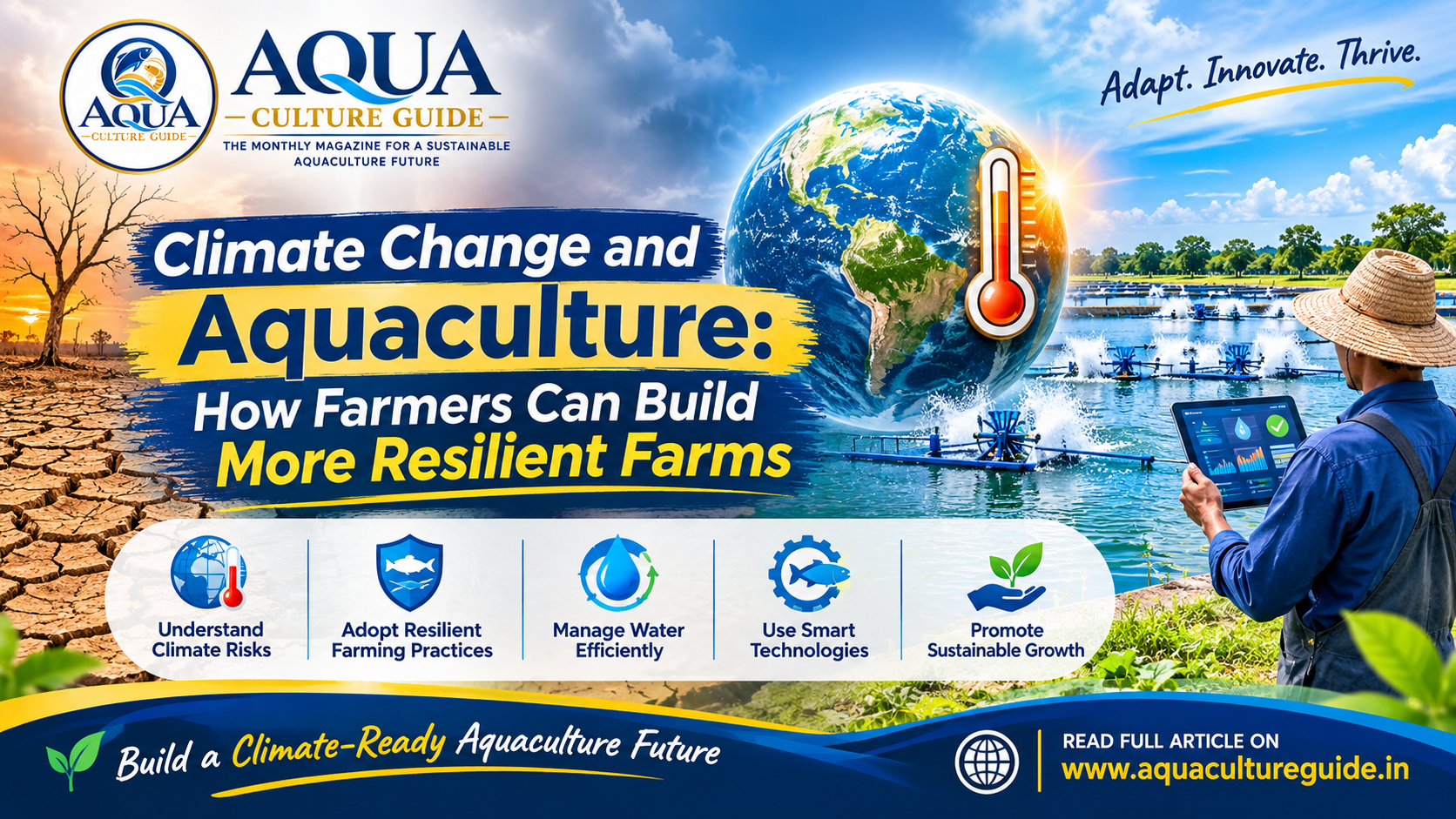
Learn how climate change affects fish and shrimp farming and discover practical ways to manage heat, rainfall, floods, drought, salinity changes and other climate risks.
Introduction
Climate change is becoming an important challenge for the aquaculture industry. Rising temperatures, irregular rainfall, heatwaves, floods, droughts and changing water conditions can affect fish and shrimp farming.
Farmers may experience sudden changes in pond water quality, reduced feeding activity, oxygen problems, disease risks and unexpected production losses. In coastal farming areas, changes in salinity and seawater conditions can create additional challenges.
These problems can affect both small and large aquaculture farms. Farmers cannot control the weather, but they can prepare their farms to handle changing environmental conditions.
This is where climate-resilient aquaculture becomes important.
Climate-resilient farming means preparing farms to manage climate-related risks, protect aquatic animals, maintain water quality and reduce production losses. It includes better pond preparation, water management, regular monitoring, emergency planning and the use of suitable technology.
What Is Climate Change in Aquaculture?
Climate change refers to long-term changes in temperature, rainfall patterns, weather conditions and other environmental factors.
In aquaculture, these changes can affect the water, pond environment, aquatic animal health and farm infrastructure.
For example:
Higher temperatures can increase stress in fish and shrimp.
Heavy rainfall can suddenly reduce pond salinity.
Drought can reduce water availability.
Floods can damage ponds and cause stock escape.
Strong storms can damage aerators, pumps and farm structures.
Changing water conditions can increase the risk of certain diseases.
The impact is different for every farm. It depends on the location, species, farming system, pond design and local climate.
- How Climate Change Affects Fish and Shrimp Farming
A. Rising Water Temperature
Higher air temperatures can increase pond water temperature, particularly during hot weather.
When water becomes too warm for the cultured species:
Fish and shrimp may experience stress.
Feeding activity may decrease.
Oxygen availability in water can decline.
Animal metabolism may change.
Growth and survival may be affected.
Warm conditions can also influence the behaviour of disease-causing organisms and the overall pond environment.
What farmers should do:
Monitor water temperature regularly.
Check dissolved oxygen more frequently during hot periods.
Avoid unnecessary handling and other stressful activities.
Maintain suitable water depth according to pond design.
Adjust feeding based on animal activity and actual pond conditions.
B. Irregular and Heavy Rainfall
Heavy rainfall can create sudden changes in pond water conditions.
In shrimp farming, rainwater entering the pond can reduce salinity, especially when rainfall is intense.
Possible effects include:
Sudden salinity changes.
Changes in pH and water stratification.
Reduced feeding activity.
Changes in pond water level.
Increased organic matter entering the pond.
Stress in fish and shrimp.
What farmers should do:
Monitor weather forecasts.
Check salinity before and after heavy rainfall.
Monitor pH and dissolved oxygen.
Maintain proper drainage arrangements.
Prevent contaminated outside water from entering ponds.
Avoid sudden water exchange without checking water quality.
C. Flooding
Flooding can cause serious damage to aquaculture farms.
Excess water may enter ponds, damage embankments and carry unwanted materials into the farming area.
Possible problems include:
Fish and shrimp escaping from ponds.
Entry of predators and unwanted fish.
Contamination from outside water.
Damage to electrical equipment.
Loss of feed, seed and farm materials.
Damage to roads, pumps and farm buildings.
What farmers should do:
Maintain strong pond bunds.
Check drainage channels before the rainy season.
Install suitable screens at water inlets and outlets.
Keep emergency nets and repair materials ready.
Protect electrical equipment from flooding.
Prepare an emergency harvest or stock protection plan.
D. Drought and Water Shortage
Drought can reduce the availability of good-quality water.
Low water availability may increase water temperature and make it difficult to maintain suitable pond conditions.
Possible effects include:
Reduced pond water levels.
Increased concentration of some dissolved substances.
Higher temperature fluctuations.
Reduced water exchange options.
Greater pressure on water resources.
What farmers should do:
Plan water requirements before stocking.
Check water availability throughout the culture period.
Reduce unnecessary water wastage.
Maintain suitable pond water levels.
Consider water storage where practical.
Reuse or treat water where the farming system allows it safely.
E. Changes in Salinity
Coastal aquaculture farms may experience salinity changes due to rainfall, evaporation, drought, seawater intrusion and changes in freshwater availability.
Sudden salinity changes can stress aquatic animals.
What farmers should do:
Monitor salinity regularly.
Record changes during different seasons.
Check water quality before introducing new water.
Avoid sudden salinity adjustments.
Select species and seed suitable for local water conditions.
F. Lower Dissolved Oxygen
High water temperature, excessive organic matter, plankton changes and other pond conditions can contribute to oxygen problems.
Low dissolved oxygen can cause serious stress and mortality.
What farmers should do:
Monitor dissolved oxygen regularly, especially during early morning.
Maintain adequate aeration capacity.
Keep backup aerators ready.
Check aerators, motors and electrical connections.
Avoid excessive feeding.
Remove accumulated organic waste where appropriate.
G. Increased Disease Risks
Changing temperatures and water conditions can influence disease risks in aquaculture.
Stress caused by sudden environmental changes may weaken animal performance and increase vulnerability to disease.
However, climate change does not automatically cause a particular disease. Disease outbreaks depend on several factors, including the pathogen, host condition, water quality and farm biosecurity.
What farmers should do:
Maintain strong biosecurity.
Observe animal behaviour daily.
Monitor feeding activity
Remove dead animals promptly.
Avoid unnecessary movement of equipment between ponds.
Send appropriate samples to a laboratory when disease is suspected.
Follow professional advice for diagnosis and treatment.
What Is Climate-Resilient Aquaculture?
Climate-resilient aquaculture means designing and managing farms so they can better prepare for, withstand and recover from climate-related challenges.
It focuses on three important areas:
Preparation: Understanding possible risks before they affect the farm.
Protection: Taking steps to protect ponds, water quality, aquatic animals and equipment.
Recovery: Having a plan to restart farm operations after floods, storms, droughts or other extreme weather events.
A resilient farm does not depend on one solution. It combines good farm management, suitable infrastructure, monitoring, planning and farmer knowledge.
Practical Ways to Build Climate-Resilient Aquaculture Farms
A. Improve Pond Design and Infrastructure
Strong pond infrastructure can reduce damage during heavy rainfall and flooding.
Farmers should:
Maintain strong and stable pond bunds.
Inspect bunds for cracks and erosion.
Maintain suitable pond depth.
Keep drainage channels clear.
Check inlet and outlet structures.
Install suitable screens to prevent stock escape.
Protect pumps and electrical equipment from floodwater.
Pond design should consider local flood history, soil conditions, water availability and engineering advice.
B. Improve Water Quality Management
Good water quality management becomes even more important during changing weather conditions.
Farmers should regularly monitor:
Dissolved oxygen.
Temperature.
pH.
Salinity.
Alkalinity.
Ammonia.
Nitrite.
Water colour and transparency.
Increase monitoring during heatwaves, heavy rainfall and sudden weather changes.
Do not make major water treatment decisions based on one unusual reading. Confirm the result before taking action.
C. Strengthen Aeration Management
Aeration is important for maintaining suitable oxygen conditions in many intensive farming systems.
Farmers should:
Calculate aeration requirements based on biomass and farming conditions.
Maintain sufficient working aerators.
Check motors and electrical connections.
Keep backup equipment ready.
Monitor dissolved oxygen during risky periods.
Prepare a power failure response plan.
During hot weather, oxygen availability may become more challenging. Regular monitoring and emergency preparedness are essential.
D. Improve Feeding Management
Climate-related stress can affect feeding activity.
Farmers should not continue the same feeding routine without observing animal behaviour and pond conditions.
Good feeding practices include:
Observe feeding activity before feeding.
Use feeding trays or other suitable monitoring methods.
Avoid overfeeding.
Adjust feed according to animal activity and health.
Maintain daily feed records.
Review feed consumption after extreme weather events.
Reducing unnecessary feed waste can also help limit organic matter accumulation in ponds.
E. Select Suitable Species and Quality Seed
Species selection is important when planning a climate-resilient farm.
Farmers should consider:
Local temperature conditions.
Seasonal salinity changes.
Water availability.
Species tolerance to local environmental conditions.
Availability of quality seed.
Market demand.
Technical support and farming experience.
Use healthy, quality seed from reliable hatcheries.
Do not select a species or strain only because it is described as climate-tolerant. Confirm its suitability for the actual farm conditions.
F. Strengthen Biosecurity
Climate-related events can increase the chance of unwanted water, animals and contaminants entering farms.
Farmers should:
Use suitable screens at water inlets.
Maintain controlled farm access.
Disinfect equipment when appropriate.
Avoid sharing equipment between ponds without proper cleaning.
Monitor animal health regularly.
Remove dead animals safely.
Maintain proper waste management.
Follow a farm-level biosecurity plan.
G. Use Weather Forecasts and Early Warning Systems
Weather information can help farmers prepare before extreme conditions arrive.
Farmers should monitor:
Heavy rainfall warnings.
Cyclone and storm alerts.
Heatwave warnings.
Drought conditions.
Local flood alerts.
Changes in water availability.
Use reliable official weather information and local advisories.
Farmers should prepare an action plan for each major weather risk rather than waiting until the event begins.
H. Introduce Digital Monitoring Technology
Modern technology can support climate-resilient aquaculture.
Useful tools include:
Water quality sensors.
IoT-based monitoring systems.
Mobile weather applications.
Digital farm records.
Automatic alerts.
Remote pond monitoring.
For example, a dissolved oxygen monitoring system can alert farmers when oxygen levels fall below a selected warning point.
Technology should support regular farm observation, not replace it.
I. Maintain Financial and Emergency Preparedness
Climate-related events can create unexpected expenses and production losses.
Farmers should:
Maintain an emergency fund where possible.
Keep important farm records.
Understand insurance options and exclusions.
Maintain contact details of suppliers and technicians.
Prepare emergency feed and equipment arrangements.
Review harvest and market plans.
Understand the cost of repairing infrastructure after extreme weather.
Complete Checklist for Climate-Resilient Aquaculture Farms
Farmers can use this checklist before the culture season and review it regularly.
Pond and Infrastructure Checklist
Inspect pond bunds and repair weak sections.
Check pond inlets and outlets.
Clean drainage channels.
Check overflow arrangements.
Install suitable screens to prevent stock escape.
Inspect roads and access routes.
Protect electrical equipment from floodwater.
Check pumps and water supply systems.
Keep essential repair materials ready.
Water Quality Checklist
Monitor dissolved oxygen regularly.
Record water temperature.
Check pH.
Monitor salinity where relevant.
Check alkalinity.
Monitor ammonia and nitrite.
Observe water colour and transparency.
Increase monitoring after heavy rainfall.
Check water quality before water exchange.
Verify unusual sensor readings with reliable testing methods.
Feeding and Animal Health Checklist
Observe feeding activity daily.
Avoid unnecessary overfeeding.
Maintain feed records.
Check animal growth regularly.
Observe unusual swimming or feeding behaviour.
Remove dead animals safely.
Maintain suitable stocking practices.
Keep contact details of an aquatic animal health professional.
Send samples for laboratory testing when required.
Weather Preparedness Checklist
Check local weather forecasts.
Monitor rainfall warnings.
Prepare for heatwaves.
Check flood risks.
Review cyclone or storm warnings where relevant.
Maintain an emergency contact list.
Prepare a stock protection plan.
Identify a safe place for equipment and feed.
Review emergency harvest options.
Equipment and Energy Checklist
Check aerators and pumps.
Keep backup aerators ready.
Maintain generator or backup power where appropriate.
Inspect electrical wiring.
Check fuel availability.
Maintain water quality monitoring equipment.
Calibrate sensors according to manufacturer instructions.
Keep essential spare parts.
Financial and Record-Keeping Checklist
Record daily farm expenses.
Maintain seed and feed purchase records.
Record water quality changes.
Record extreme weather events.
Calculate production costs.
Review insurance options.
Maintain emergency funds where possible.
Keep harvest and sales records
Step-by-Step Guide: How to Make Your Aquaculture Farm Climate-Resilient
Farmers can improve climate preparedness gradually. The following steps provide a practical starting point.
Step 1: Identify Climate Risks in Your Area
First, understand which climate-related problems are common in your farming location.
For example:
Coastal farms may face cyclones, heavy rainfall and salinity changes.
Inland farms may face drought, water shortages and extreme heat.
Low-lying farms may face flooding and drainage problems.
Speak with nearby farmers and review previous weather events that affected the area.
Step 2: Inspect Your Farm
Walk around the farm and identify weak areas.
Check pond bunds, drainage channels, water inlets, outlets, electrical systems, roads and equipment storage areas.
Make a list of repairs that should be completed before the next culture season.
Step 3: Prepare a Water Management Plan
Identify where water comes from and whether sufficient good-quality water will be available throughout the culture period.
Plan how to manage:
Heavy rainfall.
Sudden salinity changes.
Water shortages.
Water exchange.
Floodwater entry.
Drainage.
Do not use outside water without checking its suitability.
Step 4: Strengthen Pond Infrastructure
Repair weak bunds and improve drainage arrangements.
Check overflow structures and install suitable screens.
Protect pumps, electrical panels and other important equipment from flooding.
Take professional advice when major pond construction or structural changes are required.
Step 5: Improve Water Quality Monitoring
Prepare a regular water testing schedule.
Monitor important parameters such as dissolved oxygen, temperature, pH and salinity.
Use reliable testing equipment and maintain records.
Increase monitoring frequency when weather conditions change suddenly.
Step 6: Review Stocking and Seed Selection
Select species and seed that are suitable for local environmental conditions.
Purchase healthy seed from reliable hatcheries.
Consider stocking density carefully. High stocking density can increase pressure on oxygen supply, water quality and farm management, especially during difficult weather conditions.
Step 7: Prepare Feeding and Aeration Plans
Review feed management according to animal growth and feeding behaviour.
Check whether existing aerators can meet the farm's requirements.
Keep backup equipment ready and prepare an emergency response for power failures or low oxygen conditions.
Step 8: Prepare for Extreme Weather
Create a simple written plan for heatwaves, heavy rainfall, floods, storms and drought.
The plan should explain:
Who checks weather alerts.
Who monitors water quality.
Who operates emergency equipment.
How animals and equipment will be protected.
When to contact technical support.
When early harvest or other emergency action may be necessary.
Step 9: Train Farm Workers
Every worker should understand basic climate-related risks.
Train them to:
Identify unusual animal behaviour.
Check water quality readings
Operate aerators.
Respond to alarms.
Report equipment problems.
Follow emergency procedures.
Step 10: Maintain Farm Records
Record daily feed consumption, water quality, animal growth, mortality, expenses and weather events.
These records help farmers understand how their ponds respond to different weather conditions.
Step 11: Review Your Plan After Every Culture Cycle
At the end of each culture cycle, review what happened.
Ask:
Did heavy rainfall affect salinity?
Were there oxygen problems during hot weather?
Did flooding damage farm infrastructure?
Was water availability sufficient?
Did the emergency plan work?
Which improvements are needed before the next crop?
Use these lessons to improve the next culture cycle.
Climate Resilience in Shrimp Farming
Shrimp farms can be particularly affected by sudden changes in water quality and environmental conditions.
Farmers should pay special attention to:
Rainfall and Salinity: Monitor salinity after heavy rainfall and avoid sudden water adjustments.
Temperature: Observe feeding activity and check dissolved oxygen during hot periods.
Oxygen Management: Maintain adequate aeration and backup power.
Pond Preparation: Strengthen bunds, drainage and overflow arrangements before the rainy season.
Biosecurity: Prevent unwanted water and possible disease carriers from entering ponds.
Stocking Decisions: Consider seasonal weather conditions and farm carrying capacity before stocking.
Emergency Planning: Prepare for flooding, power failures and sudden water quality changes.
Climate Resilience in Fish Farming
Freshwater and other fish farming systems also face climate-related challenges.
Farmers should focus on:
Maintaining reliable water sources.
Monitoring temperature and dissolved oxygen.
Managing water levels during drought.
Strengthening pond structures against flooding.
Protecting fish from escaping during overflow.
Selecting species suitable for local conditions.
Maintaining suitable stocking density.
Preparing backup aeration and power arrangements.
Common Mistakes Farmers Should Avoid
Ignoring weather forecasts.
Waiting until heavy rainfall begins to inspect drainage.
Failing to repair weak pond bunds.
Ignoring sudden salinity changes.
Overfeeding during periods of reduced feeding activity.
Depending on a single aerator or power source.
Stocking without considering seasonal risks.
Using unsuitable water without testing it.
Ignoring biosecurity during floods.
Failing to maintain daily farm records.
Making sudden water treatment changes without checking the actual problem.
Having no emergency harvest or recovery plan.
The Future of Climate-Resilient Aquaculture
The future of aquaculture will increasingly depend on the ability of farmers to prepare for changing environmental conditions.
Some technologies and practices that may support climate resilience include:
Smart Water Quality Monitoring: IoT sensors can help farmers monitor dissolved oxygen, temperature and other important parameters.
AI-Based Weather and Farm Predictions: Digital systems may analyse weather forecasts and farm records to support better decisions.
Climate-Suitable Species and Seed: Research and responsible breeding may help improve the availability of species and strains suitable for different environmental conditions.
Improved Pond Infrastructure: Better pond design, drainage and water management can reduce exposure to extreme weather.
Renewable Energy: Solar power and suitable backup systems may help farms maintain essential operations where electricity supply is unreliable.
Climate Information Services: Local weather forecasts and early warning systems can help farmers prepare for rainfall, floods, storms and heatwaves.
The most effective approach will combine reliable technology, local knowledge, good farm management and long-term planning.
Conclusion
Climate change is creating new challenges for fish and shrimp farming. Rising temperatures, irregular rainfall, flooding, drought and changing water conditions can affect animal health, water quality and farm production.
However, farmers can reduce many risks through proper preparation and better management.
Strong pond infrastructure, regular water quality monitoring, suitable stocking practices, good biosecurity, reliable aeration and emergency planning are important parts of climate-resilient aquaculture.
Farmers do not need to make every change at once. They can begin by identifying the biggest climate risks in their area and improving one part of farm management at a time.
A climate-resilient farm is not just prepared for today's weather. It is planned to handle tomorrow's challenges.
Questions & Answers
Q1.What is climate-resilient aquaculture?
Climate-resilient aquaculture means managing fish and shrimp farms so they can better prepare for, withstand and recover from climate-related challenges such as heatwaves, floods, droughts and irregular rainfall.
Q2.How does climate change affect shrimp farming?
Climate change can affect shrimp farming through rising water temperatures, heavy rainfall, salinity changes, low dissolved oxygen, flooding and changes in disease risks.
Q3.How can farmers protect shrimp ponds during heavy rainfall?
Farmers should monitor weather forecasts, maintain strong pond bunds, keep drainage channels clear, check salinity and pH, and prevent unwanted outside water from entering ponds.
Q4.Why is rising temperature a problem in aquaculture?
Higher water temperatures can increase animal stress, affect feeding and growth, and reduce oxygen availability in water. The impact depends on the species and the actual temperature conditions.
Q5.How can farmers manage low dissolved oxygen during hot weather?
Farmers should monitor dissolved oxygen more frequently, maintain adequate aeration, keep backup aerators ready and avoid excessive feeding.
Q6.What is the effect of climate change on fish farming?
Climate change can affect water availability, temperature, oxygen levels, fish growth, health and pond infrastructure. Flooding and drought can also create production risks.
Q7.Can technology help farmers manage climate risks?
Yes. Weather applications, IoT sensors, digital farm records and early warning systems can help farmers monitor conditions and prepare for changing weather.
Related articles
భారతీయ రిజర్వాయర్లలో కేజ్ ఫిష్ ఫార్మింగ్: సాంకేతికత, అనుమతులు మరియు పెట్టుబడి వివరాలు
భారతదేశంలోని రిజర్వాయర్లలో కేజ్ ఫిష్ ఫార్మింగ్ ఎలా ప్రారంభించాలి? అవసరమైన సాంకేతికత, ప్రభుత్వ అనుమతులు, పెట్టుబడి, చేపల జాతులు, మేత నిర్వహణ మరియు లాభనష్టాల గురించి పూర్తి వివరాలు తెలుసుకోండి.
Freshwater Prawn Farming in IndiaFreshwater Prawn Farming in India: రైతులకు పూర్తి సాగు మార్గదర్శిని
భారతదేశంలో మంచినీటి రొయ్యల సాగు ఎలా ప్రారంభించాలి? జెయింట్ ఫ్రెష్వాటర్ ప్రాన్ సీడ్ ఎంపిక, చెరువు తయారీ, స్టాకింగ్, ఆహారం, నీటి నాణ్యత, పెట్టుబడి, మార్కెటింగ్ గురించి పూర్తి వివరాలు తెలుసుకోండి.
Tilapia farming in Indiaభారతదేశంలో తిలాపియా చేపల పెంపకం – మార్కెట్ అవకాశాలు, ప్రభుత్వ నిబంధనలు మరియు ఆధునిక సాగు పద్ధతులు
భారతదేశంలో తిలాపియా చేపల పెంపకం ఎలా చేయాలి? మార్కెట్ అవకాశాలు, ప్రభుత్వ అనుమతులు, చెరువు సాగు, బయోఫ్లాక్, RAS విధానాలు, పిల్లల ఎంపిక, మేత నిర్వహణ మరియు దిగుబడి గురించి పూర్తి సమాచారం.
PCR Testing in Shrimp Hatcheriesరొయ్యల హ్యాచరీల్లో PCR పరీక్షలు: ఫలితాలను రైతులు ఎలా అర్థం చేసుకోవాలి?
WSSV, EHP, AHPND వంటి వ్యాధికారకాలను గుర్తించడంలో PCR పరీక్షల పాత్ర, పరీక్షా నివేదికలను అర్థం చేసుకోవడం, నాణ్యమైన రొయ్య పిల్లలను ఎంపిక చేసుకోవడం గురించి రైతులు తెలుసుకోవాల్సిన పూర్తి సమాచారం.
Explore Aqua Culture Guide
Aqua companies directory
Feed, seed, probiotics & equipment suppliers
Aquaculture calculators
Feed, FCR, stocking & water quality tools
Telugu aqua magazine
Read the latest monthly issue online
All aqua news & articles
Farming, disease control and market updates
List your company free
Get found by farmers across India
Advertise with us
Magazine and website advertising options