Biosecurity in Shrimp Farming: Complete Farm-Level Guide, Checklist & Best Practices
7/10/2026
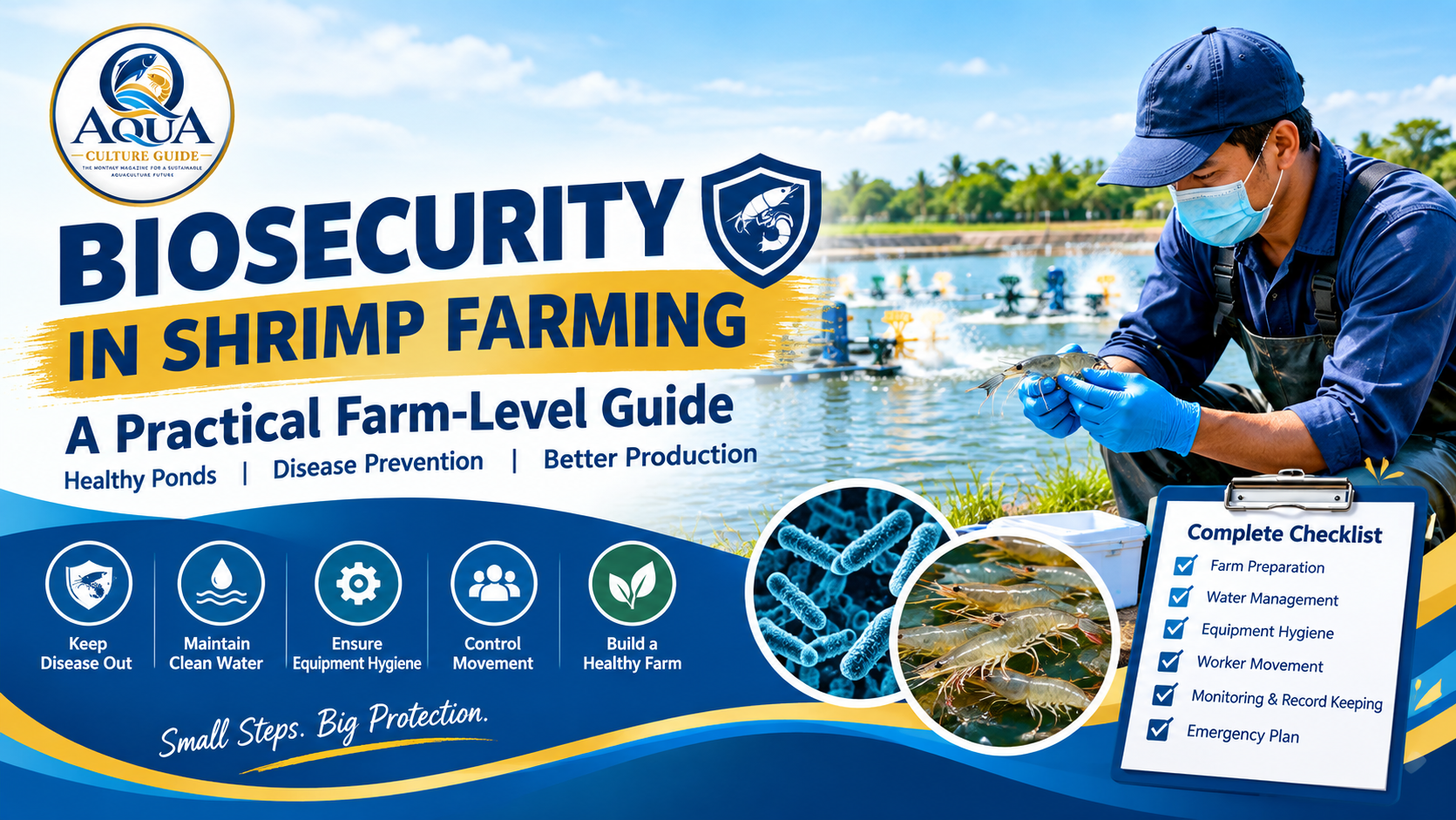
how to improve biosecurity in shrimp farming with this practical step-by-step guide covering pond preparation, water management, equipment hygiene, worker movement
Biosecurity in Shrimp Farming: A Practical Farm-Level Guide
Biosecurity is one of the most important parts of successful shrimp farming. A shrimp farm can have good seed, quality feed and modern equipment, but poor biosecurity can still increase the risk of disease entering or spreading within the farm.
Diseases can potentially move through water, shrimp seed, equipment, workers, vehicles, animals and contaminated materials. Once a pathogen enters a farm, movement between ponds can make the situation more difficult to manage.
The good news is that biosecurity does not always require expensive technology. Many effective measures are based on clean equipment, controlled movement, good pond preparation, water management, proper disposal of dead shrimp and consistent daily practices.
This practical guide explains how farmers can build a simple farm-level biosecurity program.
What Is Biosecurity in Shrimp Farming?
Biosecurity means taking planned steps to prevent the introduction, establishment and spread of disease-causing organisms on a shrimp farm.
A simple way to understand it is:
Keep disease out → Stop disease spreading → Reduce farm risk
Why Is Biosecurity Important in Shrimp Farming?
Shrimp farms can be exposed to disease risks through several pathways.
Common risk pathways include:
Infected or contaminated shrimp seed
Incoming water
Shared equipment
Workers and visitors
Vehicles
Birds and other animals
Crabs and other pond organisms
Dead shrimp
Contaminated feed or materials
Poorly managed effluent
Movement between ponds
Simple Biosecurity Rule for Shrimp Farmers
Remember these five principles:
- Control what enters the farm
- Keep clean and dirty areas separate
- Prevent movement of contamination between ponds
- Remove waste and dead shrimp safely
- Monitor continuously
Step-by-Step Biosecurity Guide for Shrimp Farms
Step 1: Create a Farm Biosecurity Plan
Before stocking shrimp, establish clear farm rules.
Your plan should identify:
Farm entry point
Water-intake area
Water-treatment area
Individual ponds
Equipment-storage areas
Feed-storage area
Waste-disposal area
Harvest area
Staff movement routes
Vehicle movement routes
Farm planning checklist
☐ Define restricted areas
☐ Define clean areas
☐ Define potentially contaminated areas
☐ Establish entry procedures
☐ Assign responsibilities to workers
☐ Prepare cleaning equipment
☐ Prepare disinfecting procedures where appropriate
☐ Establish dead-shrimp disposal procedures
☐ Maintain farm records
Step 2: Control Farm Entry
The farm entrance is the first biosecurity barrier.
Only authorized people should enter sensitive farm areas.
Entry checklist
☐ Maintain a visitor register
☐ Record date and purpose of visit
☐ Restrict unnecessary visitors
☐ Provide appropriate protective equipment
☐ Establish hand and footwear hygiene procedures
☐ Avoid direct movement from another shrimp farm into production areas
☐ Keep farm access controlled
Step 3: Divide the Farm into Zones
One of the simplest ways to improve biosecurity is to divide the farm into zones.
Example:
Zone 1 – General Area
Office, parking and public access.
Zone 2 – Controlled Area
Feed storage, equipment preparation and farm operations.
Zone 3 – Production Area
Shrimp ponds and sensitive culture areas.
Zone 4 – High-Risk/Restricted Area
Affected ponds, mortality collection areas or other areas requiring additional controls.
Important rule:
Movement should generally be from cleaner areas toward higher-risk areas, not the other way around.
Step 4: Use Good-Quality Shrimp Seed
Biosecurity begins before shrimp enter the pond.
Poor-quality or contaminated seed can introduce disease into a farm.
Seed checklist
☐ Purchase seed from a reliable hatchery
☐ Verify hatchery health information
☐ Check PL quality
☐ Check activity and uniformity
☐ Conduct appropriate health screening
☐ Use suitable transportation procedures
☐ Maintain records of seed source and batch
☐ Avoid stocking visibly weak PL
Step 5: Protect the Water Source
Water is one of the most important potential pathways for disease introduction.
Incoming water should be managed carefully.
Water-management checklist
☐ Identify the water source
☐ Assess water quality
☐ Filter incoming water where appropriate
☐ Prevent entry of unwanted organisms
☐ Use appropriate water-treatment procedures
☐ Avoid uncontrolled water movement between ponds
☐ Maintain intake structures
☐ Inspect screens and filters regularly
Step 6: Keep Equipment Pond-Specific
Shared equipment can move contamination from one pond to another.
Examples include:
Nets
Buckets
Siphon pipes
Feed trays
Boots
Scoops
Water-quality equipment
Harvest equipment
Best practice:
Use separate equipment for individual ponds whenever practical.
Step 7: Clean and Disinfect Equipment Properly
Cleaning and disinfection are not the same thing.
Cleaning
Removes:
Mud
Organic matter
Sludge
Feed residue
Biological material
Disinfection
Uses an appropriate method to reduce or eliminate microorganisms after cleaning.
Equipment hygiene checklist
☐ Remove visible dirt first
☐ Clean equipment thoroughly
☐ Use an appropriate disinfectant where required
☐ Follow product instructions
☐ Respect required contact time
☐ Rinse when the procedure requires it
☐ Dry equipment appropriately
☐ Store equipment in a clean location
Organic matter can reduce the effectiveness of many disinfectants, so cleaning should come first.
Step 8: Manage Worker Movement
Workers can unintentionally move contamination between ponds.
Worker movement rules
☐ Establish designated routes
☐ Use appropriate footwear
☐ Clean footwear when moving between controlled areas
☐ Wash hands where appropriate
☐ Use pond-specific equipment where possible
☐ Avoid unnecessary movement between ponds
☐ Visit healthy/low-risk ponds before affected/high-risk ponds where practical
Simple rule:
Clean → Higher Risk
Step 9: Control Vehicles
Vehicles can carry mud, water and organic material between locations.
This includes:
Farm vehicles
Harvest vehicles
Feed trucks
Service vehicles
Contractor vehicles
Vehicle checklist
☐ Restrict unnecessary vehicle entry
☐ Define parking areas
☐ Clean vehicles when required
☐ Prevent mud transfer between farms
☐ Keep vehicles away from sensitive pond areas where possible
☐ Establish procedures for harvest vehicles
Step 10: Manage Birds, Crabs and Other Animals
Animals can potentially move pathogens or contaminated material.
Common concerns may include:
Birds
Crabs
Fish
Wild shrimp
Other aquatic organisms
Farm measures
☐ Maintain pond barriers where practical
☐ Use suitable screening
☐ Reduce unwanted aquatic organisms
☐ Manage bird attraction where appropriate
☐ Prevent uncontrolled movement of animals between ponds
The goal is not necessarily to eliminate every animal but to reduce unnecessary disease pathways.
Step 11: Handle Dead Shrimp Immediately
Dead or moribund shrimp should not be left in the pond unnecessarily.
Dead-shrimp management
☐ Check ponds regularly
☐ Remove dead shrimp safely
☐ Use dedicated collection equipment
☐ Keep collected shrimp away from production ponds
☐ Dispose of them using an appropriate farm procedure
☐ Clean collection equipment afterward
☐ Record unusual mortality
Step 12: Manage Effluent Carefully
Water leaving a pond may contain organic material and potentially harmful microorganisms.
Effluent checklist
☐ Establish designated drainage routes
☐ Avoid uncontrolled discharge
☐ Prevent discharge water from entering other production ponds
☐ Use appropriate treatment systems where required
☐ Maintain drainage structures
☐ Inspect outlets regularly
Step 13: Maintain Pond Separation
Ponds should be managed as individual production units as much as possible.
Avoid unnecessary sharing of:
Water
Equipment
Nets
Pipes
Buckets
Workers
Feed equipment
Step 14: Monitor Shrimp Health Every Day
Biosecurity is most effective when combined with early detection.
Daily health checklist
☐ Observe shrimp behavior
☐ Check feeding activity
☐ Monitor mortality
☐ Observe water quality
☐ Check aeration
☐ Look for abnormal shrimp
☐ Record unusual observations
Step 15: Monitor Water Quality
Poor water quality can stress shrimp and increase their vulnerability to disease.
Important parameters can include:
Dissolved oxygen
Temperature
pH
Salinity
Alkalinity
Ammonia
Nitrite
Maintain records and look for sudden changes.
Remember:
Biosecurity + good water quality = stronger disease-risk management.
Step 16: Have a Disease Emergency Plan
Every farm should know what to do when unusual mortality occurs.
Emergency procedure
- Identify the affected pond
↓
- Restrict unnecessary movement
↓
- Check water quality
↓
- Increase observation
↓
- Collect appropriate samples if required
↓
- Contact a qualified laboratory or aquatic animal-health professional
↓
- Strengthen biosecurity around the affected area
↓
- Follow appropriate management recommendations
Complete Shrimp Farm Biosecurity Checklist
Before Stocking
☐ Pond properly prepared
☐ Pond equipment cleaned
☐ Water source assessed
☐ Intake filtration prepared
☐ Water-treatment procedures established
☐ Seed source verified
☐ Seed health information reviewed
☐ Farm entry controlled
☐ Worker procedures established
☐ Equipment assigned to ponds
☐ Dead-shrimp disposal system prepared
☐ Effluent management system checked
Daily Checklist
☐ Check pond condition
☐ Observe shrimp behavior
☐ Check feeding
☐ Check mortality
☐ Monitor water quality
☐ Check aeration
☐ Remove dead shrimp
☐ Clean equipment
☐ Record unusual observations
Worker Checklist
☐ Authorized access only
☐ Clean footwear
☐ Clean hands
☐ Pond-specific equipment used where possible
☐ Correct movement sequence followed
☐ No unnecessary movement between ponds
☐ Protective equipment maintained
Equipment Checklist
☐ Nets cleaned
☐ Buckets cleaned
☐ Siphon pipes cleaned
☐ Feed trays cleaned
☐ Water-quality equipment cleaned
☐ Shared equipment disinfected appropriately
☐ Equipment dried and stored correctly
Water Management Checklist
☐ Incoming water screened
☐ Water source monitored
☐ Water-treatment procedures followed
☐ Pond-to-pond water movement controlled
☐ Drainage routes maintained
☐ Effluent managed appropriately
Disease Emergency Checklist
☐ Identify affected pond
☐ Restrict movement
☐ Check water quality
☐ Monitor mortality
☐ Collect appropriate samples
☐ Contact diagnostic laboratory if required
☐ Increase biosecurity measures
☐ Record the incident
☐ Review possible source of introduction
Common Biosecurity Mistakes to Avoid
- Sharing Equipment Between Ponds
This can potentially move contamination between ponds.
Better approach: Use pond-specific equipment or clean and disinfect equipment appropriately.
- Allowing Uncontrolled Visitors
Visitors can unintentionally introduce contamination.
Better approach: Maintain controlled access and visitor records.
- Moving from Sick Ponds to Healthy Ponds
This can increase the risk of spreading a problem.
Better approach: Manage movement from lower-risk to higher-risk areas.
- Leaving Dead Shrimp in the Pond
Dead shrimp can contribute to organic loading and may be associated with disease transmission.
Better approach: Remove and dispose of dead shrimp promptly and safely.
- Ignoring Water Quality
Stressed shrimp may be more vulnerable to health problems.
Better approach: Monitor water quality consistently.
- Cleaning Without Proper Procedure
Simply rinsing equipment may not be sufficient.
Better approach: Remove organic matter first and follow an appropriate cleaning/disinfection procedure.
- Treating Every Problem as a Disease
Not every abnormality is caused by a pathogen.
Better approach: Investigate environmental, nutritional and management factors as well as disease.
Simple Farm Biosecurity Routine
Every Morning
Observe → Check → Record
Check:
Shrimp activity
Feed consumption
Mortality
Water quality
Aeration
During Farm Operations
Clean → Separate → Control Movement
When Mortality Appears
Stop unnecessary movement → Check water → Collect samples if needed → Investigate
Every Week
Review → Identify Risks → Improve
Review:
Disease events
Water quality
Equipment hygiene
Worker movement
Visitor activity
Mortality records
Final Conclusion
Biosecurity is not a single product or treatment. It is a farm-wide management system.
The best biosecurity program combines:
Healthy Seed
Safe Water
Clean Equipment
Controlled Movement
Good Pond Management
Proper Waste Disposal
Daily Monitoring
The key is consistency. A biosecurity plan works only when farm workers follow the procedures every day—not only when disease appears.
The simple rule for every shrimp farm:
Keep disease out → Stop it from spreading → Detect problems early → Act responsibly.
Questions & Answers
Q1.What is biosecurity in shrimp farming?
Biosecurity is a set of practices designed to prevent disease from entering a shrimp farm and reduce the risk of disease spreading between ponds.
Q2.Why is biosecurity important in shrimp farming?
It helps reduce disease risks associated with seed, water, equipment, workers, vehicles, animals and contaminated materials.
Q3.What is the most important biosecurity practice?
There is no single practice that solves every risk. A combination of good seed, controlled water, clean equipment, restricted movement, proper waste management and daily monitoring provides stronger protection.
Q4.Can biosecurity completely prevent shrimp disease?
No. Biosecurity can significantly reduce risk, but it cannot guarantee that disease will never occur.
Q5.Should each shrimp pond have separate equipment?
Yes, using pond-specific equipment is a good practice where practical. If equipment must be shared, it should be appropriately cleaned and disinfected between ponds.
Q6.How should dead shrimp be managed?
Dead shrimp should be removed promptly using appropriate procedures and disposed of safely, while avoiding movement of potentially contaminated material between ponds
Related articles
భారతీయ రిజర్వాయర్లలో కేజ్ ఫిష్ ఫార్మింగ్: సాంకేతికత, అనుమతులు మరియు పెట్టుబడి వివరాలు
భారతదేశంలోని రిజర్వాయర్లలో కేజ్ ఫిష్ ఫార్మింగ్ ఎలా ప్రారంభించాలి? అవసరమైన సాంకేతికత, ప్రభుత్వ అనుమతులు, పెట్టుబడి, చేపల జాతులు, మేత నిర్వహణ మరియు లాభనష్టాల గురించి పూర్తి వివరాలు తెలుసుకోండి.
Freshwater Prawn Farming in IndiaFreshwater Prawn Farming in India: రైతులకు పూర్తి సాగు మార్గదర్శిని
భారతదేశంలో మంచినీటి రొయ్యల సాగు ఎలా ప్రారంభించాలి? జెయింట్ ఫ్రెష్వాటర్ ప్రాన్ సీడ్ ఎంపిక, చెరువు తయారీ, స్టాకింగ్, ఆహారం, నీటి నాణ్యత, పెట్టుబడి, మార్కెటింగ్ గురించి పూర్తి వివరాలు తెలుసుకోండి.
Tilapia farming in Indiaభారతదేశంలో తిలాపియా చేపల పెంపకం – మార్కెట్ అవకాశాలు, ప్రభుత్వ నిబంధనలు మరియు ఆధునిక సాగు పద్ధతులు
భారతదేశంలో తిలాపియా చేపల పెంపకం ఎలా చేయాలి? మార్కెట్ అవకాశాలు, ప్రభుత్వ అనుమతులు, చెరువు సాగు, బయోఫ్లాక్, RAS విధానాలు, పిల్లల ఎంపిక, మేత నిర్వహణ మరియు దిగుబడి గురించి పూర్తి సమాచారం.
PCR Testing in Shrimp Hatcheriesరొయ్యల హ్యాచరీల్లో PCR పరీక్షలు: ఫలితాలను రైతులు ఎలా అర్థం చేసుకోవాలి?
WSSV, EHP, AHPND వంటి వ్యాధికారకాలను గుర్తించడంలో PCR పరీక్షల పాత్ర, పరీక్షా నివేదికలను అర్థం చేసుకోవడం, నాణ్యమైన రొయ్య పిల్లలను ఎంపిక చేసుకోవడం గురించి రైతులు తెలుసుకోవాల్సిన పూర్తి సమాచారం.
Explore Aqua Culture Guide
Aqua companies directory
Feed, seed, probiotics & equipment suppliers
Aquaculture calculators
Feed, FCR, stocking & water quality tools
Telugu aqua magazine
Read the latest monthly issue online
All aqua news & articles
Farming, disease control and market updates
List your company free
Get found by farmers across India
Advertise with us
Magazine and website advertising options