Aquaculture Water Quality Testing: Complete Guide for Farmers
16/10/2026
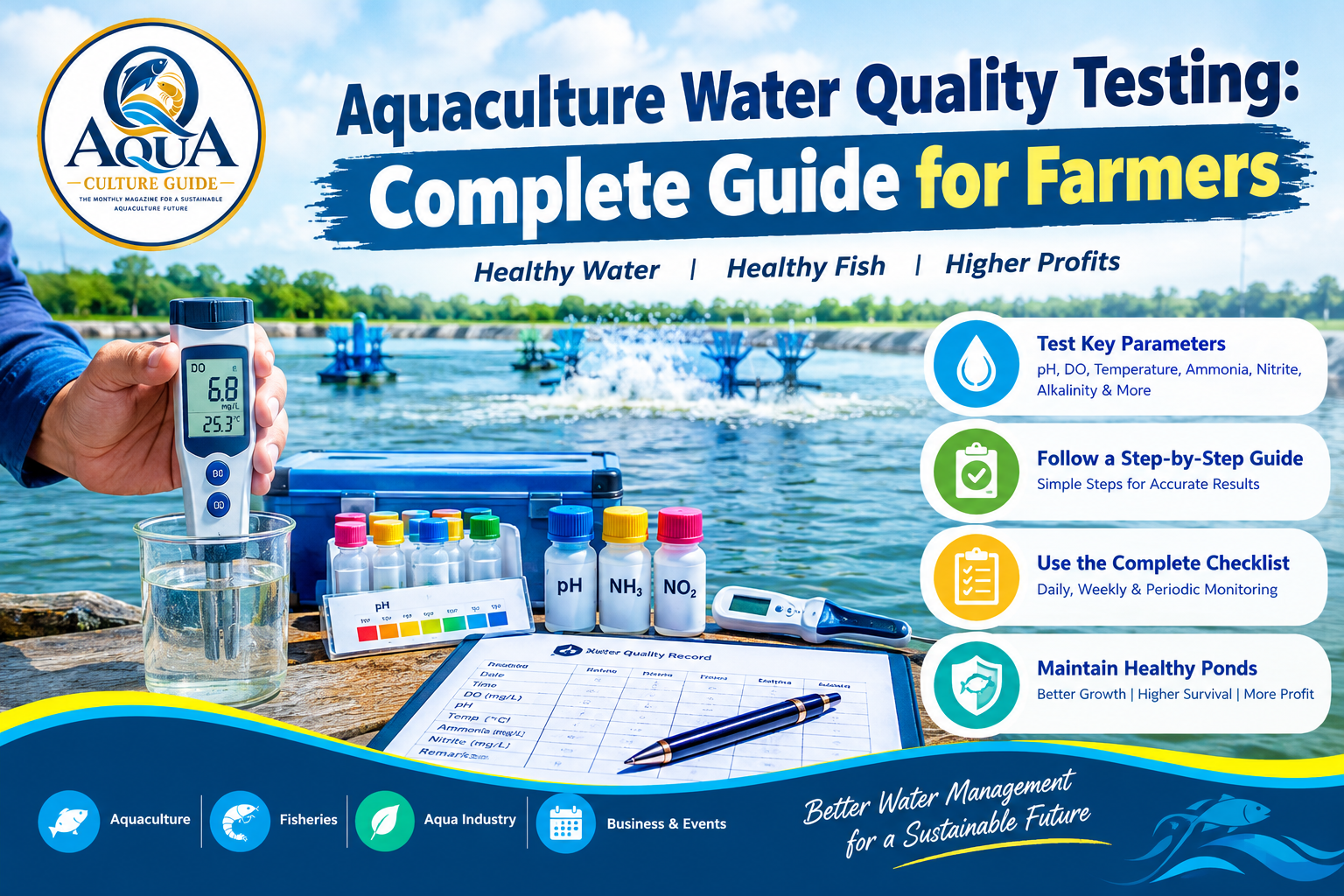
Learn how to test aquaculture water quality, measure pH, dissolved oxygen, ammonia, and temperature, and follow a complete checklist to maintain healthy fish and shrimp ponds.
Introduction
Water quality is one of the most important factors in successful aquaculture. Whether you are farming freshwater fish, shrimp, or other aquatic species, maintaining suitable water conditions is essential for healthy growth, good feed consumption, and better survival.
Poor water quality can cause stress, reduce feeding activity, slow growth, and increase the risk of disease. In severe cases, low dissolved oxygen, ammonia toxicity, or sudden changes in pH and temperature can lead to heavy mortality.
Many farmers check their ponds only when fish or shrimp begin to show unusual behaviour. However, regular water quality testing helps identify problems before they become serious.
By monitoring important parameters such as dissolved oxygen, pH, temperature, ammonia, nitrite, and alkalinity, farmers can make better management decisions and reduce avoidable production losses.
Why Is Water Quality Testing Important in Aquaculture?
Regular water quality testing helps farmers understand whether pond conditions are suitable for the species being cultured.
The main benefits include:
- Better fish and shrimp survival: Detect potentially dangerous water conditions early.
- Improved growth: Maintain conditions that support normal feeding and metabolism.
- Better feed efficiency: Fish and shrimp may eat less and use feed less efficiently when stressed.
- Early problem detection: Identify changes before they result in visible symptoms.
- Improved pond management: Make informed decisions about aeration, feeding, water exchange, and other interventions.
- Reduced financial losses: Prevent some avoidable losses associated with poor water quality.
Important: There is no single water quality target suitable for every aquaculture species. Freshwater fish, tilapia, carp, and shrimp may have different requirements. Always use species-specific recommendations and consider the farming system.
Important Water Quality Parameters Every Farmer Should Test
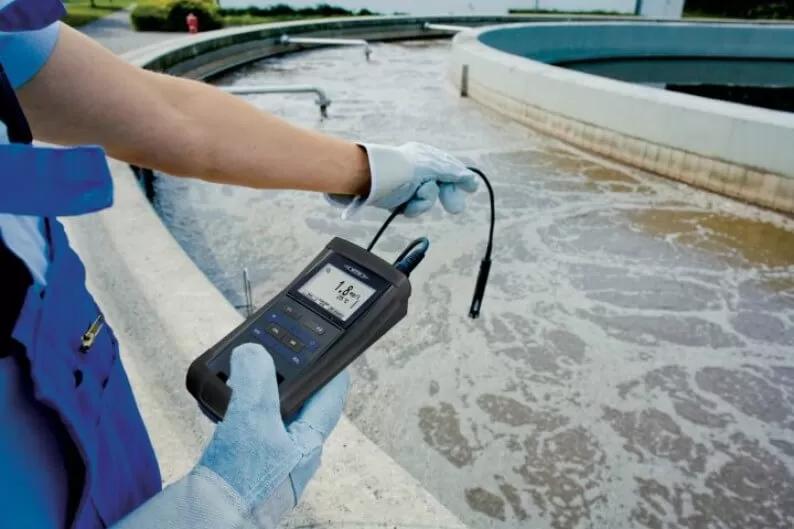
- Dissolved Oxygen (DO)
Dissolved oxygen is the oxygen available in water for fish and other aquatic organisms. Low oxygen can cause stress, reduced feeding, and sudden mortality.
Priority: Very high, especially before sunrise and during cloudy weather.
2. pH
pH indicates whether water is acidic or alkaline. Sudden pH changes can stress cultured species, and pH also influences the toxicity of ammonia.
Priority: High; monitor daily where practical.
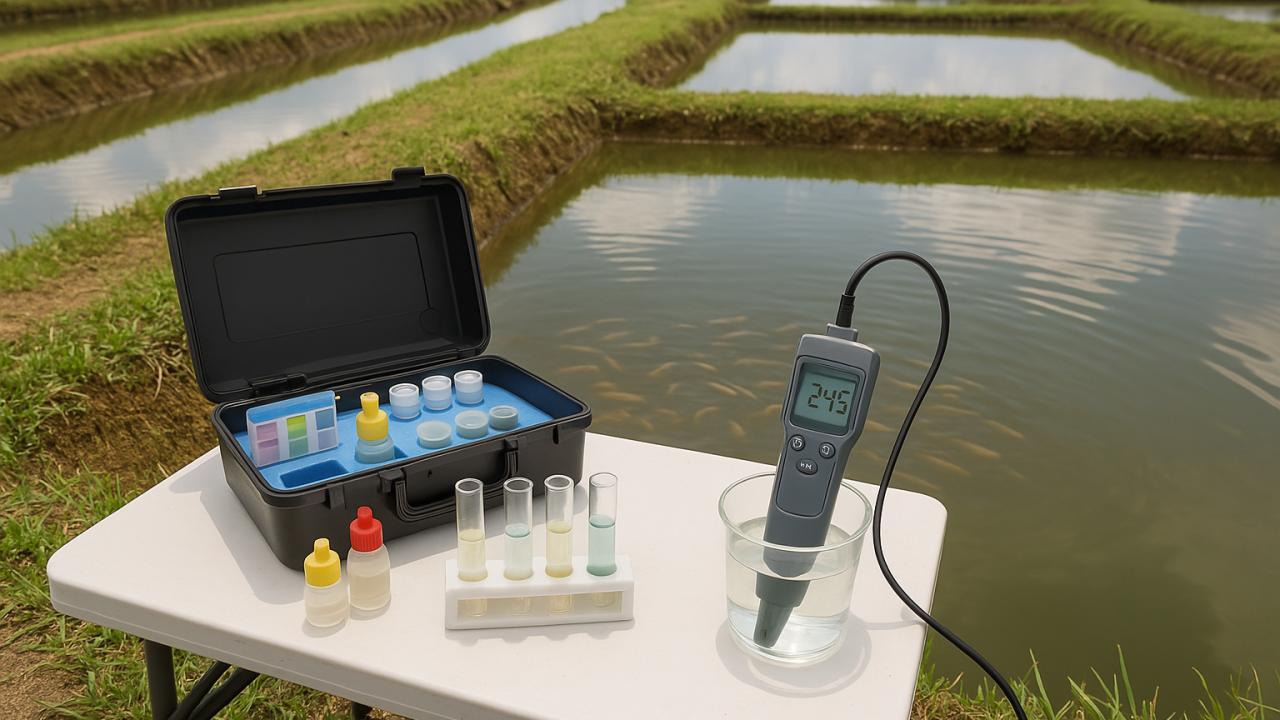
- Water Temperature
Temperature affects metabolism, feeding, oxygen demand, and the toxicity of some compounds. Monitor sudden changes as well as absolute values.
Priority: High, particularly during extreme weather.
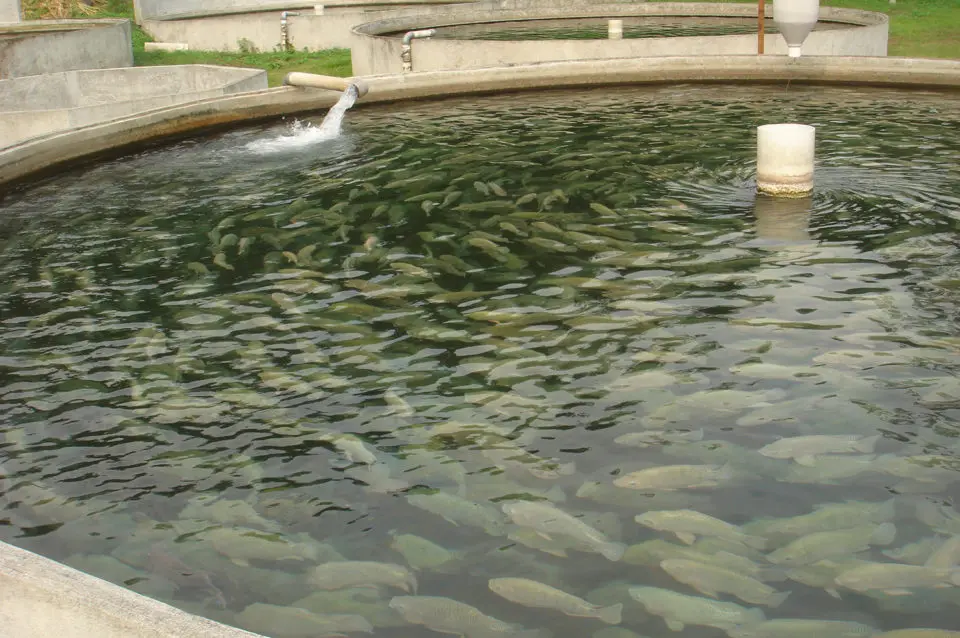
- Ammonia
Ammonia can enter pond water through fish or shrimp waste, uneaten feed, and decomposing organic matter. The un-ionised form, NH₃, is particularly toxic.
Priority: High, especially in heavily stocked or heavily fed ponds.
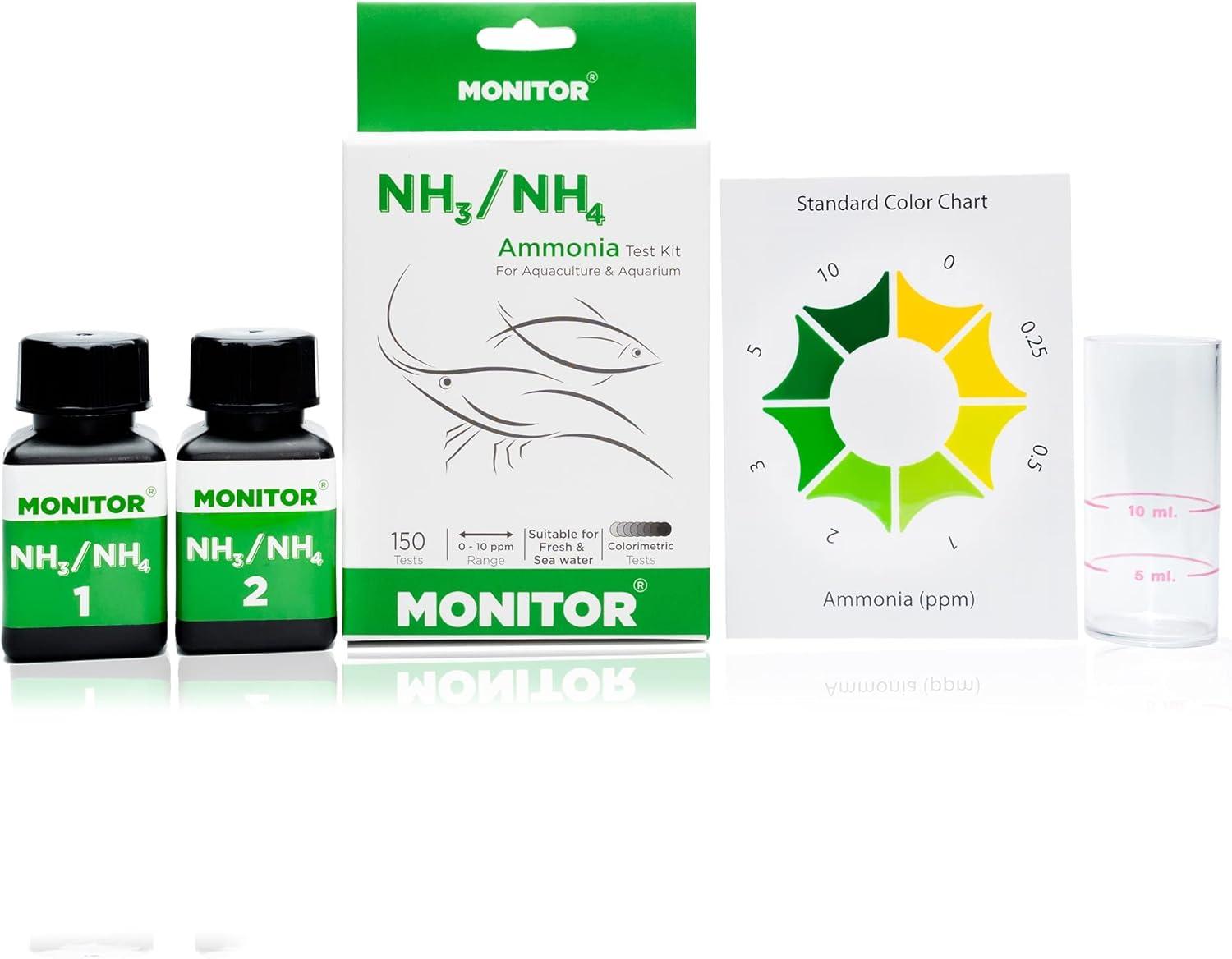
5. Nitrite
Nitrite can accumulate when nitrogen processing in the pond or filtration system is insufficient. Elevated levels can interfere with oxygen transport in fish.
Priority: High when stocking density, feeding, or waste loading is high.
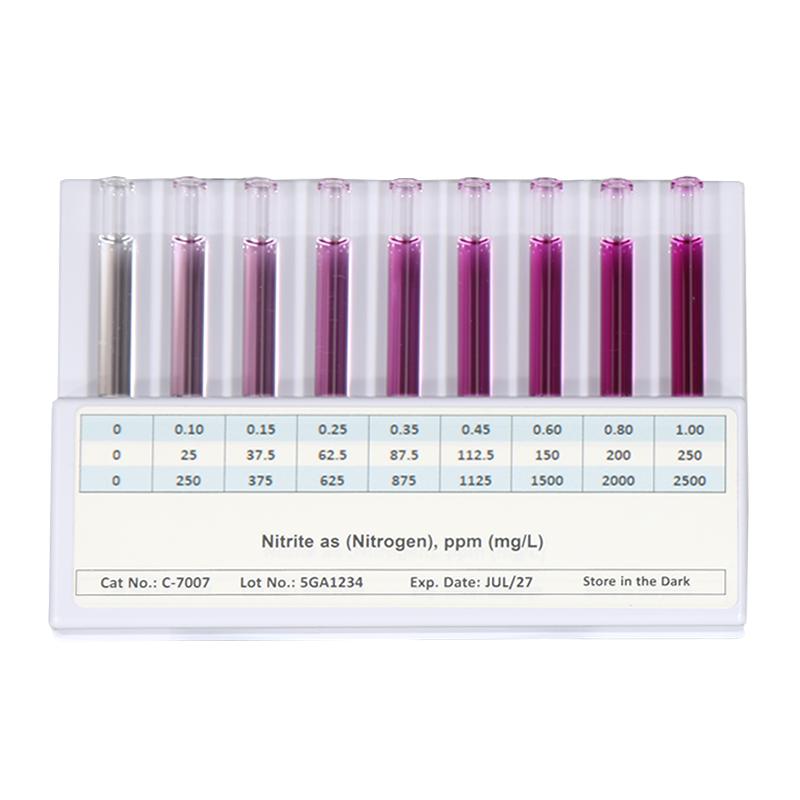
- Alkalinity and Hardness
Alkalinity helps buffer changes in pH. Hardness measures dissolved minerals, particularly calcium and magnesium. Both can influence the suitability of water for particular species and systems.
Priority: Important during pond preparation and routine management.
Recommended Water Quality Ranges: What Farmers Should Know
The following are general reference points for planning water quality monitoring, not universal limits for every species.
Parameter General guidance Why it matters
Dissolved oxygen Around 5 mg/L or higher is a useful target for many systems; species requirements vary Supports respiration and reduces oxygen stress
pH Approximately 6.5–8.5 suits many freshwater systems Affects fish health and ammonia toxicity
Temperature Depends on species and life stage Influences feeding, growth, and oxygen demand
Total ammonia nitrogen (TAN) Keep as low as practical; assess NH₃ toxicity Toxicity depends on pH and temperature
Nitrite Keep low and within species-specific limits Can interfere with oxygen transport in fish
Alkalinity Depends on species and system; many freshwater ponds benefit from adequate buffering Helps stabilise pH
Salinity Species- and system-specific Important for osmoregulation and shrimp health
Critical note: A total ammonia result cannot be interpreted properly without considering pH and temperature, because these affect the proportion present as toxic NH₃. Nitrite toxicity also depends on factors such as species and water chemistry. Use a suitable test method and species-specific thresholds before taking corrective action
Step-by-Step Guide to Aquaculture Water Quality Testing
Step 1: Prepare your testing equipment
Keep suitable equipment ready before collecting water samples.
Common equipment includes:
- Dissolved oxygen meter.
- Calibrated pH meter.
- Water thermometer.
- Ammonia and nitrite test kits.
- Alkalinity and hardness test kits.
- Salinity meter or refractometer where relevant.
- Clean sample containers.
- Record book or digital log.
Check expiry dates, calibration requirements, and the manufacturer's instructions before use.
Step 2: Collect water samples correctly
Collect representative samples from the pond or culture system.
- Avoid collecting only from one unusual spot.
- Sample areas where fish or shrimp spend time, where appropriate.
- Avoid disturbing bottom sediment unless testing sediment or bottom water specifically.
- Use clean containers suitable for the test.
- Follow the test kit's instructions for sample depth and handling.
Step 3: Measure dissolved oxygen
Measure dissolved oxygen using a calibrated DO meter or another suitable validated method.
For pond-based aquaculture, check oxygen at critical times, particularly near dawn when oxygen may be lowest. During high-risk conditions, monitor more frequently.
Record the reading, time, location, and any signs of fish or shrimp stress.
If oxygen is dangerously low or animals are gasping, start appropriate emergency aeration immediately and investigate the cause.
Step 4: Test pH and temperature
Measure pH with a calibrated meter or appropriate test kit and measure water temperature using a reliable thermometer.
Where practical, compare readings at different times of the day. In productive ponds, pH and dissolved oxygen can vary between morning and afternoon.
Large or unexpected changes may indicate an algal bloom shift, water exchange issue, weather event, or another pond management problem.
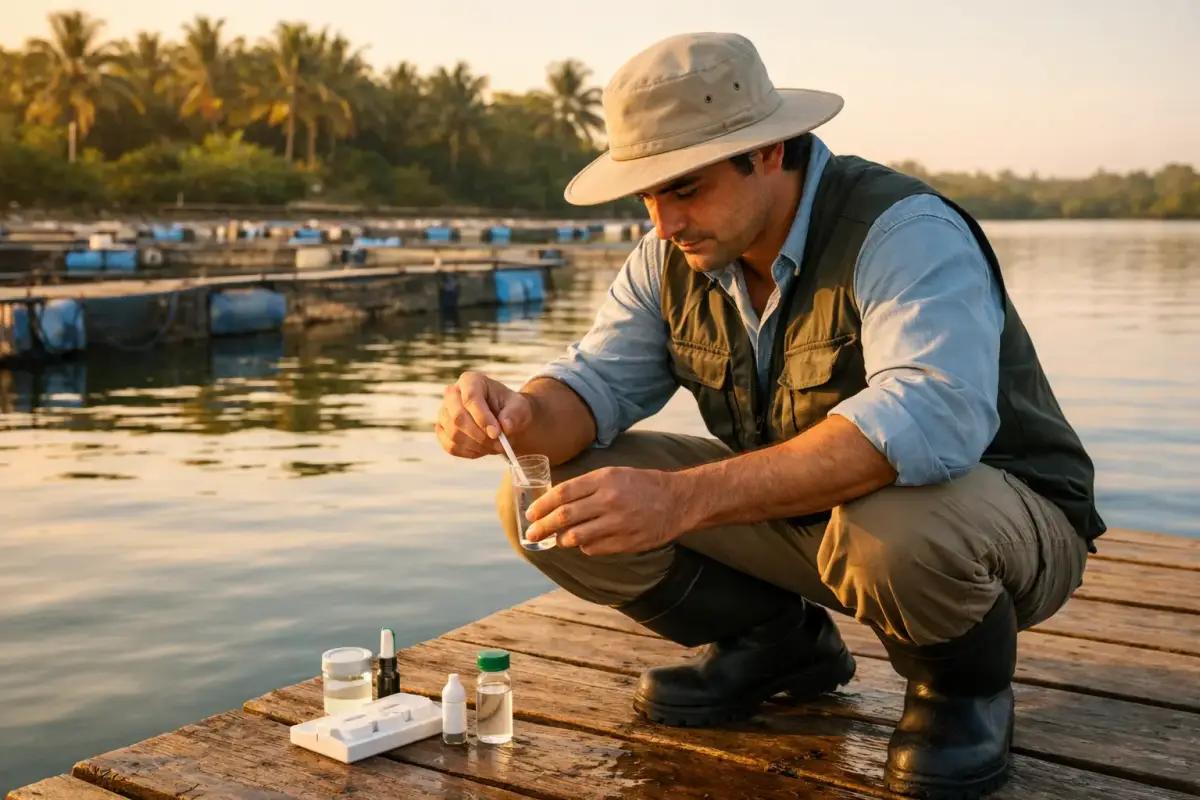
Step 5: Test ammonia and nitrite
Use a suitable water testing kit and follow its instructions carefully.
Record whether ammonia is reported as total ammonia nitrogen, NH₃, or another form. These values are not interchangeable.
If ammonia is elevated, check pH and temperature to assess potential NH₃ toxicity. If nitrite is elevated, consider stocking density, feeding, filtration or nitrogen processing, and the water chemistry.
Do not apply chemicals based only on a single unexplained reading; verify the result and consult an aquaculture professional when necessary.
Step 6: Check alkalinity, hardness, and salinity where relevant
Alkalinity testing helps assess the water's buffering capacity. Hardness is important for many freshwater species, while salinity monitoring is particularly relevant to brackish-water and marine aquaculture.
Use the measurements to guide pond preparation, water source selection, and any corrective measures appropriate for the species.
Step 7: Inspect water appearance and animal behaviour
Observe water colour, clarity, foam, unusual odours, surface films, and changes in plankton conditions. These observations can support your test results but cannot replace measurement.
Also observe feeding response, swimming behaviour, respiration, and any unusual mortality.
Step 8: Record and compare results
Maintain a log of measurements, including date, time, pond identification, weather, feeding activity, and management actions.
Comparing results over time is often more useful than relying on one isolated reading. Look for recurring low oxygen, increasing ammonia, unstable pH, or changes following feeding and weather events.
Step 9: Take corrective action
Select the response based on the measured parameter, species, severity, and cause.
Possible actions may include increasing aeration, reducing or temporarily pausing feeding during an oxygen emergency, removing accumulated organic waste where practical, improving filtration, or carefully managing water exchange when the incoming water is suitable.
Avoid abrupt or poorly planned changes in pH, salinity, temperature, or water chemistry. Obtain expert guidance for significant problems.
Step 10: Re-test after intervention
After making a correction, measure the affected parameters again at an appropriate interval. Continue monitoring until conditions stabilise and fish or shrimp return to normal behaviour.
Do not assume a problem has been resolved simply because the water looks clearer.
Complete Aquaculture Water Quality Testing Checklist
Use this interactive checklist for daily, weekly, and periodic farm inspections.
Daily monitoring
[ ] Check dissolved oxygen at critical times
[ ] Measure water temperature
[ ] Measure pH where daily monitoring is appropriate
[ ] Observe feeding and swimming behaviour
[ ] Inspect for gasping, stress, or unusual mortality
[ ] Record weather and unusual pond changes
Routine chemical testing
[ ] Test ammonia according to farm risk
[ ] Test nitrite according to farm risk
[ ] Monitor alkalinity when needed
[ ] Check hardness where relevant
[ ] Measure salinity in brackish or marine systems
[ ] Check transparency or turbidity where useful
Equipment and sampling
[ ] Calibrate meters as recommended
[ ] Check test kit expiry dates
[ ] Use clean sampling containers
[ ] Collect representative samples
[ ] Record date, time, pond, and results
Farm response and records
[ ] Compare readings with species-specific targets
[ ] Investigate abnormal results
[ ] Check aerators and backup equipment
[ ] Record corrective actions
[ ] Re-test after major interventions
[ ] Maintain a consistent water quality log
How Often Should Farmers Test Pond Water?
Testing frequency depends on the species, stocking density, feeding rate, weather, and production system.
Parameter Suggested monitoring approach
Dissolved oxygen Daily at critical times; more often during emergencies or high-risk weather
Temperature Daily and when weather changes significantly
pH Daily where practical, preferably at consistent times; compare morning and afternoon when needed
Ammonia Regularly according to biomass, feeding rate, and system risk
Nitrite Regularly, particularly in intensive systems or where nitrogen processing is unstable
Alkalinity and hardness During pond preparation and periodically, or when pH stability is a concern
Salinity Regularly in brackish-water or marine systems and after relevant water changes
Other parameters According to species, water source, local risks, and professional recommendations
Common Water Quality Problems and How to Respond
Problem Possible warning signs Appropriate first response
Low dissolved oxygen Gasping, crowding near inlets, sudden weakness Increase aeration and check oxygen levels
Unsuitable pH Stress, reduced feeding, unstable readings Verify the result and identify the cause before correcting
Elevated ammonia Reduced appetite, gill irritation, stress Check TAN, pH, temperature, feeding, and waste loading
Elevated nitrite Stress, poor performance, unexplained losses Verify the test and review nitrogen processing and water chemistry
Sudden temperature change Abnormal activity or reduced feeding Confirm temperature and avoid abrupt changes
Excessive organic waste Poor clarity, sediment accumulation, oxygen problems Review feeding, solids management, and pond maintenance
Algal bloom changes Rapid colour changes, oxygen fluctuations Increase monitoring and seek guidance before major interventions
Conclusion
Aquaculture water quality testing is an essential part of successful fish and shrimp farming. Regular measurements, careful observation, and accurate recordkeeping help farmers detect problems early and make informed management decisions.
Focus on dissolved oxygen, pH, temperature, ammonia, nitrite, and other parameters relevant to your species. Use suitable testing equipment, follow species-specific recommendations, and re-test after corrective actions.
Remember: Test regularly, record accurately, and act early. Good water quality management supports healthier fish, better survival, and more sustainable aquaculture production.
Follow Aqua Culture Guide for more practical articles on pond management, fish health, feed management, and aquaculture best practices.
Questions & Answers
Q1.What is the most important water quality parameter in aquaculture?
Dissolved oxygen is a critical parameter because low oxygen can cause rapid stress and mortality. However, pH, temperature, ammonia, nitrite, and other parameters are also important for long-term health.
Q2.How can I test pond water at home or on my farm?
Use suitable meters and test kits, follow the manufacturer's instructions, calibrate equipment where required, and record the readings. More complex problems may require laboratory analysis.
Q3.When is the best time to check dissolved oxygen?
Early morning, especially near sunrise, is important because oxygen in productive ponds may fall overnight. Additional measurements may be necessary during hot weather, cloudy periods, high biomass, or other high-risk conditions.
Q4.Why is pond water pH different in the morning and afternoon?
Photosynthesis removes carbon dioxide during daylight, which can raise pH. Overnight respiration adds carbon dioxide, which can lower pH. The size of the change depends on pond productivity and buffering capacity.
Q5.What causes ammonia to increase in fish ponds?
Ammonia can increase due to fish waste, uneaten feed, decomposing organic matter, high biomass, and insufficient biological processing. Testing and reviewing farm management records can help identify the cause.
Q6.Can clear water be unsafe for fish?
Yes. Clear water can still have low dissolved oxygen, unsuitable pH, ammonia, or chemical contaminants. Water appearance alone cannot establish whether water is safe.
Related articles
భారతీయ రిజర్వాయర్లలో కేజ్ ఫిష్ ఫార్మింగ్: సాంకేతికత, అనుమతులు మరియు పెట్టుబడి వివరాలు
భారతదేశంలోని రిజర్వాయర్లలో కేజ్ ఫిష్ ఫార్మింగ్ ఎలా ప్రారంభించాలి? అవసరమైన సాంకేతికత, ప్రభుత్వ అనుమతులు, పెట్టుబడి, చేపల జాతులు, మేత నిర్వహణ మరియు లాభనష్టాల గురించి పూర్తి వివరాలు తెలుసుకోండి.
Freshwater Prawn Farming in IndiaFreshwater Prawn Farming in India: రైతులకు పూర్తి సాగు మార్గదర్శిని
భారతదేశంలో మంచినీటి రొయ్యల సాగు ఎలా ప్రారంభించాలి? జెయింట్ ఫ్రెష్వాటర్ ప్రాన్ సీడ్ ఎంపిక, చెరువు తయారీ, స్టాకింగ్, ఆహారం, నీటి నాణ్యత, పెట్టుబడి, మార్కెటింగ్ గురించి పూర్తి వివరాలు తెలుసుకోండి.
Tilapia farming in Indiaభారతదేశంలో తిలాపియా చేపల పెంపకం – మార్కెట్ అవకాశాలు, ప్రభుత్వ నిబంధనలు మరియు ఆధునిక సాగు పద్ధతులు
భారతదేశంలో తిలాపియా చేపల పెంపకం ఎలా చేయాలి? మార్కెట్ అవకాశాలు, ప్రభుత్వ అనుమతులు, చెరువు సాగు, బయోఫ్లాక్, RAS విధానాలు, పిల్లల ఎంపిక, మేత నిర్వహణ మరియు దిగుబడి గురించి పూర్తి సమాచారం.
PCR Testing in Shrimp Hatcheriesరొయ్యల హ్యాచరీల్లో PCR పరీక్షలు: ఫలితాలను రైతులు ఎలా అర్థం చేసుకోవాలి?
WSSV, EHP, AHPND వంటి వ్యాధికారకాలను గుర్తించడంలో PCR పరీక్షల పాత్ర, పరీక్షా నివేదికలను అర్థం చేసుకోవడం, నాణ్యమైన రొయ్య పిల్లలను ఎంపిక చేసుకోవడం గురించి రైతులు తెలుసుకోవాల్సిన పూర్తి సమాచారం.
Explore Aqua Culture Guide
Aqua companies directory
Feed, seed, probiotics & equipment suppliers
Aquaculture calculators
Feed, FCR, stocking & water quality tools
Telugu aqua magazine
Read the latest monthly issue online
All aqua news & articles
Farming, disease control and market updates
List your company free
Get found by farmers across India
Advertise with us
Magazine and website advertising options