Ammonia, Nitrite, pH & Alkalinity: How These Parameters Interact in Aquaculture
16/10/2026
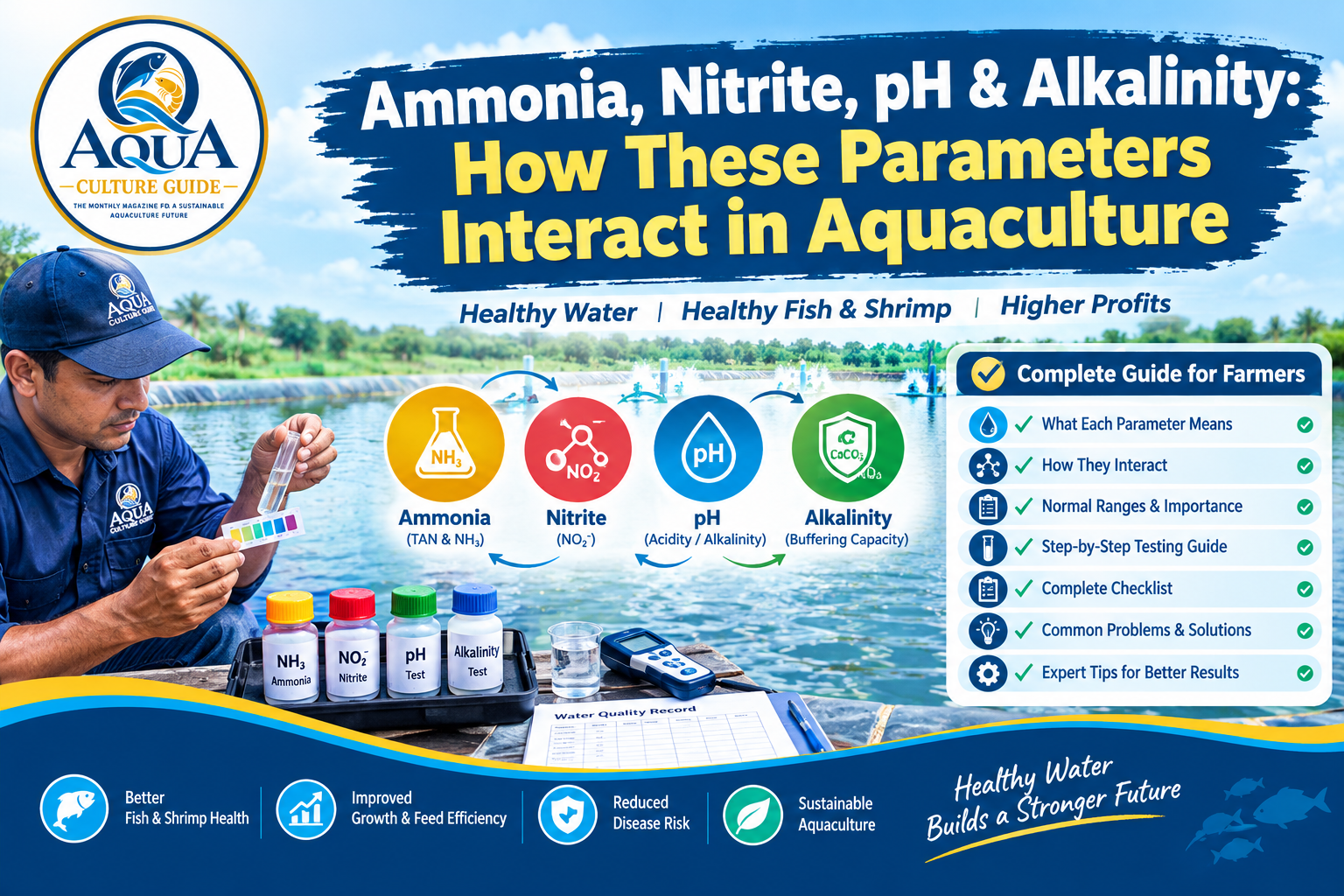
Learn how ammonia, nitrite, pH, and alkalinity interact in aquaculture, how to test pond water, and how to manage water quality for healthier fish and shrimp.
Introduction
Maintaining good water quality is one of the most important responsibilities in fish and shrimp farming. Among the many water quality parameters, ammonia, nitrite, pH, and alkalinity are closely connected and can significantly affect aquatic animal health, growth, feeding, and survival.
These parameters do not work independently. For example, high pH can increase the toxicity of ammonia, while insufficient alkalinity can cause unstable pH. Nitrite may accumulate when the biological processes responsible for breaking down nitrogenous waste are not functioning effectively.
When farmers understand how these parameters interact, they can identify potential problems earlier and make better decisions about feeding, aeration, water exchange, and pond management.
What Are Ammonia, Nitrite, pH, and Alkalinity?
- Ammonia (NH₃ and NH₄⁺)
Ammonia enters pond water through fish or shrimp waste, uneaten feed, and decomposing organic matter. Total ammonia nitrogen (TAN) includes both unionised ammonia (NH₃) and ammonium (NH₄⁺).
NH₃ is generally much more toxic to aquatic animals than NH₄⁺. The proportion present as NH₃ increases as pH and temperature rise.
- Nitrite (NO₂⁻)
Nitrite is an intermediate product in the biological conversion of ammonia to nitrate. It can accumulate when the nitrogen-processing system is overloaded or disrupted.
Elevated nitrite can interfere with oxygen transport in fish and cause serious health problems. Its toxicity depends partly on species and water chemistry.
- pH
pH indicates whether water is acidic or alkaline. It affects fish and shrimp health, biological activity, and the balance between NH₃ and NH₄⁺.
A sudden pH change can stress aquatic animals even when the reading falls within a range normally considered suitable.
- Alkalinity
Alkalinity measures water's capacity to neutralise acids and resist changes in pH. It is commonly associated with bicarbonate and carbonate in aquaculture water.
Adequate alkalinity helps stabilise pH and supports biological processes that break down nitrogenous waste
How Do These Four Parameters Interact?
Understanding their relationship is essential for effective pond management.
Feed, waste and decomposing organic matter
Produce nitrogenous waste in the pond
Ammonia (TAN)
High pH and temperature increase the NH₃ fraction
->
Biological nitrogen conversion
Ammonia → Nitrite → Nitrate
->
Oxygen and alkalinity are consumed
Insufficient oxygen or buffering can disrupt system stability
Relationship 1: pH directly affects ammonia toxicity
Ammonia exists mainly in two forms in water: NH₃ and NH₄⁺. Higher pH shifts the balance toward the more toxic NH₃ form. Higher temperature also generally increases the NH₃ fraction.
This means that the same total ammonia nitrogen reading can pose different risks under different pH and temperature conditions.
What farmers should do: When TAN is elevated, measure pH and temperature as well. Do not assess ammonia risk using the TAN reading alone.
Relationship 2: Alkalinity helps stabilise pH
Alkalinity acts as a buffer against sudden changes in pH. When alkalinity is insufficient, daily pH fluctuations may become more pronounced.
In productive ponds, photosynthesis can raise pH during daylight, while respiration overnight can lower it.
What farmers should do: Monitor alkalinity and compare morning and afternoon pH readings when fluctuations are suspected. Avoid adding lime or other chemicals without checking the water chemistry and selecting an appropriate treatment.
Relationship 3: Ammonia conversion produces nitrite
Nitrifying microorganisms convert ammonia into nitrite and then nitrite into nitrate. These processes are important in biological filters and can also occur in pond environments.
If the system cannot process the nitrogen load efficiently, ammonia or nitrite may accumulate.
What farmers should do: Review feeding rates, organic waste, stocking density, aeration, and biological filtration where applicable. Test both ammonia and nitrite instead of assuming one reading tells the whole story.
Relationship 4: Nitrogen conversion consumes oxygen and alkalinity
Nitrification requires oxygen and consumes alkalinity. In simplified terms, complete nitrification consumes approximately 4.6 mg of oxygen and 7.14 mg of alkalinity expressed as CaCO₃ for every 1 mg of ammonia nitrogen oxidised.
This demand can be significant in intensive systems.
What farmers should do: Maintain appropriate aeration and monitor alkalinity, especially in biofilters and heavily stocked systems with high feed inputs.
Recommended Monitoring Targets for Fish and Shrimp Farms
The following are general reference points, not universal safety limits. Species, life stage, salinity, temperature, production intensity, and measurement methods all influence appropriate targets.
Parameter General management guidance
Ammonia Keep TAN low; assess the NH₃ fraction using pH and temperature
Nitrite Keep low and follow species- and system-specific limits
pH Approximately 6.5–8.5 is a broad reference range for many freshwater systems
Alkalinity Maintain sufficient buffering capacity for the species and system
Dissolved oxygen Around 5 mg/L or higher is a useful target for many systems, with higher or different requirements possible
For shrimp farming, pay particular attention to salinity, alkalinity, dissolved oxygen, and the specific requirements of the cultured species. For recirculating aquaculture systems, monitor biofilter performance and the accumulation of nitrogen compounds.
Do not use these broad ranges as automatic treatment triggers. Interpret readings in the context of the species and farm system.
Step-by-Step Guide to Testing Pond Water
Step 1: Prepare the testing equipment
Keep the following equipment ready:
- Calibrated pH meter or suitable pH test kit.
- Ammonia test kit that identifies the reported measurement.
- Nitrite test kit.
- Alkalinity test kit.
- Thermometer.
- Dissolved oxygen meter.
- Clean sampling containers.
- Record book or digital monitoring sheet.
Check the expiry dates of reagents and follow the manufacturer's instructions
Step 2: Collect representative water samples
Take samples from appropriate pond locations and depths. Avoid disturbing bottom sediment unless the purpose is to test bottom water or sediment conditions.
Use clean containers and follow the handling instructions for each test. Whenever possible, measure pH, temperature, and dissolved oxygen directly in the pond.
Step 3: Test ammonia
Follow the test kit procedure and record the result with its units.
Check whether the result represents TAN, NH₃, or another measurement. If TAN is elevated, also record pH and temperature so that ammonia toxicity can be assessed properly.
If the reading appears unusual, verify it using a reliable test method.
Step 4: Test nitrite
Use the appropriate nitrite test and record the result. Confirm whether the kit reports nitrite as NO₂⁻ or nitrite-nitrogen (NO₂-N), since these values use different reporting conventions.
If nitrite is elevated, review the nitrogen-processing system, feeding load, oxygen availability, and relevant water chemistry.
Step 5: Measure pH
Measure pH with a calibrated meter or suitable kit. Record the time of testing because pond pH can change throughout the day.
If you suspect large fluctuations, compare early-morning and afternoon readings.
Step 6: Measure alkalinity
Use a suitable alkalinity test kit and record the result, commonly expressed as mg/L as CaCO₃.
Low alkalinity can indicate limited buffering capacity. Before making adjustments, consider the species, water source, current pH, and the amount of alkalinity required by the system.
Step 7: Check dissolved oxygen and temperature
These measurements help explain whether biological nitrogen conversion is likely to be affected by oxygen availability and whether the NH₃ fraction may be elevated.
Check dissolved oxygen particularly near dawn and during high-risk weather or intensive production periods.
Step 8: Compare and interpret the results together
Do not assess each reading in isolation. For example:
- High TAN + high pH + high temperature = potentially greater ammonia toxicity.
- Rising nitrite + high feeding load = possible nitrogen-processing limitation.
- Low alkalinity + large daily pH fluctuations = reduced buffering capacity may be contributing.
- Low dissolved oxygen + increasing ammonia or nitrite = possible oxygen limitation affecting aquatic animals and biological processes.
These combinations suggest possible causes, not definitive diagnoses
Step 9: Correct the underlying problem
Choose an action based on the measurements and the likely cause. Possible actions include improving aeration, reducing excess feed and organic waste, reviewing stocking and feeding rates, checking biological filters, or carefully managing water exchange where appropriate.
Avoid abrupt pH corrections and unverified chemical treatments.
Step 10: Re-test and maintain records
After an intervention, repeat the relevant tests at an appropriate interval. Record the original readings, action taken, and follow-up readings.
If fish or shrimp are distressed, mortality is increasing, or readings remain abnormal, seek help from a qualified aquaculture or aquatic animal health professional.
Common Water Quality Problems and Their Management
Problem Possible cause Recommended response
High ammonia Excess waste, overfeeding, high biomass, inadequate processing Verify TAN, assess pH and temperature, review feed and waste management
High nitrite Incomplete or overloaded nitrogen processing Verify the result, assess oxygen and biofilter function, review loading
High pH Photosynthesis, low carbon dioxide, water chemistry changes Measure morning and afternoon pH; investigate the cause
Low pH Respiration, low alkalinity, acidic inputs Test alkalinity and other relevant parameters before correction
Low alkalinity Insufficient buffering or consumption during nitrification Confirm the reading and develop a system-appropriate correction plan
Large pH fluctuations Strong daily photosynthesis and respiration, limited buffering Monitor daily patterns and assess alkalinity and pond productivity
Complete Aquaculture Water Quality Checklist
Use this checklist during regular pond inspections.
Ammonia and nitrite
[ ] Test TAN using a suitable method
[ ] Record ammonia units and reporting basis
[ ] Measure pH and temperature when assessing ammonia risk
[ ] Test nitrite and record its reporting basis
[ ] Investigate abnormal results before treating
pH and alkalinity
[ ] Calibrate the pH meter as recommended
[ ] Record pH at a consistent time
[ ] Compare morning and afternoon pH if needed
[ ] Measure alkalinity and record units
[ ] Investigate low alkalinity or unstable pH
Oxygen and farm management
[ ] Monitor dissolved oxygen at critical times
[ ] Check aerators and backup equipment
[ ] Review feeding rate and uneaten feed
[ ] Inspect organic waste and pond conditions
[ ] Check biofilter function where applicable
Records and follow-up
[ ] Record date, time, pond and readings
[ ] Compare results with species-specific targets
[ ] Record corrective actions
[ ] Repeat tests after interventions
[ ] Seek professional advice if problems persist
Conclusion
Ammonia, nitrite, pH, and alkalinity are closely connected components of aquaculture water quality. Poor management of one parameter can affect the others, increasing stress and potentially reducing fish and shrimp survival.
The best approach is to test regularly, interpret results together, manage feeding and organic waste, maintain sufficient oxygen, and protect the stability of the pond or biofilter environment.
Remember: High pH can increase ammonia toxicity, insufficient alkalinity can destabilise pH, and disrupted nitrogen processing can lead to ammonia or nitrite accumulation. Understanding these relationships helps farmers make better water management decisions.
Follow Aqua Culture Guide for more practical information on fish health, shrimp farming, pond management, and sustainable aquaculture.
Questions & Answers
Q1.Why is ammonia dangerous for fish?
Ammonia can damage gill function and interfere with normal physiological processes. The NH₃ form is especially toxic, and its proportion increases with rising pH and temperature.
Q2.What is the difference between ammonia and nitrite?
Ammonia is produced from nitrogenous waste and decomposing organic matter. Nitrite is an intermediate compound formed during biological ammonia conversion. Both can be harmful when they accumulate.
Q3.How does pH affect ammonia toxicity?
Higher pH shifts the balance from ammonium (NH₄⁺) toward the more toxic unionised ammonia (NH₃). Temperature also affects this balance, so TAN should be interpreted alongside both pH and temperature.
Q4.What is the role of alkalinity in aquaculture?
Alkalinity helps resist sudden changes in pH. It also supports nitrification, which consumes alkalinity as ammonia is converted to nitrate.
Q5.Why does nitrite increase in fish ponds?
Nitrite may accumulate when the biological processes converting ammonia to nitrite and then nitrate become unbalanced. High waste loading, insufficient oxygen, or a disrupted biofilter can contribute.
Q6.Can low alkalinity cause pH fluctuations?
Yes. Low alkalinity reduces the water's buffering capacity, making pH more susceptible to changes caused by photosynthesis, respiration, and other processes.
Related articles
భారతీయ రిజర్వాయర్లలో కేజ్ ఫిష్ ఫార్మింగ్: సాంకేతికత, అనుమతులు మరియు పెట్టుబడి వివరాలు
భారతదేశంలోని రిజర్వాయర్లలో కేజ్ ఫిష్ ఫార్మింగ్ ఎలా ప్రారంభించాలి? అవసరమైన సాంకేతికత, ప్రభుత్వ అనుమతులు, పెట్టుబడి, చేపల జాతులు, మేత నిర్వహణ మరియు లాభనష్టాల గురించి పూర్తి వివరాలు తెలుసుకోండి.
Freshwater Prawn Farming in IndiaFreshwater Prawn Farming in India: రైతులకు పూర్తి సాగు మార్గదర్శిని
భారతదేశంలో మంచినీటి రొయ్యల సాగు ఎలా ప్రారంభించాలి? జెయింట్ ఫ్రెష్వాటర్ ప్రాన్ సీడ్ ఎంపిక, చెరువు తయారీ, స్టాకింగ్, ఆహారం, నీటి నాణ్యత, పెట్టుబడి, మార్కెటింగ్ గురించి పూర్తి వివరాలు తెలుసుకోండి.
Tilapia farming in Indiaభారతదేశంలో తిలాపియా చేపల పెంపకం – మార్కెట్ అవకాశాలు, ప్రభుత్వ నిబంధనలు మరియు ఆధునిక సాగు పద్ధతులు
భారతదేశంలో తిలాపియా చేపల పెంపకం ఎలా చేయాలి? మార్కెట్ అవకాశాలు, ప్రభుత్వ అనుమతులు, చెరువు సాగు, బయోఫ్లాక్, RAS విధానాలు, పిల్లల ఎంపిక, మేత నిర్వహణ మరియు దిగుబడి గురించి పూర్తి సమాచారం.
PCR Testing in Shrimp Hatcheriesరొయ్యల హ్యాచరీల్లో PCR పరీక్షలు: ఫలితాలను రైతులు ఎలా అర్థం చేసుకోవాలి?
WSSV, EHP, AHPND వంటి వ్యాధికారకాలను గుర్తించడంలో PCR పరీక్షల పాత్ర, పరీక్షా నివేదికలను అర్థం చేసుకోవడం, నాణ్యమైన రొయ్య పిల్లలను ఎంపిక చేసుకోవడం గురించి రైతులు తెలుసుకోవాల్సిన పూర్తి సమాచారం.
Explore Aqua Culture Guide
Aqua companies directory
Feed, seed, probiotics & equipment suppliers
Aquaculture calculators
Feed, FCR, stocking & water quality tools
Telugu aqua magazine
Read the latest monthly issue online
All aqua news & articles
Farming, disease control and market updates
List your company free
Get found by farmers across India
Advertise with us
Magazine and website advertising options